


Ep.: How many wives did Adam have?
We know the Adam was married to the first woman, Eve, however there is mythology implying he had a second wife named “Lilith”, prior to Eve. The mythology of Lilith is first mentioned in ancient Babylonian demonology as a class of winged female demons that attacks pregnant women and infants. The myth migrated to the world of the ancient Hittites, Egyptians and Greeks.
The earliest surviving mention of her name appears in the Sumerian epic poem, Gilgamesh, a hero who slays monsters and assists a goddess. A dragon and “Zu-bird” appear as well. Her appearance in various folklore goes on, and sometime in the Middle Ages around the year 1000, a new twist was added to the mythology by Jewish sources – that she was Adam’s first – and terrifying – wife who left Eden because she was treated as man’s inferior. Unwholesome sexual practices are linked to Lilith as she powerfully embodies the demon-lover myth.
None of the Patriarchs made mention of Lilith, nor do Jesus or the apostles. The Apostle Paul, arguably the chief of Gentile conversions, never even hints at the idea of Adam having a bitterly-estranged wife who inhabits the darkness and is responsible for the primal deception of mankind.
Lilith is found in Jewish mysticism, the sort one would find in the Zohar, because these are the doctrines of Kabbalah–the Synagogue of Satan mentioned in Revelation 2:9.
Kabbalah absorbed the ancient mysteries of Babylon. Kabbalistic doctrines and practices are so pervasive in modern culture, you can find them in movies, literature, and even corporate logos—all of which devout Christians avoid.
The point is: traditions such as Lilith were adopted by Jews who practiced witchcraft and sorcery, Jews who would later deny Christ and clamor to have him killed, as Paul wrote in 1 Thessalonians 2:14-16. Kabbalah is a different religion, one that the Bible specifically forbids, along with all of its myths and traditions.
Just as you should not be deceived by stories of Zeus and Aphrodite, or the Babylonian gods of Anu, Enlil or Shamash, or their many demons we should stay away from the satanic mythological stories of Lilith and any other entities or principles that are unscriptural and dangerous to your spiritual health.
To learn more about what the Bible says about demons listen to, “How Do Demons Influence Our World?”
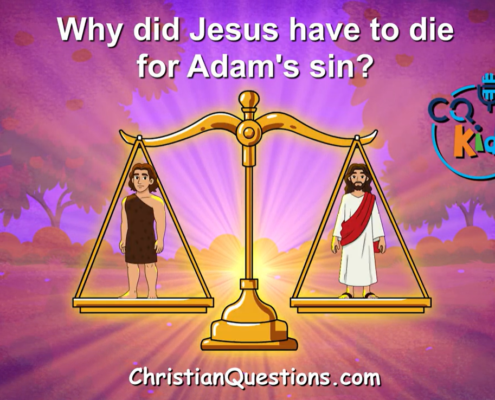 https://resources.christianquestions.com/wp-content/uploads/2026/01/26132755/Screenshot-2026-01-23-092755.png
738
1316
Teresa Sutherland
https://resources.christianquestions.com/wp-content/uploads/2024/03/28151014/ChristianQuestions-Logo.png
Teresa Sutherland2026-01-26 00:20:382026-01-26 13:47:38VIDEO: Why did Jesus have to die for Adam’s sin?
https://resources.christianquestions.com/wp-content/uploads/2026/01/26132755/Screenshot-2026-01-23-092755.png
738
1316
Teresa Sutherland
https://resources.christianquestions.com/wp-content/uploads/2024/03/28151014/ChristianQuestions-Logo.png
Teresa Sutherland2026-01-26 00:20:382026-01-26 13:47:38VIDEO: Why did Jesus have to die for Adam’s sin?
 https://christianquestions.com/wp-content/uploads/2026/01/Screenshot-2026-01-03-at-4.21.06-PM.png
1066
1980
Teresa Sutherland
https://resources.christianquestions.com/wp-content/uploads/2024/03/28151014/ChristianQuestions-Logo.png
Teresa Sutherland2026-01-05 00:00:292026-01-05 21:57:52VIDEO: How does God know what is best for us?
https://christianquestions.com/wp-content/uploads/2026/01/Screenshot-2026-01-03-at-4.21.06-PM.png
1066
1980
Teresa Sutherland
https://resources.christianquestions.com/wp-content/uploads/2024/03/28151014/ChristianQuestions-Logo.png
Teresa Sutherland2026-01-05 00:00:292026-01-05 21:57:52VIDEO: How does God know what is best for us? https://resources.christianquestions.com/wp-content/uploads/2025/12/27195744/theme-1.png
1024
1536
Christian Questions
https://resources.christianquestions.com/wp-content/uploads/2024/03/28151014/ChristianQuestions-Logo.png
Christian Questions2025-12-08 04:00:022025-12-20 22:47:29Did Jesus Die for Every Single Human Being?
https://resources.christianquestions.com/wp-content/uploads/2025/12/27195744/theme-1.png
1024
1536
Teresa Sutherland
https://resources.christianquestions.com/wp-content/uploads/2024/03/28151014/ChristianQuestions-Logo.png
Teresa Sutherland2025-12-08 00:00:202025-12-12 21:16:58VIDEO: Did Jesus Die for Every Single Human Being?
https://resources.christianquestions.com/wp-content/uploads/2025/12/27195744/theme-1.png
1024
1536
Christian Questions
https://resources.christianquestions.com/wp-content/uploads/2024/03/28151014/ChristianQuestions-Logo.png
Christian Questions2025-12-08 04:00:022025-12-20 22:47:29Did Jesus Die for Every Single Human Being?
https://resources.christianquestions.com/wp-content/uploads/2025/12/27195744/theme-1.png
1024
1536
Teresa Sutherland
https://resources.christianquestions.com/wp-content/uploads/2024/03/28151014/ChristianQuestions-Logo.png
Teresa Sutherland2025-12-08 00:00:202025-12-12 21:16:58VIDEO: Did Jesus Die for Every Single Human Being? https://resources.christianquestions.com/wp-content/uploads/2025/09/29121300/Screenshot-2025-09-23-131948.png
775
1387
Teresa Sutherland
https://resources.christianquestions.com/wp-content/uploads/2024/03/28151014/ChristianQuestions-Logo.png
Teresa Sutherland2025-09-29 10:00:022025-09-29 12:32:08VIDEO: Can zombies possibly be real?
https://resources.christianquestions.com/wp-content/uploads/2025/09/29121300/Screenshot-2025-09-23-131948.png
775
1387
Teresa Sutherland
https://resources.christianquestions.com/wp-content/uploads/2024/03/28151014/ChristianQuestions-Logo.png
Teresa Sutherland2025-09-29 10:00:022025-09-29 12:32:08VIDEO: Can zombies possibly be real? https://resources.christianquestions.com/wp-content/uploads/2025/04/14164916/Screenshot-2025-04-11-131341.png
717
1273
Teresa Sutherland
https://resources.christianquestions.com/wp-content/uploads/2024/03/28151014/ChristianQuestions-Logo.png
Teresa Sutherland2025-04-14 00:00:172025-04-14 17:11:31VIDEO: How do we know Jesus died and was resurrected?
https://resources.christianquestions.com/wp-content/uploads/2025/04/14164916/Screenshot-2025-04-11-131341.png
717
1273
Teresa Sutherland
https://resources.christianquestions.com/wp-content/uploads/2024/03/28151014/ChristianQuestions-Logo.png
Teresa Sutherland2025-04-14 00:00:172025-04-14 17:11:31VIDEO: How do we know Jesus died and was resurrected? https://resources.christianquestions.com/wp-content/uploads/2025/03/22010512/CQ-Podcast-Highlight-Website-2.png
720
1280
Teresa Sutherland
https://resources.christianquestions.com/wp-content/uploads/2024/03/28151014/ChristianQuestions-Logo.png
Teresa Sutherland2025-03-06 00:00:452025-10-05 00:35:22VIDEO: Why Should We Be Wary of Those Who Preach About “Soul Ties”? Podcast Highlight
https://resources.christianquestions.com/wp-content/uploads/2025/03/22010512/CQ-Podcast-Highlight-Website-2.png
720
1280
Teresa Sutherland
https://resources.christianquestions.com/wp-content/uploads/2024/03/28151014/ChristianQuestions-Logo.png
Teresa Sutherland2025-03-06 00:00:452025-10-05 00:35:22VIDEO: Why Should We Be Wary of Those Who Preach About “Soul Ties”? Podcast Highlight https://resources.christianquestions.com/wp-content/uploads/2025/03/22010942/CQ-Podcast-Highlight-Website-3.png
720
1280
Teresa Sutherland
https://resources.christianquestions.com/wp-content/uploads/2024/03/28151014/ChristianQuestions-Logo.png
Teresa Sutherland2025-03-05 00:00:572025-10-05 00:37:27VIDEO: How Is “Breaking a Soul Tie” Similar to Witchcraft and Demonology? Podcast Highlight
https://resources.christianquestions.com/wp-content/uploads/2025/03/22010942/CQ-Podcast-Highlight-Website-3.png
720
1280
Teresa Sutherland
https://resources.christianquestions.com/wp-content/uploads/2024/03/28151014/ChristianQuestions-Logo.png
Teresa Sutherland2025-03-05 00:00:572025-10-05 00:37:27VIDEO: How Is “Breaking a Soul Tie” Similar to Witchcraft and Demonology? Podcast Highlight https://resources.christianquestions.com/wp-content/uploads/2025/03/22011355/CQ-Podcast-Highlight-Website1-6.png
360
640
Teresa Sutherland
https://resources.christianquestions.com/wp-content/uploads/2024/03/28151014/ChristianQuestions-Logo.png
Teresa Sutherland2025-03-04 00:00:122025-10-05 00:39:56VIDEO: What Is the Problem With Believing in Soul Ties? Podcast Highlight
https://resources.christianquestions.com/wp-content/uploads/2025/03/22011355/CQ-Podcast-Highlight-Website1-6.png
360
640
Teresa Sutherland
https://resources.christianquestions.com/wp-content/uploads/2024/03/28151014/ChristianQuestions-Logo.png
Teresa Sutherland2025-03-04 00:00:122025-10-05 00:39:56VIDEO: What Is the Problem With Believing in Soul Ties? Podcast Highlight https://resources.christianquestions.com/wp-content/uploads/2025/03/27103544/theme.jpg
1583
1894
Christian Questions
https://resources.christianquestions.com/wp-content/uploads/2024/03/28151014/ChristianQuestions-Logo.png
Christian Questions2025-03-03 19:40:092025-03-22 14:23:34Are Soul Ties Biblical?
https://resources.christianquestions.com/wp-content/uploads/2025/03/27103544/theme.jpg
1583
1894
Teresa Sutherland
https://resources.christianquestions.com/wp-content/uploads/2024/03/28151014/ChristianQuestions-Logo.png
Teresa Sutherland2025-03-03 00:00:252025-03-11 23:22:58VIDEO: Are Soul Ties Biblical?
https://resources.christianquestions.com/wp-content/uploads/2025/03/27103544/theme.jpg
1583
1894
Christian Questions
https://resources.christianquestions.com/wp-content/uploads/2024/03/28151014/ChristianQuestions-Logo.png
Christian Questions2025-03-03 19:40:092025-03-22 14:23:34Are Soul Ties Biblical?
https://resources.christianquestions.com/wp-content/uploads/2025/03/27103544/theme.jpg
1583
1894
Teresa Sutherland
https://resources.christianquestions.com/wp-content/uploads/2024/03/28151014/ChristianQuestions-Logo.png
Teresa Sutherland2025-03-03 00:00:252025-03-11 23:22:58VIDEO: Are Soul Ties Biblical? https://resources.christianquestions.com/wp-content/uploads/2024/12/22020243/CQ-Podcast-Highlight-Website1.png
360
640
Teresa Sutherland
https://resources.christianquestions.com/wp-content/uploads/2024/03/28151014/ChristianQuestions-Logo.png
Teresa Sutherland2024-12-24 00:00:092025-10-07 09:56:52VIDEO: How Did Peter Overcome His Fear on the Mount of Transfiguration? Podcast Highlight
https://resources.christianquestions.com/wp-content/uploads/2024/12/22020243/CQ-Podcast-Highlight-Website1.png
360
640
Teresa Sutherland
https://resources.christianquestions.com/wp-content/uploads/2024/03/28151014/ChristianQuestions-Logo.png
Teresa Sutherland2024-12-24 00:00:092025-10-07 09:56:52VIDEO: How Did Peter Overcome His Fear on the Mount of Transfiguration? Podcast HighlightVIDEO: Are the dead really dead?
Parents and Bible class teachers, take a deeper look at what the Bible actually says about what happens after we die. The definition of what a “soul” is is also discussed. This short, animated video will clear up popular misconceptions about death. Subscribe to our channel at ChristianQuestions.com/YouTube and never miss a video!
 https://resources.christianquestions.com/wp-content/uploads/2026/03/13142826/theme.png
336
549
Christian Questions
https://resources.christianquestions.com/wp-content/uploads/2024/03/28151014/ChristianQuestions-Logo.png
Christian Questions2026-03-23 04:00:292026-04-02 11:38:40How Is My Faith Revealed When I Am at Work?
https://resources.christianquestions.com/wp-content/uploads/2026/03/13142826/theme.png
336
549
Teresa Sutherland
https://resources.christianquestions.com/wp-content/uploads/2024/03/28151014/ChristianQuestions-Logo.png
Teresa Sutherland2026-03-23 00:00:082026-04-02 11:42:07VIDEO: How Is My Faith Revealed When I Am at Work?
https://resources.christianquestions.com/wp-content/uploads/2026/03/13142826/theme.png
336
549
Christian Questions
https://resources.christianquestions.com/wp-content/uploads/2024/03/28151014/ChristianQuestions-Logo.png
Christian Questions2026-03-23 04:00:292026-04-02 11:38:40How Is My Faith Revealed When I Am at Work?
https://resources.christianquestions.com/wp-content/uploads/2026/03/13142826/theme.png
336
549
Teresa Sutherland
https://resources.christianquestions.com/wp-content/uploads/2024/03/28151014/ChristianQuestions-Logo.png
Teresa Sutherland2026-03-23 00:00:082026-04-02 11:42:07VIDEO: How Is My Faith Revealed When I Am at Work? https://resources.christianquestions.com/wp-content/uploads/2026/03/09115859/Screenshot-2026-03-04-at-9.42.43-PM.png
910
1748
Teresa Sutherland
https://resources.christianquestions.com/wp-content/uploads/2024/03/28151014/ChristianQuestions-Logo.png
Teresa Sutherland2026-03-09 00:00:392026-03-09 12:15:34VIDEO: What is the peace of God?
https://resources.christianquestions.com/wp-content/uploads/2026/03/09115859/Screenshot-2026-03-04-at-9.42.43-PM.png
910
1748
Teresa Sutherland
https://resources.christianquestions.com/wp-content/uploads/2024/03/28151014/ChristianQuestions-Logo.png
Teresa Sutherland2026-03-09 00:00:392026-03-09 12:15:34VIDEO: What is the peace of God? https://resources.christianquestions.com/wp-content/uploads/2026/02/11180604/theme-7-godliness.png
1024
1536
Christian Questions
https://resources.christianquestions.com/wp-content/uploads/2024/03/28151014/ChristianQuestions-Logo.png
Christian Questions2026-02-23 04:00:102026-03-02 12:23:21How Do I Grow in Godliness as a Christian? (Christian Character Series Part VII)
https://resources.christianquestions.com/wp-content/uploads/2026/02/11180604/theme-7-godliness.png
1024
1536
Teresa Sutherland
https://resources.christianquestions.com/wp-content/uploads/2024/03/28151014/ChristianQuestions-Logo.png
Teresa Sutherland2026-02-23 00:00:122026-03-03 13:31:22VIDEO: How Do I Grow in Godliness as a Christian? (Christian Character Series Part VII)
https://resources.christianquestions.com/wp-content/uploads/2026/02/11180604/theme-7-godliness.png
1024
1536
Christian Questions
https://resources.christianquestions.com/wp-content/uploads/2024/03/28151014/ChristianQuestions-Logo.png
Christian Questions2026-02-23 04:00:102026-03-02 12:23:21How Do I Grow in Godliness as a Christian? (Christian Character Series Part VII)
https://resources.christianquestions.com/wp-content/uploads/2026/02/11180604/theme-7-godliness.png
1024
1536
Teresa Sutherland
https://resources.christianquestions.com/wp-content/uploads/2024/03/28151014/ChristianQuestions-Logo.png
Teresa Sutherland2026-02-23 00:00:122026-03-03 13:31:22VIDEO: How Do I Grow in Godliness as a Christian? (Christian Character Series Part VII) https://resources.christianquestions.com/wp-content/uploads/2026/02/16135621/Jesus-and-Samaritan-woman-screensnip.png
781
1390
Teresa Sutherland
https://resources.christianquestions.com/wp-content/uploads/2024/03/28151014/ChristianQuestions-Logo.png
Teresa Sutherland2026-02-16 00:00:122026-02-16 14:36:54VIDEO: What happened with Jesus and the Samaritan woman at the well?
https://resources.christianquestions.com/wp-content/uploads/2026/01/26132755/Screenshot-2026-01-23-092755.png
738
1316
Teresa Sutherland
https://resources.christianquestions.com/wp-content/uploads/2024/03/28151014/ChristianQuestions-Logo.png
Teresa Sutherland2026-01-26 00:20:382026-01-26 13:47:38VIDEO: Why did Jesus have to die for Adam’s sin?
https://resources.christianquestions.com/wp-content/uploads/2026/02/16135621/Jesus-and-Samaritan-woman-screensnip.png
781
1390
Teresa Sutherland
https://resources.christianquestions.com/wp-content/uploads/2024/03/28151014/ChristianQuestions-Logo.png
Teresa Sutherland2026-02-16 00:00:122026-02-16 14:36:54VIDEO: What happened with Jesus and the Samaritan woman at the well?
https://resources.christianquestions.com/wp-content/uploads/2026/01/26132755/Screenshot-2026-01-23-092755.png
738
1316
Teresa Sutherland
https://resources.christianquestions.com/wp-content/uploads/2024/03/28151014/ChristianQuestions-Logo.png
Teresa Sutherland2026-01-26 00:20:382026-01-26 13:47:38VIDEO: Why did Jesus have to die for Adam’s sin? https://resources.christianquestions.com/wp-content/uploads/2026/01/17001747/CQ-Podcast-Highlight-Website-1-1-3.png
720
1280
Teresa Sutherland
https://resources.christianquestions.com/wp-content/uploads/2024/03/28151014/ChristianQuestions-Logo.png
Teresa Sutherland2026-01-14 00:00:002026-01-17 00:21:47VIDEO: How Does Courage Work In Our Lives? Podcast Highlight
https://resources.christianquestions.com/wp-content/uploads/2026/01/17001747/CQ-Podcast-Highlight-Website-1-1-3.png
720
1280
Teresa Sutherland
https://resources.christianquestions.com/wp-content/uploads/2024/03/28151014/ChristianQuestions-Logo.png
Teresa Sutherland2026-01-14 00:00:002026-01-17 00:21:47VIDEO: How Does Courage Work In Our Lives? Podcast Highlight https://resources.christianquestions.com/wp-content/uploads/2026/01/15124440/CQ-Podcast-Highlight-Website-1-1-2.png
720
1280
Teresa Sutherland
https://resources.christianquestions.com/wp-content/uploads/2024/03/28151014/ChristianQuestions-Logo.png
Teresa Sutherland2026-01-13 00:00:312026-01-15 12:53:56VIDEO: Why Does God Allow Some Christians To Have More Difficult Experiences? Podcast Highlight
https://resources.christianquestions.com/wp-content/uploads/2026/01/15124440/CQ-Podcast-Highlight-Website-1-1-2.png
720
1280
Teresa Sutherland
https://resources.christianquestions.com/wp-content/uploads/2024/03/28151014/ChristianQuestions-Logo.png
Teresa Sutherland2026-01-13 00:00:312026-01-15 12:53:56VIDEO: Why Does God Allow Some Christians To Have More Difficult Experiences? Podcast Highlight https://resources.christianquestions.com/wp-content/uploads/2026/01/03102015/theme-1-1.png
1024
1536
Christian Questions
https://resources.christianquestions.com/wp-content/uploads/2024/03/28151014/ChristianQuestions-Logo.png
Christian Questions2026-01-12 04:00:162026-01-14 21:11:44How Do God’s Promises Change Your Life? (Christian Character Series Part I)
https://resources.christianquestions.com/wp-content/uploads/2026/01/03102015/theme-1-1.png
1024
1536
Teresa Sutherland
https://resources.christianquestions.com/wp-content/uploads/2024/03/28151014/ChristianQuestions-Logo.png
Teresa Sutherland2026-01-12 00:00:042026-01-14 21:14:52VIDEO: How Do God’s Promises Change Your Life? (Christian Character Series Part I)
https://christianquestions.com/wp-content/uploads/2026/01/Screenshot-2026-01-03-at-4.21.06-PM.png
1066
1980
Teresa Sutherland
https://resources.christianquestions.com/wp-content/uploads/2024/03/28151014/ChristianQuestions-Logo.png
Teresa Sutherland2026-01-05 00:00:292026-01-05 21:57:52VIDEO: How does God know what is best for us?
https://resources.christianquestions.com/wp-content/uploads/2026/01/03102015/theme-1-1.png
1024
1536
Christian Questions
https://resources.christianquestions.com/wp-content/uploads/2024/03/28151014/ChristianQuestions-Logo.png
Christian Questions2026-01-12 04:00:162026-01-14 21:11:44How Do God’s Promises Change Your Life? (Christian Character Series Part I)
https://resources.christianquestions.com/wp-content/uploads/2026/01/03102015/theme-1-1.png
1024
1536
Teresa Sutherland
https://resources.christianquestions.com/wp-content/uploads/2024/03/28151014/ChristianQuestions-Logo.png
Teresa Sutherland2026-01-12 00:00:042026-01-14 21:14:52VIDEO: How Do God’s Promises Change Your Life? (Christian Character Series Part I)
https://christianquestions.com/wp-content/uploads/2026/01/Screenshot-2026-01-03-at-4.21.06-PM.png
1066
1980
Teresa Sutherland
https://resources.christianquestions.com/wp-content/uploads/2024/03/28151014/ChristianQuestions-Logo.png
Teresa Sutherland2026-01-05 00:00:292026-01-05 21:57:52VIDEO: How does God know what is best for us?VIDEO: Can Christians Be Cursed and Curse Others? (Part III)
Did Jesus “curse” people and things? Watch this short vlog then listen to the full podcast of the same name for more details.
https://resources.christianquestions.com/wp-content/uploads/2026/03/13142826/theme.png
336
549
Christian Questions
https://resources.christianquestions.com/wp-content/uploads/2024/03/28151014/ChristianQuestions-Logo.png
Christian Questions2026-03-23 04:00:292026-04-02 11:38:40How Is My Faith Revealed When I Am at Work?
https://resources.christianquestions.com/wp-content/uploads/2026/03/13142826/theme.png
336
549
Teresa Sutherland
https://resources.christianquestions.com/wp-content/uploads/2024/03/28151014/ChristianQuestions-Logo.png
Teresa Sutherland2026-03-23 00:00:082026-04-02 11:42:07VIDEO: How Is My Faith Revealed When I Am at Work? https://resources.christianquestions.com/wp-content/uploads/2026/03/13203245/CQ-Podcast-Highlight-Website-1-3.png
720
1280
Teresa Sutherland
https://resources.christianquestions.com/wp-content/uploads/2024/03/28151014/ChristianQuestions-Logo.png
Teresa Sutherland2026-03-11 00:00:262026-03-13 20:35:34VIDEO: How Did “Agape” Love Save Another Man’s Life During the Holocaust? Podcast Highlight
https://resources.christianquestions.com/wp-content/uploads/2026/03/13203245/CQ-Podcast-Highlight-Website-1-3.png
720
1280
Teresa Sutherland
https://resources.christianquestions.com/wp-content/uploads/2024/03/28151014/ChristianQuestions-Logo.png
Teresa Sutherland2026-03-11 00:00:262026-03-13 20:35:34VIDEO: How Did “Agape” Love Save Another Man’s Life During the Holocaust? Podcast Highlight https://resources.christianquestions.com/wp-content/uploads/2026/03/13202101/CQ-Podcast-Highlight-Website-1-2.png
720
1280
Teresa Sutherland
https://resources.christianquestions.com/wp-content/uploads/2024/03/28151014/ChristianQuestions-Logo.png
Teresa Sutherland2026-03-10 00:00:052026-03-13 20:22:08VIDEO: What Do We Do When We Don’t Have Love For Others Like Jesus Did? Podcast Highlight
https://resources.christianquestions.com/wp-content/uploads/2026/03/13202101/CQ-Podcast-Highlight-Website-1-2.png
720
1280
Teresa Sutherland
https://resources.christianquestions.com/wp-content/uploads/2024/03/28151014/ChristianQuestions-Logo.png
Teresa Sutherland2026-03-10 00:00:052026-03-13 20:22:08VIDEO: What Do We Do When We Don’t Have Love For Others Like Jesus Did? Podcast Highlight https://resources.christianquestions.com/wp-content/uploads/2026/03/28084448/theme-9-love.png
1024
1536
Christian Questions
https://resources.christianquestions.com/wp-content/uploads/2024/03/28151014/ChristianQuestions-Logo.png
Christian Questions2026-03-09 04:00:502026-03-11 22:46:30What Does Christian Love Really Look Like? (Christian Character Series Part IX)
https://resources.christianquestions.com/wp-content/uploads/2026/03/09115859/Screenshot-2026-03-04-at-9.42.43-PM.png
910
1748
Teresa Sutherland
https://resources.christianquestions.com/wp-content/uploads/2024/03/28151014/ChristianQuestions-Logo.png
Teresa Sutherland2026-03-09 00:00:392026-03-09 12:15:34VIDEO: What is the peace of God?
https://resources.christianquestions.com/wp-content/uploads/2026/03/28084448/theme-9-love.png
1024
1536
Teresa Sutherland
https://resources.christianquestions.com/wp-content/uploads/2024/03/28151014/ChristianQuestions-Logo.png
Teresa Sutherland2026-03-09 00:00:102026-03-17 23:44:09VIDEO: What Does Christian Love Really Look Like? (Christian Character Series Part IX)
https://resources.christianquestions.com/wp-content/uploads/2026/02/11180604/theme-7-godliness.png
1024
1536
Christian Questions
https://resources.christianquestions.com/wp-content/uploads/2024/03/28151014/ChristianQuestions-Logo.png
Christian Questions2026-02-23 04:00:102026-03-02 12:23:21How Do I Grow in Godliness as a Christian? (Christian Character Series Part VII)
https://resources.christianquestions.com/wp-content/uploads/2026/02/11180604/theme-7-godliness.png
1024
1536
Teresa Sutherland
https://resources.christianquestions.com/wp-content/uploads/2024/03/28151014/ChristianQuestions-Logo.png
Teresa Sutherland2026-02-23 00:00:122026-03-03 13:31:22VIDEO: How Do I Grow in Godliness as a Christian? (Christian Character Series Part VII)
https://resources.christianquestions.com/wp-content/uploads/2026/03/28084448/theme-9-love.png
1024
1536
Christian Questions
https://resources.christianquestions.com/wp-content/uploads/2024/03/28151014/ChristianQuestions-Logo.png
Christian Questions2026-03-09 04:00:502026-03-11 22:46:30What Does Christian Love Really Look Like? (Christian Character Series Part IX)
https://resources.christianquestions.com/wp-content/uploads/2026/03/09115859/Screenshot-2026-03-04-at-9.42.43-PM.png
910
1748
Teresa Sutherland
https://resources.christianquestions.com/wp-content/uploads/2024/03/28151014/ChristianQuestions-Logo.png
Teresa Sutherland2026-03-09 00:00:392026-03-09 12:15:34VIDEO: What is the peace of God?
https://resources.christianquestions.com/wp-content/uploads/2026/03/28084448/theme-9-love.png
1024
1536
Teresa Sutherland
https://resources.christianquestions.com/wp-content/uploads/2024/03/28151014/ChristianQuestions-Logo.png
Teresa Sutherland2026-03-09 00:00:102026-03-17 23:44:09VIDEO: What Does Christian Love Really Look Like? (Christian Character Series Part IX)
https://resources.christianquestions.com/wp-content/uploads/2026/02/11180604/theme-7-godliness.png
1024
1536
Christian Questions
https://resources.christianquestions.com/wp-content/uploads/2024/03/28151014/ChristianQuestions-Logo.png
Christian Questions2026-02-23 04:00:102026-03-02 12:23:21How Do I Grow in Godliness as a Christian? (Christian Character Series Part VII)
https://resources.christianquestions.com/wp-content/uploads/2026/02/11180604/theme-7-godliness.png
1024
1536
Teresa Sutherland
https://resources.christianquestions.com/wp-content/uploads/2024/03/28151014/ChristianQuestions-Logo.png
Teresa Sutherland2026-02-23 00:00:122026-03-03 13:31:22VIDEO: How Do I Grow in Godliness as a Christian? (Christian Character Series Part VII) https://resources.christianquestions.com/wp-content/uploads/2026/02/04152110/theme-6-perseverance.png
1024
1536
Christian Questions
https://resources.christianquestions.com/wp-content/uploads/2024/03/28151014/ChristianQuestions-Logo.png
Christian Questions2026-02-16 04:00:572026-02-20 23:50:32How Do I Grow in Christian Perseverance? (Christian Character Series Part VI)
https://resources.christianquestions.com/wp-content/uploads/2026/02/16135621/Jesus-and-Samaritan-woman-screensnip.png
781
1390
Teresa Sutherland
https://resources.christianquestions.com/wp-content/uploads/2024/03/28151014/ChristianQuestions-Logo.png
Teresa Sutherland2026-02-16 00:00:122026-02-16 14:36:54VIDEO: What happened with Jesus and the Samaritan woman at the well?
https://resources.christianquestions.com/wp-content/uploads/2026/02/04152110/theme-6-perseverance.png
1024
1536
Teresa Sutherland
https://resources.christianquestions.com/wp-content/uploads/2024/03/28151014/ChristianQuestions-Logo.png
Teresa Sutherland2026-02-16 00:00:002026-02-21 00:11:32VIDEO: How Do I Grow in Christian Perseverance? (Christian Character Series Part VI)
https://resources.christianquestions.com/wp-content/uploads/2026/02/04152110/theme-6-perseverance.png
1024
1536
Christian Questions
https://resources.christianquestions.com/wp-content/uploads/2024/03/28151014/ChristianQuestions-Logo.png
Christian Questions2026-02-16 04:00:572026-02-20 23:50:32How Do I Grow in Christian Perseverance? (Christian Character Series Part VI)
https://resources.christianquestions.com/wp-content/uploads/2026/02/16135621/Jesus-and-Samaritan-woman-screensnip.png
781
1390
Teresa Sutherland
https://resources.christianquestions.com/wp-content/uploads/2024/03/28151014/ChristianQuestions-Logo.png
Teresa Sutherland2026-02-16 00:00:122026-02-16 14:36:54VIDEO: What happened with Jesus and the Samaritan woman at the well?
https://resources.christianquestions.com/wp-content/uploads/2026/02/04152110/theme-6-perseverance.png
1024
1536
Teresa Sutherland
https://resources.christianquestions.com/wp-content/uploads/2024/03/28151014/ChristianQuestions-Logo.png
Teresa Sutherland2026-02-16 00:00:002026-02-21 00:11:32VIDEO: How Do I Grow in Christian Perseverance? (Christian Character Series Part VI)Ep.1197: Can Christians Be Cursed and Curse Others? Curses Series (Part III)
Determining what curses are real through a New Testament lens


CHAPTERS
Theme Scripture: Mark 11:21
The word “curse” is overused and under comprehended. Cursing can mean using words that are not acceptable to repeat in public. To curse can mean to call upon a perceived other-worldly power for the purpose of harming someone or something. Cursing can also mean the expression of great disdain and loathing for people or things. In Part II of our 3-part Curses Series, we observed in great detail how to properly understand cursing, especially the curses of God in the Old Testament. Today we dive into curses in the New Testament to find the differences and similarities with the Old Testament. Several people “cursed” in the New Testament, including Jesus. What does it all mean to us here and now? Are curses real today and if so, what should we do?
Jesus cursed!
The idea that Jesus “cursed” people or things can be a disturbing one. To understand what is meant by this, it is important to focus on the usual areas of concern, definitions and context. The Jesus uses when he talks about curses is a convincing one. It means to “execrate” (to have great loathing for) by analogy, to doom. It comes from two Greek words that include a sense of calling down harm upon someone or something. In the pagan Greek and Roman culture of Jesus’ day, this word would carry a sense of gods and magic being involved. In Jesus’ case, it had everything to do with God’s will and God’s judgments.
What about that fig tree?
The day after Palm Sunday when Jesus rode triumphantly into Jerusalem, he saw a fig tree and proclaimed it to become fruitless from that day forward. The following morning the tree was withered. Jesus, by the power of God’s spirit, “cursed” this tree to dramatically show that Israel (symbolically represented by the fig tree) would lose their favor with God, as they would reject and crucify Jesus. There are several other times Jesus uses this specific Greek word for curse.
The Apostle Paul also wrote several times about curses. He referenced Israel and the “curse of the Law,” as well as referencing curses regarding Christians who misrepresent or walk away from the gospel. What did he mean? Check out our September 27, 2021 podcast, “Can Christians be Cursed and Curse Others?” Curses Series (Part III) for more. We carefully categorize which words for curse mean what so that we can understand the messages behind them.
Also, we get practical for today’s world. Directly confronting the idea of curses existing today, we lay out what that means for Christians. This is tougher than you might think, because there are many scary and erroneous views that have influence in Christian culture. Can Christians be cursed? Do Christians have the authority to curse others? These important questions can only be answered by comprehensively understanding what the Scriptures really teach. Join us as we uncover the Bible’s truth on curses in the New Testament and what we as Christians need to know and do today!
Watch Our Episode Preview
https://resources.christianquestions.com/wp-content/uploads/2026/03/13142826/theme.png
336
549
Christian Questions
https://resources.christianquestions.com/wp-content/uploads/2024/03/28151014/ChristianQuestions-Logo.png
Christian Questions2026-03-23 04:00:292026-04-02 11:38:40How Is My Faith Revealed When I Am at Work?
https://resources.christianquestions.com/wp-content/uploads/2026/03/13142826/theme.png
336
549
Teresa Sutherland
https://resources.christianquestions.com/wp-content/uploads/2024/03/28151014/ChristianQuestions-Logo.png
Teresa Sutherland2026-03-23 00:00:082026-04-02 11:42:07VIDEO: How Is My Faith Revealed When I Am at Work?
https://resources.christianquestions.com/wp-content/uploads/2026/03/13203245/CQ-Podcast-Highlight-Website-1-3.png
720
1280
Teresa Sutherland
https://resources.christianquestions.com/wp-content/uploads/2024/03/28151014/ChristianQuestions-Logo.png
Teresa Sutherland2026-03-11 00:00:262026-03-13 20:35:34VIDEO: How Did “Agape” Love Save Another Man’s Life During the Holocaust? Podcast Highlight
https://resources.christianquestions.com/wp-content/uploads/2026/03/13202101/CQ-Podcast-Highlight-Website-1-2.png
720
1280
Teresa Sutherland
https://resources.christianquestions.com/wp-content/uploads/2024/03/28151014/ChristianQuestions-Logo.png
Teresa Sutherland2026-03-10 00:00:052026-03-13 20:22:08VIDEO: What Do We Do When We Don’t Have Love For Others Like Jesus Did? Podcast Highlight
https://resources.christianquestions.com/wp-content/uploads/2026/03/28084448/theme-9-love.png
1024
1536
Christian Questions
https://resources.christianquestions.com/wp-content/uploads/2024/03/28151014/ChristianQuestions-Logo.png
Christian Questions2026-03-09 04:00:502026-03-11 22:46:30What Does Christian Love Really Look Like? (Christian Character Series Part IX)
https://resources.christianquestions.com/wp-content/uploads/2026/03/09115859/Screenshot-2026-03-04-at-9.42.43-PM.png
910
1748
Teresa Sutherland
https://resources.christianquestions.com/wp-content/uploads/2024/03/28151014/ChristianQuestions-Logo.png
Teresa Sutherland2026-03-09 00:00:392026-03-09 12:15:34VIDEO: What is the peace of God?
https://resources.christianquestions.com/wp-content/uploads/2026/03/28084448/theme-9-love.png
1024
1536
Teresa Sutherland
https://resources.christianquestions.com/wp-content/uploads/2024/03/28151014/ChristianQuestions-Logo.png
Teresa Sutherland2026-03-09 00:00:102026-03-17 23:44:09VIDEO: What Does Christian Love Really Look Like? (Christian Character Series Part IX)
https://resources.christianquestions.com/wp-content/uploads/2026/02/11180604/theme-7-godliness.png
1024
1536
Christian Questions
https://resources.christianquestions.com/wp-content/uploads/2024/03/28151014/ChristianQuestions-Logo.png
Christian Questions2026-02-23 04:00:102026-03-02 12:23:21How Do I Grow in Godliness as a Christian? (Christian Character Series Part VII)
https://resources.christianquestions.com/wp-content/uploads/2026/02/11180604/theme-7-godliness.png
1024
1536
Teresa Sutherland
https://resources.christianquestions.com/wp-content/uploads/2024/03/28151014/ChristianQuestions-Logo.png
Teresa Sutherland2026-02-23 00:00:122026-03-03 13:31:22VIDEO: How Do I Grow in Godliness as a Christian? (Christian Character Series Part VII)
https://resources.christianquestions.com/wp-content/uploads/2026/02/04152110/theme-6-perseverance.png
1024
1536
Christian Questions
https://resources.christianquestions.com/wp-content/uploads/2024/03/28151014/ChristianQuestions-Logo.png
Christian Questions2026-02-16 04:00:572026-02-20 23:50:32How Do I Grow in Christian Perseverance? (Christian Character Series Part VI)
https://resources.christianquestions.com/wp-content/uploads/2026/02/16135621/Jesus-and-Samaritan-woman-screensnip.png
781
1390
Teresa Sutherland
https://resources.christianquestions.com/wp-content/uploads/2024/03/28151014/ChristianQuestions-Logo.png
Teresa Sutherland2026-02-16 00:00:122026-02-16 14:36:54VIDEO: What happened with Jesus and the Samaritan woman at the well?
https://resources.christianquestions.com/wp-content/uploads/2026/02/04152110/theme-6-perseverance.png
1024
1536
Teresa Sutherland
https://resources.christianquestions.com/wp-content/uploads/2024/03/28151014/ChristianQuestions-Logo.png
Teresa Sutherland2026-02-16 00:00:002026-02-21 00:11:32VIDEO: How Do I Grow in Christian Perseverance? (Christian Character Series Part VI)Ep.: Is it a sin to play violent video games?
This speaks to a bigger question of how we can most profitably spend our time in order to be pleasing to our heavenly Father.
If your conscience is picking up that something is not right, that even by not participating in the overtly sinful parts of a game (probably difficult to do if you want to have the full immersive experience) your conscience is telling you that you are in the wrong place, this may mean it is something that is sinful.
While we all need time to relax and recharge from the cares of the world, in our free time we are still to honor God and respect Him and His creation. If you choose to spend your free moments gaming, there are many, many games that can allow our minds to be creative, challenged and inspired without exposing ourselves to evil parts of some video games.
This is not a godly way to spend time that would build up your Christian character. Exposing yourself to such things is definitely imprinting on your brain and allows Satan to have victory by bringing you farther and farther away from righteous thinking.
The Bible uses the phrase “redeeming the time” in two places: Ephesians 5:16 and Colossians 4:5. We are to “redeem the time” because the days are evil, and we are to walk in wisdom. This means we are to make wise and sacred use of every opportunity for doing good. Buy up the time you have to use in God’s service, because it is in very limited supply and we do not want to waste the moments we are given.
We need to watch everything we do, say and think because the temptations around us are more subtle and yet outrageous than ever before.
A good test of using your time is found in Philippians 4:8:
“Finally, brothers and sisters, whatever is true, whatever is honorable, whatever is right, whatever is pure, whatever is lovely, whatever is commendable, if there is any excellence and if anything worthy of praise, think about these things.”
To learn more about how we should spend our free time listen to, “Can Good Things Ever Be Bad?”
To learn more about sin listen to, “Are Some Sins Worse Than Others?”
https://resources.christianquestions.com/wp-content/uploads/2026/03/13142826/theme.png
336
549
Christian Questions
https://resources.christianquestions.com/wp-content/uploads/2024/03/28151014/ChristianQuestions-Logo.png
Christian Questions2026-03-23 04:00:292026-04-02 11:38:40How Is My Faith Revealed When I Am at Work?
https://resources.christianquestions.com/wp-content/uploads/2026/03/13142826/theme.png
336
549
Teresa Sutherland
https://resources.christianquestions.com/wp-content/uploads/2024/03/28151014/ChristianQuestions-Logo.png
Teresa Sutherland2026-03-23 00:00:082026-04-02 11:42:07VIDEO: How Is My Faith Revealed When I Am at Work?
https://resources.christianquestions.com/wp-content/uploads/2026/03/13203245/CQ-Podcast-Highlight-Website-1-3.png
720
1280
Teresa Sutherland
https://resources.christianquestions.com/wp-content/uploads/2024/03/28151014/ChristianQuestions-Logo.png
Teresa Sutherland2026-03-11 00:00:262026-03-13 20:35:34VIDEO: How Did “Agape” Love Save Another Man’s Life During the Holocaust? Podcast Highlight
https://resources.christianquestions.com/wp-content/uploads/2026/03/13202101/CQ-Podcast-Highlight-Website-1-2.png
720
1280
Teresa Sutherland
https://resources.christianquestions.com/wp-content/uploads/2024/03/28151014/ChristianQuestions-Logo.png
Teresa Sutherland2026-03-10 00:00:052026-03-13 20:22:08VIDEO: What Do We Do When We Don’t Have Love For Others Like Jesus Did? Podcast Highlight
https://resources.christianquestions.com/wp-content/uploads/2026/03/28084448/theme-9-love.png
1024
1536
Christian Questions
https://resources.christianquestions.com/wp-content/uploads/2024/03/28151014/ChristianQuestions-Logo.png
Christian Questions2026-03-09 04:00:502026-03-11 22:46:30What Does Christian Love Really Look Like? (Christian Character Series Part IX)
https://resources.christianquestions.com/wp-content/uploads/2026/03/09115859/Screenshot-2026-03-04-at-9.42.43-PM.png
910
1748
Teresa Sutherland
https://resources.christianquestions.com/wp-content/uploads/2024/03/28151014/ChristianQuestions-Logo.png
Teresa Sutherland2026-03-09 00:00:392026-03-09 12:15:34VIDEO: What is the peace of God?
https://resources.christianquestions.com/wp-content/uploads/2026/03/28084448/theme-9-love.png
1024
1536
Teresa Sutherland
https://resources.christianquestions.com/wp-content/uploads/2024/03/28151014/ChristianQuestions-Logo.png
Teresa Sutherland2026-03-09 00:00:102026-03-17 23:44:09VIDEO: What Does Christian Love Really Look Like? (Christian Character Series Part IX)
https://resources.christianquestions.com/wp-content/uploads/2026/02/11180604/theme-7-godliness.png
1024
1536
Christian Questions
https://resources.christianquestions.com/wp-content/uploads/2024/03/28151014/ChristianQuestions-Logo.png
Christian Questions2026-02-23 04:00:102026-03-02 12:23:21How Do I Grow in Godliness as a Christian? (Christian Character Series Part VII)
https://resources.christianquestions.com/wp-content/uploads/2026/02/11180604/theme-7-godliness.png
1024
1536
Teresa Sutherland
https://resources.christianquestions.com/wp-content/uploads/2024/03/28151014/ChristianQuestions-Logo.png
Teresa Sutherland2026-02-23 00:00:122026-03-03 13:31:22VIDEO: How Do I Grow in Godliness as a Christian? (Christian Character Series Part VII)
https://resources.christianquestions.com/wp-content/uploads/2026/02/04152110/theme-6-perseverance.png
1024
1536
Christian Questions
https://resources.christianquestions.com/wp-content/uploads/2024/03/28151014/ChristianQuestions-Logo.png
Christian Questions2026-02-16 04:00:572026-02-20 23:50:32How Do I Grow in Christian Perseverance? (Christian Character Series Part VI)
https://resources.christianquestions.com/wp-content/uploads/2026/02/16135621/Jesus-and-Samaritan-woman-screensnip.png
781
1390
Teresa Sutherland
https://resources.christianquestions.com/wp-content/uploads/2024/03/28151014/ChristianQuestions-Logo.png
Teresa Sutherland2026-02-16 00:00:122026-02-16 14:36:54VIDEO: What happened with Jesus and the Samaritan woman at the well?
https://resources.christianquestions.com/wp-content/uploads/2026/02/04152110/theme-6-perseverance.png
1024
1536
Teresa Sutherland
https://resources.christianquestions.com/wp-content/uploads/2024/03/28151014/ChristianQuestions-Logo.png
Teresa Sutherland2026-02-16 00:00:002026-02-21 00:11:32VIDEO: How Do I Grow in Christian Perseverance? (Christian Character Series Part VI)Ep.: How can I break bad, sinful habits?
- 2 Corinthians 5:17 describes us as being a “new creation.”
- Romans 6:6 says we want to no longer be enslaved to sin.
- Romans 6:4 says we are to “walk in newness of life.”
- Ephesians 4:22-24 admonishes us to “put off your old self, which belongs to your former manner of life and is corrupt through deceitful desires, and to be renewed in the spirit of your minds, and to put on the new self, created after the likeness of God in true righteousness and holiness.”
https://resources.christianquestions.com/wp-content/uploads/2026/03/13142826/theme.png
336
549
Christian Questions
https://resources.christianquestions.com/wp-content/uploads/2024/03/28151014/ChristianQuestions-Logo.png
Christian Questions2026-03-23 04:00:292026-04-02 11:38:40How Is My Faith Revealed When I Am at Work?
https://resources.christianquestions.com/wp-content/uploads/2026/03/13142826/theme.png
336
549
Teresa Sutherland
https://resources.christianquestions.com/wp-content/uploads/2024/03/28151014/ChristianQuestions-Logo.png
Teresa Sutherland2026-03-23 00:00:082026-04-02 11:42:07VIDEO: How Is My Faith Revealed When I Am at Work?
https://resources.christianquestions.com/wp-content/uploads/2026/03/13203245/CQ-Podcast-Highlight-Website-1-3.png
720
1280
Teresa Sutherland
https://resources.christianquestions.com/wp-content/uploads/2024/03/28151014/ChristianQuestions-Logo.png
Teresa Sutherland2026-03-11 00:00:262026-03-13 20:35:34VIDEO: How Did “Agape” Love Save Another Man’s Life During the Holocaust? Podcast Highlight
https://resources.christianquestions.com/wp-content/uploads/2026/03/13202101/CQ-Podcast-Highlight-Website-1-2.png
720
1280
Teresa Sutherland
https://resources.christianquestions.com/wp-content/uploads/2024/03/28151014/ChristianQuestions-Logo.png
Teresa Sutherland2026-03-10 00:00:052026-03-13 20:22:08VIDEO: What Do We Do When We Don’t Have Love For Others Like Jesus Did? Podcast Highlight
https://resources.christianquestions.com/wp-content/uploads/2026/03/28084448/theme-9-love.png
1024
1536
Christian Questions
https://resources.christianquestions.com/wp-content/uploads/2024/03/28151014/ChristianQuestions-Logo.png
Christian Questions2026-03-09 04:00:502026-03-11 22:46:30What Does Christian Love Really Look Like? (Christian Character Series Part IX)
https://resources.christianquestions.com/wp-content/uploads/2026/03/09115859/Screenshot-2026-03-04-at-9.42.43-PM.png
910
1748
Teresa Sutherland
https://resources.christianquestions.com/wp-content/uploads/2024/03/28151014/ChristianQuestions-Logo.png
Teresa Sutherland2026-03-09 00:00:392026-03-09 12:15:34VIDEO: What is the peace of God?
https://resources.christianquestions.com/wp-content/uploads/2026/03/28084448/theme-9-love.png
1024
1536
Teresa Sutherland
https://resources.christianquestions.com/wp-content/uploads/2024/03/28151014/ChristianQuestions-Logo.png
Teresa Sutherland2026-03-09 00:00:102026-03-17 23:44:09VIDEO: What Does Christian Love Really Look Like? (Christian Character Series Part IX)
https://resources.christianquestions.com/wp-content/uploads/2026/02/11180604/theme-7-godliness.png
1024
1536
Christian Questions
https://resources.christianquestions.com/wp-content/uploads/2024/03/28151014/ChristianQuestions-Logo.png
Christian Questions2026-02-23 04:00:102026-03-02 12:23:21How Do I Grow in Godliness as a Christian? (Christian Character Series Part VII)
https://resources.christianquestions.com/wp-content/uploads/2026/02/11180604/theme-7-godliness.png
1024
1536
Teresa Sutherland
https://resources.christianquestions.com/wp-content/uploads/2024/03/28151014/ChristianQuestions-Logo.png
Teresa Sutherland2026-02-23 00:00:122026-03-03 13:31:22VIDEO: How Do I Grow in Godliness as a Christian? (Christian Character Series Part VII)
https://resources.christianquestions.com/wp-content/uploads/2026/02/04152110/theme-6-perseverance.png
1024
1536
Christian Questions
https://resources.christianquestions.com/wp-content/uploads/2024/03/28151014/ChristianQuestions-Logo.png
Christian Questions2026-02-16 04:00:572026-02-20 23:50:32How Do I Grow in Christian Perseverance? (Christian Character Series Part VI)
https://resources.christianquestions.com/wp-content/uploads/2026/02/16135621/Jesus-and-Samaritan-woman-screensnip.png
781
1390
Teresa Sutherland
https://resources.christianquestions.com/wp-content/uploads/2024/03/28151014/ChristianQuestions-Logo.png
Teresa Sutherland2026-02-16 00:00:122026-02-16 14:36:54VIDEO: What happened with Jesus and the Samaritan woman at the well?
https://resources.christianquestions.com/wp-content/uploads/2026/02/04152110/theme-6-perseverance.png
1024
1536
Teresa Sutherland
https://resources.christianquestions.com/wp-content/uploads/2024/03/28151014/ChristianQuestions-Logo.png
Teresa Sutherland2026-02-16 00:00:002026-02-21 00:11:32VIDEO: How Do I Grow in Christian Perseverance? (Christian Character Series Part VI)Ep.: What is the resurrection on earth?
The Bible describes TWO salvations for mankind.
1 Corinthians 15:35-55 describes the heavenly resurrection, but the earthly resurrection is addressed in 1 Corinthians 15:21-23.
“As in Adam all die, even so in Christ shall all be made alive.”
1 Corinthians 15:22
Everyone who dies in Adam will have a resurrection. As in John 5:28-29, there are two resurrections, a heavenly resurrection of life for the faithful followers of Christ, and a resurrection of judgment – an earthly resurrection – for the remainder of all born in Adam. Paul describes these two resurrections in 1 Corinthians 15:23: “But every man in his own order: Christ the firstfruits; afterward they that are Christ’s at his coming.”
“Christ the firstfuits” – describes the heavenly resurrection. The faithful followers of Christ are referred to in Revelation 14:1-4 as having the Father’s name written in their foreheads, and in verse 4 as being pure and following the Lamb wherever he goes, “the firstfruits to God and to the Lamb.” They are also referred to as “the church of the first-born who are enrolled in heaven.” (Hebrews 12:23)
“They that are Christ’s at his coming” – refers to all the remainder of our human family who die because of Adam’s sin and is a major work of blessing that Jesus’ return will accomplish. Who are they that are Christ’s? “The creation was subjected to futility, not of its own will, but because of Him who subjected it…” (Romans 8:20)
All of the human race – all of creation – was under the power of futility (depravity) not by personal choice, but by the inheritance of the death sentence through Adam. See Romans 5:12 and Romans 5:19: “For as through the one man’s disobedience THE MANY were made sinners, even so through the obedience of the one THE MANY will be made righteous,” or in other words, “As in Adam all die, so in Christ shall all be made alive.”
God’s justice in this inherited death sentence had an amazing long-range purpose for blessing!
“For the creation was subjected to futility, not of its own will, but because of Him who subjected it IN HOPE that the creation itself also will be set free from its slavery to corruption into the freedom of the glory of the children of God.”
Romans 8:20-21
“For the anxious longing of the creation waits eagerly for the revealing of the sons of God.” (Romans 8:19)
The HOPE is the blessing of freedom from the slavery of sin and death because of Adam. This whole creation born in Adam waits for the manifestation of the sons of God, the firstborn class, who will with our returned Lord Jesus bring blessing to all of our human family resurrected on earth.
“They that are Christ’s at his coming”: He returns to reign with his bride, and “they will live and reign with him a thousand years.” (Revelation 20:4)
”He will reign until he has put all enemies under his feet.”
1 Corinthians 15:25
After the symbolic meltdown of our present religious and social rulership, the old heavens and earth, he will institute the new heavens and the new earth, the holy spiritual rulership and earthly government. (2 Peter 3:10-13)
“And I saw the holy city, new Jerusalem, coming down out of heaven from God, (the new heavens blessing the earth) made ready as a bride adorned for her husband.” (Revelation 21:2)
“And the spirit and the bride say, ‘Come.’ And let the one who hears say, ‘Come.’ And let the one who is thirsty come; let the one who wishes take the water of life without cost.” (Revelation 22:17)
The amazing hope and blessing in this earthly resurrection is the blessing of healing of heart and mind.
The physical and spiritual eyes of the blind will be opened as told to us in Isaiah 35:5-6. There will be a “highway of holiness” – a very accessible opportunity for becoming holy, described in Isaiah 35:8. Satan, the “roaring lion,” will be bound and not permitted to deceive the nations according to Isaiah 35:9. Also see Revelation 20:1-3.
“They will not hurt or destroy in all My holy mountain, for the earth will be full of the knowledge of the LORD as the waters cover the sea.” (Isaiah 11:9)
https://resources.christianquestions.com/wp-content/uploads/2026/03/13142826/theme.png
336
549
Christian Questions
https://resources.christianquestions.com/wp-content/uploads/2024/03/28151014/ChristianQuestions-Logo.png
Christian Questions2026-03-23 04:00:292026-04-02 11:38:40How Is My Faith Revealed When I Am at Work?
https://resources.christianquestions.com/wp-content/uploads/2026/03/13142826/theme.png
336
549
Teresa Sutherland
https://resources.christianquestions.com/wp-content/uploads/2024/03/28151014/ChristianQuestions-Logo.png
Teresa Sutherland2026-03-23 00:00:082026-04-02 11:42:07VIDEO: How Is My Faith Revealed When I Am at Work?
https://resources.christianquestions.com/wp-content/uploads/2026/03/13203245/CQ-Podcast-Highlight-Website-1-3.png
720
1280
Teresa Sutherland
https://resources.christianquestions.com/wp-content/uploads/2024/03/28151014/ChristianQuestions-Logo.png
Teresa Sutherland2026-03-11 00:00:262026-03-13 20:35:34VIDEO: How Did “Agape” Love Save Another Man’s Life During the Holocaust? Podcast Highlight
https://resources.christianquestions.com/wp-content/uploads/2026/03/13202101/CQ-Podcast-Highlight-Website-1-2.png
720
1280
Teresa Sutherland
https://resources.christianquestions.com/wp-content/uploads/2024/03/28151014/ChristianQuestions-Logo.png
Teresa Sutherland2026-03-10 00:00:052026-03-13 20:22:08VIDEO: What Do We Do When We Don’t Have Love For Others Like Jesus Did? Podcast Highlight
https://resources.christianquestions.com/wp-content/uploads/2026/03/28084448/theme-9-love.png
1024
1536
Christian Questions
https://resources.christianquestions.com/wp-content/uploads/2024/03/28151014/ChristianQuestions-Logo.png
Christian Questions2026-03-09 04:00:502026-03-11 22:46:30What Does Christian Love Really Look Like? (Christian Character Series Part IX)
https://resources.christianquestions.com/wp-content/uploads/2026/03/09115859/Screenshot-2026-03-04-at-9.42.43-PM.png
910
1748
Teresa Sutherland
https://resources.christianquestions.com/wp-content/uploads/2024/03/28151014/ChristianQuestions-Logo.png
Teresa Sutherland2026-03-09 00:00:392026-03-09 12:15:34VIDEO: What is the peace of God?
https://resources.christianquestions.com/wp-content/uploads/2026/03/28084448/theme-9-love.png
1024
1536
Teresa Sutherland
https://resources.christianquestions.com/wp-content/uploads/2024/03/28151014/ChristianQuestions-Logo.png
Teresa Sutherland2026-03-09 00:00:102026-03-17 23:44:09VIDEO: What Does Christian Love Really Look Like? (Christian Character Series Part IX)
https://resources.christianquestions.com/wp-content/uploads/2026/02/11180604/theme-7-godliness.png
1024
1536
Christian Questions
https://resources.christianquestions.com/wp-content/uploads/2024/03/28151014/ChristianQuestions-Logo.png
Christian Questions2026-02-23 04:00:102026-03-02 12:23:21How Do I Grow in Godliness as a Christian? (Christian Character Series Part VII)
https://resources.christianquestions.com/wp-content/uploads/2026/02/11180604/theme-7-godliness.png
1024
1536
Teresa Sutherland
https://resources.christianquestions.com/wp-content/uploads/2024/03/28151014/ChristianQuestions-Logo.png
Teresa Sutherland2026-02-23 00:00:122026-03-03 13:31:22VIDEO: How Do I Grow in Godliness as a Christian? (Christian Character Series Part VII)
https://resources.christianquestions.com/wp-content/uploads/2026/02/04152110/theme-6-perseverance.png
1024
1536
Christian Questions
https://resources.christianquestions.com/wp-content/uploads/2024/03/28151014/ChristianQuestions-Logo.png
Christian Questions2026-02-16 04:00:572026-02-20 23:50:32How Do I Grow in Christian Perseverance? (Christian Character Series Part VI)
https://resources.christianquestions.com/wp-content/uploads/2026/02/16135621/Jesus-and-Samaritan-woman-screensnip.png
781
1390
Teresa Sutherland
https://resources.christianquestions.com/wp-content/uploads/2024/03/28151014/ChristianQuestions-Logo.png
Teresa Sutherland2026-02-16 00:00:122026-02-16 14:36:54VIDEO: What happened with Jesus and the Samaritan woman at the well?
https://resources.christianquestions.com/wp-content/uploads/2026/02/04152110/theme-6-perseverance.png
1024
1536
Teresa Sutherland
https://resources.christianquestions.com/wp-content/uploads/2024/03/28151014/ChristianQuestions-Logo.png
Teresa Sutherland2026-02-16 00:00:002026-02-21 00:11:32VIDEO: How Do I Grow in Christian Perseverance? (Christian Character Series Part VI)Ep.: Why did God allow Satan to harm Job?
The story of Job’s life is one that has puzzled people for a long time. Initially, Job’s initial reaction to his trying experiences was excellent. Job 1:22 says, “Through all this Job did not sin nor did he blame God.” But, as his burdens wore on him he finally came to accuse God. He said, “ “I cry out to you, but you do not answer me; … You have become cruel to me; With the strength of your hand you oppose me…. when I looked for good, evil came to me; … My heart is in turmoil and cannot rest.” (Job 30:20-27)
God finally answered Job in chapters 38-41. He essentially said, “Job, you do not understand who I am or why I do what I do. If you did, you would know that there is a purpose in everything I do. I have gone to great lengths in creating life. I have provided a place for life to exist. Do not question my motives, just know that I am all powerful. I am God. Trust that my reasons are pure and good.”
This is an important principle when dealing with God. We should trust that whatever He does is for our ultimate good. Like Job, we tend to be short-sighted in our view of life and why God acts as He does. But God, who is “from everlasting to everlasting,” has a different perspective. Job was a man of faith. But his faith was untested. This is an important principle and was demonstrated even in Jesus’ life.
Jesus himself had to experience temptation and struggle. The Apostle Paul says that Jesus “learned obedience by the things he suffered”(Hebrews 5:8). Jesus certainly knew how to obey before coming to earth. But his suffering made him stronger and more resilient. It created a deeper faith that was totally unmovable.
A common illustration to describe the strengthening of faith is how steel is hardened. It is fired under tremendous heat. This carefully supervised process actually fuses the steel at the molecular level. It becomes harder and able to endure great pressures that it could not endure before the process was applied. That is similar to the testing of faith. When rightly supervised and endured, great lessons are learned regarding how to trust God under adversity. With each victory, the ability to endure becomes greater and the outlook of the individual changes as he goes through experiences where he needs to trust. This cannot occur without adversity.
Though he was a man of faith, Job was a man of greater faith after his experience. He came to understand that God had not abandoned him and was able to restore his wealth and grant him 10 more children.His life has often been used to illustrate the fall of man. When God permitted Satan to tempt Adam and Eve, God was not being irresponsible. He saw that man needed to be tested. Adam failed the test and plunged the world into sin. Along with Adam, we are learning the consequences of sin. We die because we have inherited sin. Job shared in man’s fall. Like all of us, he was already condemned to death. But that is not the end of God’s plan. It is merely the world’s instructional phase.
God has the power of life. He can raise the dead and has promised to do so in His kingdom. That means that Job’s 20 children will all be brought back to life. God’s dealing with Job was not done on a whim or a wager with Satan. God’s plan is thought-out and loving.
A very meaningful passage is found in Ephesians 1.
“… So abundant was God’s grace, the grace which He, the possessor of all wisdom and understanding, lavished upon us, when He made known to us the secret of His will. And this is in harmony with God’s merciful purpose for the government of the world when the times are ripe for it – the purpose which He has cherished in His own mind of restoring the whole creation to find its one head in Christ; yea things in heaven and things on earth, to find their one head in him.” Ephesians 1:7-10
There is wisdom in everything God does. And when we may not understand His actions, we should trust that He will always have our best interests at heart.
To learn more about why God allows suffering in our lives listen to, “Does God Really Want Me To Suffer?”
https://resources.christianquestions.com/wp-content/uploads/2026/03/13142826/theme.png
336
549
Christian Questions
https://resources.christianquestions.com/wp-content/uploads/2024/03/28151014/ChristianQuestions-Logo.png
Christian Questions2026-03-23 04:00:292026-04-02 11:38:40How Is My Faith Revealed When I Am at Work?
https://resources.christianquestions.com/wp-content/uploads/2026/03/13142826/theme.png
336
549
Teresa Sutherland
https://resources.christianquestions.com/wp-content/uploads/2024/03/28151014/ChristianQuestions-Logo.png
Teresa Sutherland2026-03-23 00:00:082026-04-02 11:42:07VIDEO: How Is My Faith Revealed When I Am at Work?
https://resources.christianquestions.com/wp-content/uploads/2026/03/13203245/CQ-Podcast-Highlight-Website-1-3.png
720
1280
Teresa Sutherland
https://resources.christianquestions.com/wp-content/uploads/2024/03/28151014/ChristianQuestions-Logo.png
Teresa Sutherland2026-03-11 00:00:262026-03-13 20:35:34VIDEO: How Did “Agape” Love Save Another Man’s Life During the Holocaust? Podcast Highlight
https://resources.christianquestions.com/wp-content/uploads/2026/03/13202101/CQ-Podcast-Highlight-Website-1-2.png
720
1280
Teresa Sutherland
https://resources.christianquestions.com/wp-content/uploads/2024/03/28151014/ChristianQuestions-Logo.png
Teresa Sutherland2026-03-10 00:00:052026-03-13 20:22:08VIDEO: What Do We Do When We Don’t Have Love For Others Like Jesus Did? Podcast Highlight
https://resources.christianquestions.com/wp-content/uploads/2026/03/28084448/theme-9-love.png
1024
1536
Christian Questions
https://resources.christianquestions.com/wp-content/uploads/2024/03/28151014/ChristianQuestions-Logo.png
Christian Questions2026-03-09 04:00:502026-03-11 22:46:30What Does Christian Love Really Look Like? (Christian Character Series Part IX)
https://resources.christianquestions.com/wp-content/uploads/2026/03/09115859/Screenshot-2026-03-04-at-9.42.43-PM.png
910
1748
Teresa Sutherland
https://resources.christianquestions.com/wp-content/uploads/2024/03/28151014/ChristianQuestions-Logo.png
Teresa Sutherland2026-03-09 00:00:392026-03-09 12:15:34VIDEO: What is the peace of God?
https://resources.christianquestions.com/wp-content/uploads/2026/03/28084448/theme-9-love.png
1024
1536
Teresa Sutherland
https://resources.christianquestions.com/wp-content/uploads/2024/03/28151014/ChristianQuestions-Logo.png
Teresa Sutherland2026-03-09 00:00:102026-03-17 23:44:09VIDEO: What Does Christian Love Really Look Like? (Christian Character Series Part IX)
https://resources.christianquestions.com/wp-content/uploads/2026/02/11180604/theme-7-godliness.png
1024
1536
Christian Questions
https://resources.christianquestions.com/wp-content/uploads/2024/03/28151014/ChristianQuestions-Logo.png
Christian Questions2026-02-23 04:00:102026-03-02 12:23:21How Do I Grow in Godliness as a Christian? (Christian Character Series Part VII)
https://resources.christianquestions.com/wp-content/uploads/2026/02/11180604/theme-7-godliness.png
1024
1536
Teresa Sutherland
https://resources.christianquestions.com/wp-content/uploads/2024/03/28151014/ChristianQuestions-Logo.png
Teresa Sutherland2026-02-23 00:00:122026-03-03 13:31:22VIDEO: How Do I Grow in Godliness as a Christian? (Christian Character Series Part VII)
https://resources.christianquestions.com/wp-content/uploads/2026/02/04152110/theme-6-perseverance.png
1024
1536
Christian Questions
https://resources.christianquestions.com/wp-content/uploads/2024/03/28151014/ChristianQuestions-Logo.png
Christian Questions2026-02-16 04:00:572026-02-20 23:50:32How Do I Grow in Christian Perseverance? (Christian Character Series Part VI)
https://resources.christianquestions.com/wp-content/uploads/2026/02/16135621/Jesus-and-Samaritan-woman-screensnip.png
781
1390
Teresa Sutherland
https://resources.christianquestions.com/wp-content/uploads/2024/03/28151014/ChristianQuestions-Logo.png
Teresa Sutherland2026-02-16 00:00:122026-02-16 14:36:54VIDEO: What happened with Jesus and the Samaritan woman at the well?
https://resources.christianquestions.com/wp-content/uploads/2026/02/04152110/theme-6-perseverance.png
1024
1536
Teresa Sutherland
https://resources.christianquestions.com/wp-content/uploads/2024/03/28151014/ChristianQuestions-Logo.png
Teresa Sutherland2026-02-16 00:00:002026-02-21 00:11:32VIDEO: How Do I Grow in Christian Perseverance? (Christian Character Series Part VI)Ep.: Is it ok to sin if we are saved by grace?
Sin is a transgression of the Divine law or God’s law.
Thousands of years ago God gave Moses and the Jewish nation the Ten Commandments as well as 613 other laws stated in Leviticus. Since the Jews were God’s special people from whom the Messiah was to come, they needed to be kept pure and separate from the nations around them. Therefore, the Law acted as a schoolmaster in order to bring them to Christ.
‘‘So the law was put in charge to lead us to Christ that we might be justified by faith. Now that faith has come, we are no longer under the supervision of the law.” (Galatians 3:24-25)
Once Jesus came and fulfilled the Law by his sacrifice unto death, the Law was no longer binding to the Jew providing he accepted Jesus. The Apostle Paul further explains this thought by commenting, ‘‘that a man is not justified by observing the law, but by faith in Jesus Christ.’’ (Galatians 2:15)
Even though Christians, be they Jew or Gentile, are not required to follow the 613 laws or to celebrate the Jewish Sabbath or holy days, they are, however, required to follow the Ten Commandments. In fact, as Jesus taught us in the Sermon on the Mount, these commandments should be taken to a higher level than had ever been taught and should now be “written on our hearts.”
In the Sermon, Jesus gave his followers the high principles that they and we, as Christians today, are to live by.
Jesus said, “You have heard it said, ‘Love your neighbor and hate your enemy, ‘but I tell you: Love your enemies and pray for those who persecute you, that you may be sons of your Father in heaven.’” (Matthew 5:43-45)
In these verses, Jesus is showing his followers the importance of the law of love, a law that is far greater than the Old Law Covenant that he completed upon his death on the cross. Christians are required to “write” the Ten Commandments upon their hearts, thereby, taking these commandments to a much higher level.
If we are “saved by grace” and the Law of Moses is no longer applicable, then is it okay to sin?
Absolutely not. The Apostle Paul gives us an obvious list of the acts that make up the sinful nature in Galatians 5:19-21 [sexual immorality, impurity, debauchery, idolatry, witchcraft, hatred, discord, jealousy, fits of rage, selfish ambition, dissensions, and orgies] and warns us “that those who live like this will not inherit the kingdom of God.” (Verse 21) He then tells us to live a life guided by the holy spirit and lists the fruits of such a life.
“But the fruit of the spirit is love, joy, peace, patience, kindness, goodness, faithfulness, gentleness and self-control. Against such things there is no law. Those who belong to Christ Jesus have crucified the sinful nature with its passions and desires.” (Galatians 5:22-24)
The Apostle Peter gives us a similar list in 2 Peter 1:5-7. He then adds, “For if you do these things, you will never fall, and you will receive a rich welcome into the eternal kingdom of our Lord and Savior Jesus Christ.” (2 Peter 1:10-11)
Sin is repugnant to God. It is never okay to sin. Continuous deliberate sinning without asking forgiveness and repenting has a demeaning, ungodly influence on your life and will not allow you to be part of God’s heavenly kingdom. Rather than think sin is okay, you must accept the fact that you are a sinner and evaluate your heart attitude, conscience and conduct as you try to emulate the sinless life of our Master, Jesus Christ. Then, seeing where you have fallen short, ask forgiveness before the throne of heavenly grace.
“Forgive us our trespasses, as we forgive those who have trespassed against us. And lead us not into temptation, but deliver us from the evil one.” (Matthew 6:12-13)
It is important that we continually check our thoughts and actions and ask ourselves if Jesus’ thoughts and actions would be in accord with ours. Each time we discover we have fallen short of the perfect example set before us, we need to ask forgiveness through prayer. Prayer is the Christian’s lifeline. You will find refuge and joy in prayer knowing that God hears the prayers of the righteous and is able and willing to forgive your sins if you acknowledge them and are truly repentant.
“Let us then approach the throne of grace with confidence, so that we may receive mercy and find grace to help us in our time of need.” (Hebrews 4:16)
To learn more about sin listen to, “Are We Sure Sin is Really Sinful?”
https://resources.christianquestions.com/wp-content/uploads/2026/03/13142826/theme.png
336
549
Christian Questions
https://resources.christianquestions.com/wp-content/uploads/2024/03/28151014/ChristianQuestions-Logo.png
Christian Questions2026-03-23 04:00:292026-04-02 11:38:40How Is My Faith Revealed When I Am at Work?
https://resources.christianquestions.com/wp-content/uploads/2026/03/13142826/theme.png
336
549
Teresa Sutherland
https://resources.christianquestions.com/wp-content/uploads/2024/03/28151014/ChristianQuestions-Logo.png
Teresa Sutherland2026-03-23 00:00:082026-04-02 11:42:07VIDEO: How Is My Faith Revealed When I Am at Work?
https://resources.christianquestions.com/wp-content/uploads/2026/03/13203245/CQ-Podcast-Highlight-Website-1-3.png
720
1280
Teresa Sutherland
https://resources.christianquestions.com/wp-content/uploads/2024/03/28151014/ChristianQuestions-Logo.png
Teresa Sutherland2026-03-11 00:00:262026-03-13 20:35:34VIDEO: How Did “Agape” Love Save Another Man’s Life During the Holocaust? Podcast Highlight
https://resources.christianquestions.com/wp-content/uploads/2026/03/13202101/CQ-Podcast-Highlight-Website-1-2.png
720
1280
Teresa Sutherland
https://resources.christianquestions.com/wp-content/uploads/2024/03/28151014/ChristianQuestions-Logo.png
Teresa Sutherland2026-03-10 00:00:052026-03-13 20:22:08VIDEO: What Do We Do When We Don’t Have Love For Others Like Jesus Did? Podcast Highlight
https://resources.christianquestions.com/wp-content/uploads/2026/03/28084448/theme-9-love.png
1024
1536
Christian Questions
https://resources.christianquestions.com/wp-content/uploads/2024/03/28151014/ChristianQuestions-Logo.png
Christian Questions2026-03-09 04:00:502026-03-11 22:46:30What Does Christian Love Really Look Like? (Christian Character Series Part IX)
https://resources.christianquestions.com/wp-content/uploads/2026/03/09115859/Screenshot-2026-03-04-at-9.42.43-PM.png
910
1748
Teresa Sutherland
https://resources.christianquestions.com/wp-content/uploads/2024/03/28151014/ChristianQuestions-Logo.png
Teresa Sutherland2026-03-09 00:00:392026-03-09 12:15:34VIDEO: What is the peace of God?
https://resources.christianquestions.com/wp-content/uploads/2026/03/28084448/theme-9-love.png
1024
1536
Teresa Sutherland
https://resources.christianquestions.com/wp-content/uploads/2024/03/28151014/ChristianQuestions-Logo.png
Teresa Sutherland2026-03-09 00:00:102026-03-17 23:44:09VIDEO: What Does Christian Love Really Look Like? (Christian Character Series Part IX)
https://resources.christianquestions.com/wp-content/uploads/2026/02/11180604/theme-7-godliness.png
1024
1536
Christian Questions
https://resources.christianquestions.com/wp-content/uploads/2024/03/28151014/ChristianQuestions-Logo.png
Christian Questions2026-02-23 04:00:102026-03-02 12:23:21How Do I Grow in Godliness as a Christian? (Christian Character Series Part VII)
https://resources.christianquestions.com/wp-content/uploads/2026/02/11180604/theme-7-godliness.png
1024
1536
Teresa Sutherland
https://resources.christianquestions.com/wp-content/uploads/2024/03/28151014/ChristianQuestions-Logo.png
Teresa Sutherland2026-02-23 00:00:122026-03-03 13:31:22VIDEO: How Do I Grow in Godliness as a Christian? (Christian Character Series Part VII)
https://resources.christianquestions.com/wp-content/uploads/2026/02/04152110/theme-6-perseverance.png
1024
1536
Christian Questions
https://resources.christianquestions.com/wp-content/uploads/2024/03/28151014/ChristianQuestions-Logo.png
Christian Questions2026-02-16 04:00:572026-02-20 23:50:32How Do I Grow in Christian Perseverance? (Christian Character Series Part VI)
https://resources.christianquestions.com/wp-content/uploads/2026/02/16135621/Jesus-and-Samaritan-woman-screensnip.png
781
1390
Teresa Sutherland
https://resources.christianquestions.com/wp-content/uploads/2024/03/28151014/ChristianQuestions-Logo.png
Teresa Sutherland2026-02-16 00:00:122026-02-16 14:36:54VIDEO: What happened with Jesus and the Samaritan woman at the well?
https://resources.christianquestions.com/wp-content/uploads/2026/02/04152110/theme-6-perseverance.png
1024
1536
Teresa Sutherland
https://resources.christianquestions.com/wp-content/uploads/2024/03/28151014/ChristianQuestions-Logo.png
Teresa Sutherland2026-02-16 00:00:002026-02-21 00:11:32VIDEO: How Do I Grow in Christian Perseverance? (Christian Character Series Part VI)Ep.: Who was responsible for the first sin – Adam or Eve?
We learn in Genesis 2:16-17 that the LORD God gave Adam a direct command to eat of every tree in the Garden except of the tree of the knowledge of good and evil, for if he ate of it, he would surely die. It was not long after this directive that God said, “It is not good for the man to be alone. I will make a helper suitable for him.” (Genesis 2:18) The helper was Eve, who was formed from Adam’s rib.
Since Eve had not yet been created when God gave the command to Adam, she learned God’s command second hand from Adam. It is interesting to note that when Satan tempted Eve, she misquoted God’s commandment.
She said, “We may eat from the trees in the garden, but God did say, ‘You must not eat the fruit from the tree that is in the middle of the garden, and you must not touch it, or you will die.’” (Genesis 3:3)
God never told Adam that he could not touch the tree, only that he could not eat of its fruit. Also, God told Adam that the tree was called the knowledge of good and evil. Eve never mentioned the tree by name. Instead, Satan told her that if she ate of the tree, she would be like God knowing good and evil (Genesis 3:5). Eve believed Satan’s lie that she would not surely die and then surrendered to temptation (the lust of the flesh – saw that it was good for food; the lust of the eyes – pleasant to the eyes; and the pride of life – desirable to make one wise).
The Apostle Paul tells us that Eve was deceived when she sinned (1 Timothy 2:14). Not only did she sin, but she also became the agent of temptation for Adam. However, when Adam ate the forbidden fruit, he was not deceived as Eve was. Adam sinned with his eyes wide open in rebellion against God.
Eve was tricked into sinning. Adam knew exactly what he was doing. He hearkened unto his wife and disobeyed God (Genesis 3:17). Therefore, it is Adam, not Eve, who bears the responsibility for the fall of the human race and for the introduction of death into the created order (Romans 5:12, 1 Corinthians 15:22).
https://resources.christianquestions.com/wp-content/uploads/2026/03/13142826/theme.png
336
549
Christian Questions
https://resources.christianquestions.com/wp-content/uploads/2024/03/28151014/ChristianQuestions-Logo.png
Christian Questions2026-03-23 04:00:292026-04-02 11:38:40How Is My Faith Revealed When I Am at Work?
https://resources.christianquestions.com/wp-content/uploads/2026/03/13142826/theme.png
336
549
Teresa Sutherland
https://resources.christianquestions.com/wp-content/uploads/2024/03/28151014/ChristianQuestions-Logo.png
Teresa Sutherland2026-03-23 00:00:082026-04-02 11:42:07VIDEO: How Is My Faith Revealed When I Am at Work?
https://resources.christianquestions.com/wp-content/uploads/2026/03/13203245/CQ-Podcast-Highlight-Website-1-3.png
720
1280
Teresa Sutherland
https://resources.christianquestions.com/wp-content/uploads/2024/03/28151014/ChristianQuestions-Logo.png
Teresa Sutherland2026-03-11 00:00:262026-03-13 20:35:34VIDEO: How Did “Agape” Love Save Another Man’s Life During the Holocaust? Podcast Highlight
https://resources.christianquestions.com/wp-content/uploads/2026/03/13202101/CQ-Podcast-Highlight-Website-1-2.png
720
1280
Teresa Sutherland
https://resources.christianquestions.com/wp-content/uploads/2024/03/28151014/ChristianQuestions-Logo.png
Teresa Sutherland2026-03-10 00:00:052026-03-13 20:22:08VIDEO: What Do We Do When We Don’t Have Love For Others Like Jesus Did? Podcast Highlight
https://resources.christianquestions.com/wp-content/uploads/2026/03/28084448/theme-9-love.png
1024
1536
Christian Questions
https://resources.christianquestions.com/wp-content/uploads/2024/03/28151014/ChristianQuestions-Logo.png
Christian Questions2026-03-09 04:00:502026-03-11 22:46:30What Does Christian Love Really Look Like? (Christian Character Series Part IX)
https://resources.christianquestions.com/wp-content/uploads/2026/03/09115859/Screenshot-2026-03-04-at-9.42.43-PM.png
910
1748
Teresa Sutherland
https://resources.christianquestions.com/wp-content/uploads/2024/03/28151014/ChristianQuestions-Logo.png
Teresa Sutherland2026-03-09 00:00:392026-03-09 12:15:34VIDEO: What is the peace of God?
https://resources.christianquestions.com/wp-content/uploads/2026/03/28084448/theme-9-love.png
1024
1536
Teresa Sutherland
https://resources.christianquestions.com/wp-content/uploads/2024/03/28151014/ChristianQuestions-Logo.png
Teresa Sutherland2026-03-09 00:00:102026-03-17 23:44:09VIDEO: What Does Christian Love Really Look Like? (Christian Character Series Part IX)
https://resources.christianquestions.com/wp-content/uploads/2026/02/11180604/theme-7-godliness.png
1024
1536
Christian Questions
https://resources.christianquestions.com/wp-content/uploads/2024/03/28151014/ChristianQuestions-Logo.png
Christian Questions2026-02-23 04:00:102026-03-02 12:23:21How Do I Grow in Godliness as a Christian? (Christian Character Series Part VII)
https://resources.christianquestions.com/wp-content/uploads/2026/02/11180604/theme-7-godliness.png
1024
1536
Teresa Sutherland
https://resources.christianquestions.com/wp-content/uploads/2024/03/28151014/ChristianQuestions-Logo.png
Teresa Sutherland2026-02-23 00:00:122026-03-03 13:31:22VIDEO: How Do I Grow in Godliness as a Christian? (Christian Character Series Part VII)
https://resources.christianquestions.com/wp-content/uploads/2026/02/04152110/theme-6-perseverance.png
1024
1536
Christian Questions
https://resources.christianquestions.com/wp-content/uploads/2024/03/28151014/ChristianQuestions-Logo.png
Christian Questions2026-02-16 04:00:572026-02-20 23:50:32How Do I Grow in Christian Perseverance? (Christian Character Series Part VI)
https://resources.christianquestions.com/wp-content/uploads/2026/02/16135621/Jesus-and-Samaritan-woman-screensnip.png
781
1390
Teresa Sutherland
https://resources.christianquestions.com/wp-content/uploads/2024/03/28151014/ChristianQuestions-Logo.png
Teresa Sutherland2026-02-16 00:00:122026-02-16 14:36:54VIDEO: What happened with Jesus and the Samaritan woman at the well?
https://resources.christianquestions.com/wp-content/uploads/2026/02/04152110/theme-6-perseverance.png
1024
1536
Teresa Sutherland
https://resources.christianquestions.com/wp-content/uploads/2024/03/28151014/ChristianQuestions-Logo.png
Teresa Sutherland2026-02-16 00:00:002026-02-21 00:11:32VIDEO: How Do I Grow in Christian Perseverance? (Christian Character Series Part VI)Ep.: Who should we confess our sins to?
The concept of confession of sin to a priest is nowhere taught in either the Old or New Testaments. In fact, the New Testament teaches that all true believers are priests.
1 Peter 2:9-10 describes believers as a “holy priesthood” and a “royal priesthood,” “a people belonging to God.” In the Old Covenant, the Jewish nation could only approach God through its priests who offered sacrifices to God for the forgiveness of sins of the entire nation of Israel. This practice is no longer necessary because of Jesus’ one time all-encompassing sacrifice, which fulfilled the Law, thus granting Christians direct access to God for forgiveness of individual sins through Jesus Christ.
“Let us then approach the throne of grace with confidence, so that we may receive mercy and find grace to help us in our time of need.” Hebrews 4:16
The New Testament teaches that the organization of Christ’s church would have elders, deacons (1 Timothy 3), overseers (Titus 1:6-9), and pastors (Ephesians 4:11). There is never any mention of priests. Believers are told to confess their sins to God (1 John 1:9) and God is faithful and just to forgive sins as they are confessed to him. Although James 5:16 speaks of confessing trespasses to one another, this confession is in no way linked with God’s forgiveness of the trespass.
The Roman Catholic Church bases its practice of confession to a priest primarily on John 20:23, “If you forgive anyone his sins, they are forgiven; if you do not forgive them, they are not forgiven.” Because Jesus gave the apostles the authority to forgive sins, Catholics claim that that authority was passed on to their successors, i.e., the bishops and priests of the Roman Catholic Church. There are several problems with this interpretation.
First, John 20:23 nowhere mentions confession of sin. Second, the scripture nowhere promises, or even hints, that the authority to forgive sins would be passed on to the successors of the apostles. Jesus’ promise was specifically directed to the apostles. Lastly, the New Testament nowhere states that the apostles would even have successors to their apostolic authority.
Therefore, should we confess our sins directly to God or do we need to confess them to a priest? We are to confess our sins to God. He has the power to forgive us.
“If we confess our sins, he is faithful and just and will forgive us our sins and purify us from all unrighteousness.” 1 John 1:9
A priest does not have the power or authority to forgive sins. No man living on earth in this day and age has that authority. This fact does not negate the need we have as individuals to confess our sins openly to other believers. That practice is encouraged in James 5:16, “Therefore, confess your sins to each other and pray for each other so that you may be healed. The prayer of a righteous man is powerful and effective.”
Although God hears the prayers of the righteous, a righteous individual has no power to eradicate the sin of another. However, and most importantly, we Christians are admonished to always forgive others for transgressions against us.
“For if you forgive men when they sin against you, your heavenly Father will also forgive you. But if you do not forgive men their sins, your Father will not forgive your sins.” (Matthew 6:14-15)
To learn about repentance listen to, “How Do I Live a Life of Repentance?”
https://resources.christianquestions.com/wp-content/uploads/2026/03/13142826/theme.png
336
549
Christian Questions
https://resources.christianquestions.com/wp-content/uploads/2024/03/28151014/ChristianQuestions-Logo.png
Christian Questions2026-03-23 04:00:292026-04-02 11:38:40How Is My Faith Revealed When I Am at Work?
https://resources.christianquestions.com/wp-content/uploads/2026/03/13142826/theme.png
336
549
Teresa Sutherland
https://resources.christianquestions.com/wp-content/uploads/2024/03/28151014/ChristianQuestions-Logo.png
Teresa Sutherland2026-03-23 00:00:082026-04-02 11:42:07VIDEO: How Is My Faith Revealed When I Am at Work?
https://resources.christianquestions.com/wp-content/uploads/2026/03/13203245/CQ-Podcast-Highlight-Website-1-3.png
720
1280
Teresa Sutherland
https://resources.christianquestions.com/wp-content/uploads/2024/03/28151014/ChristianQuestions-Logo.png
Teresa Sutherland2026-03-11 00:00:262026-03-13 20:35:34VIDEO: How Did “Agape” Love Save Another Man’s Life During the Holocaust? Podcast Highlight
https://resources.christianquestions.com/wp-content/uploads/2026/03/13202101/CQ-Podcast-Highlight-Website-1-2.png
720
1280
Teresa Sutherland
https://resources.christianquestions.com/wp-content/uploads/2024/03/28151014/ChristianQuestions-Logo.png
Teresa Sutherland2026-03-10 00:00:052026-03-13 20:22:08VIDEO: What Do We Do When We Don’t Have Love For Others Like Jesus Did? Podcast Highlight
https://resources.christianquestions.com/wp-content/uploads/2026/03/28084448/theme-9-love.png
1024
1536
Christian Questions
https://resources.christianquestions.com/wp-content/uploads/2024/03/28151014/ChristianQuestions-Logo.png
Christian Questions2026-03-09 04:00:502026-03-11 22:46:30What Does Christian Love Really Look Like? (Christian Character Series Part IX)
https://resources.christianquestions.com/wp-content/uploads/2026/03/09115859/Screenshot-2026-03-04-at-9.42.43-PM.png
910
1748
Teresa Sutherland
https://resources.christianquestions.com/wp-content/uploads/2024/03/28151014/ChristianQuestions-Logo.png
Teresa Sutherland2026-03-09 00:00:392026-03-09 12:15:34VIDEO: What is the peace of God?
https://resources.christianquestions.com/wp-content/uploads/2026/03/28084448/theme-9-love.png
1024
1536
Teresa Sutherland
https://resources.christianquestions.com/wp-content/uploads/2024/03/28151014/ChristianQuestions-Logo.png
Teresa Sutherland2026-03-09 00:00:102026-03-17 23:44:09VIDEO: What Does Christian Love Really Look Like? (Christian Character Series Part IX)
https://resources.christianquestions.com/wp-content/uploads/2026/02/11180604/theme-7-godliness.png
1024
1536
Christian Questions
https://resources.christianquestions.com/wp-content/uploads/2024/03/28151014/ChristianQuestions-Logo.png
Christian Questions2026-02-23 04:00:102026-03-02 12:23:21How Do I Grow in Godliness as a Christian? (Christian Character Series Part VII)
https://resources.christianquestions.com/wp-content/uploads/2026/02/11180604/theme-7-godliness.png
1024
1536
Teresa Sutherland
https://resources.christianquestions.com/wp-content/uploads/2024/03/28151014/ChristianQuestions-Logo.png
Teresa Sutherland2026-02-23 00:00:122026-03-03 13:31:22VIDEO: How Do I Grow in Godliness as a Christian? (Christian Character Series Part VII)
https://resources.christianquestions.com/wp-content/uploads/2026/02/04152110/theme-6-perseverance.png
1024
1536
Christian Questions
https://resources.christianquestions.com/wp-content/uploads/2024/03/28151014/ChristianQuestions-Logo.png
Christian Questions2026-02-16 04:00:572026-02-20 23:50:32How Do I Grow in Christian Perseverance? (Christian Character Series Part VI)
https://resources.christianquestions.com/wp-content/uploads/2026/02/16135621/Jesus-and-Samaritan-woman-screensnip.png
781
1390
Teresa Sutherland
https://resources.christianquestions.com/wp-content/uploads/2024/03/28151014/ChristianQuestions-Logo.png
Teresa Sutherland2026-02-16 00:00:122026-02-16 14:36:54VIDEO: What happened with Jesus and the Samaritan woman at the well?
https://resources.christianquestions.com/wp-content/uploads/2026/02/04152110/theme-6-perseverance.png
1024
1536
Teresa Sutherland
https://resources.christianquestions.com/wp-content/uploads/2024/03/28151014/ChristianQuestions-Logo.png
Teresa Sutherland2026-02-16 00:00:002026-02-21 00:11:32VIDEO: How Do I Grow in Christian Perseverance? (Christian Character Series Part VI)Ep.: Does God punish for repeated lying?
Often a person who lies repeatedly either is not aware that his or her behavior is a violation of God’s commandment (Exodus 20:16) not to lie and is, therefore, committing a sinful act, or is so used to lying that he or she has rationalized the behavior to the point of guiltlessness. In either case, the degree of accountability that God holds against the individual is directly related to the individual’s knowledge of right and wrong and also his deliberate intent to deceive.
Ultimately, whether now or in the age to come, lies will be revealed “for we will all stand before God’s judgment seat” (Romans 14:10) so that “each of us will give an account of himself to God.” (Romans 14:12) Sins must be made right by asking for forgiveness from God and from the people who were sinned against.
There are many scriptures that show how much God disapproves of lying. We will cite but a few. Proverbs 6:16-19 tells us six things that God hates. Two of them are “a lying tongue” (verse 17) and “a false witness who pours out lies” (verse 19).
“The LORD detests lying lips, but he delights in men who are truthful.” (Proverbs 12:22)
“No one who practices deceit will dwell in my house; no one who speaks falsely will stand in my presence.” (Psalm 101:7)
Is it then God’s intent to punish a person for lying? We believe that God would rather have a person see the sinfulness of his lies, ask forgiveness, make restitution to those he sinned against, and change his ways. However, if a person continues to lie after he learns how sinful it is, he will have a much more difficult time in God’s Kingdom on earth, yet to come when all sins will be revealed.
In God’s Kingdom all humankind will be given every opportunity to learn righteousness, practice it and write it on his heart. If, after a reasonable time of mercy and instruction during the Day of Judgment, a person still continues to lie and not comply with God’s laws, he will be taken away in the second death (Revelation 21:8). God will not “punish” the person. That person will simply not exist anymore. “There is a way that seems right to a man, but in the end it leads to death.” (Proverbs 14:12)
To learn more about lying listen to, “Is There a Difference Between Exaggerating and Lying?”
“Should We Ever Lie?”
https://resources.christianquestions.com/wp-content/uploads/2026/03/13142826/theme.png
336
549
Christian Questions
https://resources.christianquestions.com/wp-content/uploads/2024/03/28151014/ChristianQuestions-Logo.png
Christian Questions2026-03-23 04:00:292026-04-02 11:38:40How Is My Faith Revealed When I Am at Work?
https://resources.christianquestions.com/wp-content/uploads/2026/03/13142826/theme.png
336
549
Teresa Sutherland
https://resources.christianquestions.com/wp-content/uploads/2024/03/28151014/ChristianQuestions-Logo.png
Teresa Sutherland2026-03-23 00:00:082026-04-02 11:42:07VIDEO: How Is My Faith Revealed When I Am at Work?
https://resources.christianquestions.com/wp-content/uploads/2026/03/13203245/CQ-Podcast-Highlight-Website-1-3.png
720
1280
Teresa Sutherland
https://resources.christianquestions.com/wp-content/uploads/2024/03/28151014/ChristianQuestions-Logo.png
Teresa Sutherland2026-03-11 00:00:262026-03-13 20:35:34VIDEO: How Did “Agape” Love Save Another Man’s Life During the Holocaust? Podcast Highlight
https://resources.christianquestions.com/wp-content/uploads/2026/03/13202101/CQ-Podcast-Highlight-Website-1-2.png
720
1280
Teresa Sutherland
https://resources.christianquestions.com/wp-content/uploads/2024/03/28151014/ChristianQuestions-Logo.png
Teresa Sutherland2026-03-10 00:00:052026-03-13 20:22:08VIDEO: What Do We Do When We Don’t Have Love For Others Like Jesus Did? Podcast Highlight
https://resources.christianquestions.com/wp-content/uploads/2026/03/28084448/theme-9-love.png
1024
1536
Christian Questions
https://resources.christianquestions.com/wp-content/uploads/2024/03/28151014/ChristianQuestions-Logo.png
Christian Questions2026-03-09 04:00:502026-03-11 22:46:30What Does Christian Love Really Look Like? (Christian Character Series Part IX)
https://resources.christianquestions.com/wp-content/uploads/2026/03/09115859/Screenshot-2026-03-04-at-9.42.43-PM.png
910
1748
Teresa Sutherland
https://resources.christianquestions.com/wp-content/uploads/2024/03/28151014/ChristianQuestions-Logo.png
Teresa Sutherland2026-03-09 00:00:392026-03-09 12:15:34VIDEO: What is the peace of God?
https://resources.christianquestions.com/wp-content/uploads/2026/03/28084448/theme-9-love.png
1024
1536
Teresa Sutherland
https://resources.christianquestions.com/wp-content/uploads/2024/03/28151014/ChristianQuestions-Logo.png
Teresa Sutherland2026-03-09 00:00:102026-03-17 23:44:09VIDEO: What Does Christian Love Really Look Like? (Christian Character Series Part IX)
https://resources.christianquestions.com/wp-content/uploads/2026/02/11180604/theme-7-godliness.png
1024
1536
Christian Questions
https://resources.christianquestions.com/wp-content/uploads/2024/03/28151014/ChristianQuestions-Logo.png
Christian Questions2026-02-23 04:00:102026-03-02 12:23:21How Do I Grow in Godliness as a Christian? (Christian Character Series Part VII)
https://resources.christianquestions.com/wp-content/uploads/2026/02/11180604/theme-7-godliness.png
1024
1536
Teresa Sutherland
https://resources.christianquestions.com/wp-content/uploads/2024/03/28151014/ChristianQuestions-Logo.png
Teresa Sutherland2026-02-23 00:00:122026-03-03 13:31:22VIDEO: How Do I Grow in Godliness as a Christian? (Christian Character Series Part VII)
https://resources.christianquestions.com/wp-content/uploads/2026/02/04152110/theme-6-perseverance.png
1024
1536
Christian Questions
https://resources.christianquestions.com/wp-content/uploads/2024/03/28151014/ChristianQuestions-Logo.png
Christian Questions2026-02-16 04:00:572026-02-20 23:50:32How Do I Grow in Christian Perseverance? (Christian Character Series Part VI)
https://resources.christianquestions.com/wp-content/uploads/2026/02/16135621/Jesus-and-Samaritan-woman-screensnip.png
781
1390
Teresa Sutherland
https://resources.christianquestions.com/wp-content/uploads/2024/03/28151014/ChristianQuestions-Logo.png
Teresa Sutherland2026-02-16 00:00:122026-02-16 14:36:54VIDEO: What happened with Jesus and the Samaritan woman at the well?
https://resources.christianquestions.com/wp-content/uploads/2026/02/04152110/theme-6-perseverance.png
1024
1536
Teresa Sutherland
https://resources.christianquestions.com/wp-content/uploads/2024/03/28151014/ChristianQuestions-Logo.png
Teresa Sutherland2026-02-16 00:00:002026-02-21 00:11:32VIDEO: How Do I Grow in Christian Perseverance? (Christian Character Series Part VI)Ep.: Is dancing wrong?
Many Christians, do not feel that dancing is proper. Although the Bible does not give specific instructions on dancing, we find examples of when dancing was appropriate and when it was not.
An example of inappropriate dancing occurred when Moses went up to the mountain to talk to God (Exodus 32:6, 19-25). While Moses was away the Israelites built an idol to worship. In the process of the idol worship, they began to dance. Their actions ended up in “revelry” (vs. 6) or “out of control” behavior (vs. 25). In this case, dancing led to very sinful activity.
However, in Exodus 15:20, Miriam, Moses’ sister, danced in order to celebrate the victory that God’s power had brought at the Red Sea. In 2 Samuel 6:12-16, David “danced before the Lord” in order to celebrate the return of the Ark of the Covenant to Jerusalem. Every instance of dancing in the Bible that is not considered sinful was done in worship or praise to God.
Christian groups that prohibit dancing believe that any dancing that draws attention to oneself or one’s body is sinful since our bodies belong to God and are the temple of the holy spirit (1 Corinthians 6:19 20). These groups also believe that dancing, especially dancing where men touch women (1 Corinthians 7:1-3), can ignite passions and can lead to lust, which is a sin.
Is it, then, all right for a Christian to go to a party and dance? We believe it is providing the Christian is careful not to turn off his Christianity by denying its core values in order to have “a good time.” We believe that as Christians we have a responsibility to ourselves and to those around us to follow as closely as we can in the footsteps of our Master Jesus. We need to ask ourselves if we would do this action if Jesus were in our midst? Any dancing that stirs up sinful desires in us or in others is to be avoided. As Christians we are walking letters, read by everyone (2 Corinthians 3:2-3). Those around us should be able to tell that we are Christians by our actions and conduct.
To learn more about living as a Christian listen to, “Am I Failing as a Christian?”
https://resources.christianquestions.com/wp-content/uploads/2026/03/13142826/theme.png
336
549
Christian Questions
https://resources.christianquestions.com/wp-content/uploads/2024/03/28151014/ChristianQuestions-Logo.png
Christian Questions2026-03-23 04:00:292026-04-02 11:38:40How Is My Faith Revealed When I Am at Work?
https://resources.christianquestions.com/wp-content/uploads/2026/03/13142826/theme.png
336
549
Teresa Sutherland
https://resources.christianquestions.com/wp-content/uploads/2024/03/28151014/ChristianQuestions-Logo.png
Teresa Sutherland2026-03-23 00:00:082026-04-02 11:42:07VIDEO: How Is My Faith Revealed When I Am at Work?
https://resources.christianquestions.com/wp-content/uploads/2026/03/13203245/CQ-Podcast-Highlight-Website-1-3.png
720
1280
Teresa Sutherland
https://resources.christianquestions.com/wp-content/uploads/2024/03/28151014/ChristianQuestions-Logo.png
Teresa Sutherland2026-03-11 00:00:262026-03-13 20:35:34VIDEO: How Did “Agape” Love Save Another Man’s Life During the Holocaust? Podcast Highlight
https://resources.christianquestions.com/wp-content/uploads/2026/03/13202101/CQ-Podcast-Highlight-Website-1-2.png
720
1280
Teresa Sutherland
https://resources.christianquestions.com/wp-content/uploads/2024/03/28151014/ChristianQuestions-Logo.png
Teresa Sutherland2026-03-10 00:00:052026-03-13 20:22:08VIDEO: What Do We Do When We Don’t Have Love For Others Like Jesus Did? Podcast Highlight
https://resources.christianquestions.com/wp-content/uploads/2026/03/28084448/theme-9-love.png
1024
1536
Christian Questions
https://resources.christianquestions.com/wp-content/uploads/2024/03/28151014/ChristianQuestions-Logo.png
Christian Questions2026-03-09 04:00:502026-03-11 22:46:30What Does Christian Love Really Look Like? (Christian Character Series Part IX)
https://resources.christianquestions.com/wp-content/uploads/2026/03/09115859/Screenshot-2026-03-04-at-9.42.43-PM.png
910
1748
Teresa Sutherland
https://resources.christianquestions.com/wp-content/uploads/2024/03/28151014/ChristianQuestions-Logo.png
Teresa Sutherland2026-03-09 00:00:392026-03-09 12:15:34VIDEO: What is the peace of God?
https://resources.christianquestions.com/wp-content/uploads/2026/03/28084448/theme-9-love.png
1024
1536
Teresa Sutherland
https://resources.christianquestions.com/wp-content/uploads/2024/03/28151014/ChristianQuestions-Logo.png
Teresa Sutherland2026-03-09 00:00:102026-03-17 23:44:09VIDEO: What Does Christian Love Really Look Like? (Christian Character Series Part IX)
https://resources.christianquestions.com/wp-content/uploads/2026/02/11180604/theme-7-godliness.png
1024
1536
Christian Questions
https://resources.christianquestions.com/wp-content/uploads/2024/03/28151014/ChristianQuestions-Logo.png
Christian Questions2026-02-23 04:00:102026-03-02 12:23:21How Do I Grow in Godliness as a Christian? (Christian Character Series Part VII)
https://resources.christianquestions.com/wp-content/uploads/2026/02/11180604/theme-7-godliness.png
1024
1536
Teresa Sutherland
https://resources.christianquestions.com/wp-content/uploads/2024/03/28151014/ChristianQuestions-Logo.png
Teresa Sutherland2026-02-23 00:00:122026-03-03 13:31:22VIDEO: How Do I Grow in Godliness as a Christian? (Christian Character Series Part VII)
https://resources.christianquestions.com/wp-content/uploads/2026/02/04152110/theme-6-perseverance.png
1024
1536
Christian Questions
https://resources.christianquestions.com/wp-content/uploads/2024/03/28151014/ChristianQuestions-Logo.png
Christian Questions2026-02-16 04:00:572026-02-20 23:50:32How Do I Grow in Christian Perseverance? (Christian Character Series Part VI)
https://resources.christianquestions.com/wp-content/uploads/2026/02/16135621/Jesus-and-Samaritan-woman-screensnip.png
781
1390
Teresa Sutherland
https://resources.christianquestions.com/wp-content/uploads/2024/03/28151014/ChristianQuestions-Logo.png
Teresa Sutherland2026-02-16 00:00:122026-02-16 14:36:54VIDEO: What happened with Jesus and the Samaritan woman at the well?
https://resources.christianquestions.com/wp-content/uploads/2026/02/04152110/theme-6-perseverance.png
1024
1536
Teresa Sutherland
https://resources.christianquestions.com/wp-content/uploads/2024/03/28151014/ChristianQuestions-Logo.png
Teresa Sutherland2026-02-16 00:00:002026-02-21 00:11:32VIDEO: How Do I Grow in Christian Perseverance? (Christian Character Series Part VI)Ep.: Why were Moses and Aaron kept out of the Promised Land?
In Numbers 20:8, the Lord told Moses, “Take the staff, and you and your brother Aaron gather the assembly together. Speak to that rock before their eyes and it will pour out its water. You will bring water out of the rock for the community so they and their livestock can drink.”
Numbers 20:9-11 records Moses’ response: “So Moses took the staff from the LORD’s presence, just as He commanded him. He and Aaron gathered the assembly together in front of the rock and Moses said to them, ‘Listen, you rebels, must we bring you water out of this rock?’ Then Moses raised his arm and struck the rock twice with his staff. Water gushed out, and the community and their livestock drank.”
Numbers 20:12 gives us the Lord’s response, “But the LORD said to Moses and Aaron, “Because you did not trust in me enough to honor me as holy in the sight of the Israelites, you will not bring this community into the land I give them.”
What did Moses together with his brother Aaron do that warranted such a severe penalty from the Lord? First, Moses disobeyed a direct command from God. God had commanded Moses to speak to the rock. Instead, Moses struck the rock with his staff.
Second, Moses took the credit for bringing forth the water. Notice how in verse 10 Moses said, “must we (referring to Moses and Aaron) bring you water out of this rock.” Moses took credit for the miracle himself, instead of attributing it to God.
Third, Moses did this in front of all the Israelites. Such a public example of direct disobedience could not go unpunished. The punishment of both Moses and Aaron (since they both had been directly instructed by God) was that they would not be allowed to enter the Promised Land (Numbers 20:12).
To learn more about Moses listen to, “What Does Moses the Deliverer Teach Us About Jesus?”
https://resources.christianquestions.com/wp-content/uploads/2026/03/13142826/theme.png
336
549
Christian Questions
https://resources.christianquestions.com/wp-content/uploads/2024/03/28151014/ChristianQuestions-Logo.png
Christian Questions2026-03-23 04:00:292026-04-02 11:38:40How Is My Faith Revealed When I Am at Work?
https://resources.christianquestions.com/wp-content/uploads/2026/03/13142826/theme.png
336
549
Teresa Sutherland
https://resources.christianquestions.com/wp-content/uploads/2024/03/28151014/ChristianQuestions-Logo.png
Teresa Sutherland2026-03-23 00:00:082026-04-02 11:42:07VIDEO: How Is My Faith Revealed When I Am at Work?
https://resources.christianquestions.com/wp-content/uploads/2026/03/13203245/CQ-Podcast-Highlight-Website-1-3.png
720
1280
Teresa Sutherland
https://resources.christianquestions.com/wp-content/uploads/2024/03/28151014/ChristianQuestions-Logo.png
Teresa Sutherland2026-03-11 00:00:262026-03-13 20:35:34VIDEO: How Did “Agape” Love Save Another Man’s Life During the Holocaust? Podcast Highlight
https://resources.christianquestions.com/wp-content/uploads/2026/03/13202101/CQ-Podcast-Highlight-Website-1-2.png
720
1280
Teresa Sutherland
https://resources.christianquestions.com/wp-content/uploads/2024/03/28151014/ChristianQuestions-Logo.png
Teresa Sutherland2026-03-10 00:00:052026-03-13 20:22:08VIDEO: What Do We Do When We Don’t Have Love For Others Like Jesus Did? Podcast Highlight
https://resources.christianquestions.com/wp-content/uploads/2026/03/28084448/theme-9-love.png
1024
1536
Christian Questions
https://resources.christianquestions.com/wp-content/uploads/2024/03/28151014/ChristianQuestions-Logo.png
Christian Questions2026-03-09 04:00:502026-03-11 22:46:30What Does Christian Love Really Look Like? (Christian Character Series Part IX)
https://resources.christianquestions.com/wp-content/uploads/2026/03/09115859/Screenshot-2026-03-04-at-9.42.43-PM.png
910
1748
Teresa Sutherland
https://resources.christianquestions.com/wp-content/uploads/2024/03/28151014/ChristianQuestions-Logo.png
Teresa Sutherland2026-03-09 00:00:392026-03-09 12:15:34VIDEO: What is the peace of God?
https://resources.christianquestions.com/wp-content/uploads/2026/03/28084448/theme-9-love.png
1024
1536
Teresa Sutherland
https://resources.christianquestions.com/wp-content/uploads/2024/03/28151014/ChristianQuestions-Logo.png
Teresa Sutherland2026-03-09 00:00:102026-03-17 23:44:09VIDEO: What Does Christian Love Really Look Like? (Christian Character Series Part IX)
https://resources.christianquestions.com/wp-content/uploads/2026/02/11180604/theme-7-godliness.png
1024
1536
Christian Questions
https://resources.christianquestions.com/wp-content/uploads/2024/03/28151014/ChristianQuestions-Logo.png
Christian Questions2026-02-23 04:00:102026-03-02 12:23:21How Do I Grow in Godliness as a Christian? (Christian Character Series Part VII)
https://resources.christianquestions.com/wp-content/uploads/2026/02/11180604/theme-7-godliness.png
1024
1536
Teresa Sutherland
https://resources.christianquestions.com/wp-content/uploads/2024/03/28151014/ChristianQuestions-Logo.png
Teresa Sutherland2026-02-23 00:00:122026-03-03 13:31:22VIDEO: How Do I Grow in Godliness as a Christian? (Christian Character Series Part VII)
https://resources.christianquestions.com/wp-content/uploads/2026/02/04152110/theme-6-perseverance.png
1024
1536
Christian Questions
https://resources.christianquestions.com/wp-content/uploads/2024/03/28151014/ChristianQuestions-Logo.png
Christian Questions2026-02-16 04:00:572026-02-20 23:50:32How Do I Grow in Christian Perseverance? (Christian Character Series Part VI)
https://resources.christianquestions.com/wp-content/uploads/2026/02/16135621/Jesus-and-Samaritan-woman-screensnip.png
781
1390
Teresa Sutherland
https://resources.christianquestions.com/wp-content/uploads/2024/03/28151014/ChristianQuestions-Logo.png
Teresa Sutherland2026-02-16 00:00:122026-02-16 14:36:54VIDEO: What happened with Jesus and the Samaritan woman at the well?
https://resources.christianquestions.com/wp-content/uploads/2026/02/04152110/theme-6-perseverance.png
1024
1536
Teresa Sutherland
https://resources.christianquestions.com/wp-content/uploads/2024/03/28151014/ChristianQuestions-Logo.png
Teresa Sutherland2026-02-16 00:00:002026-02-21 00:11:32VIDEO: How Do I Grow in Christian Perseverance? (Christian Character Series Part VI)Ep.: Is plastic surgery a sin?
We can see no reason why you shouldn’t have plastic surgery to remove permanent scars or other conditions. It is only natural to want to feel and look “normal.” However, be careful that vanity is not your reason for the surgery. When vanity motivates a person to undergo surgery, he/she has become his/her own idol. The Bible warns us not to be vain or conceited (Philippians 2:3,4) and not to draw attention to ourselves by the way we look (1 Timothy 2:9).
The most important thing to do before making the decision to undergo plastic surgery would be to consult God about the issue. The Bible tells us that God cares about every worry and concern we have. Therefore, it is paramount that we take our problems to Him in prayer (1 Peter 5:7). When we ask for His wisdom and guidance, we will have the ability to make decisions that will please and honor Him.
Is it wrong to have plastic surgery to remove permanent scars from a past surgery? If the scars are disfiguring, we would say that such a surgery is certainly not sinful. A problem may arise when plastic surgery is used to enhance otherwise healthy body parts or as an anti-aging tool. In any case, beauty should always “be that of your inner self, the unfading beauty of a gentile and quiet spirit, which is of great worth in God’s sight. For this is the way the holy women of the past who put their hope in God used to make themselves beautiful.” (1 Peter 3:4-5)
https://resources.christianquestions.com/wp-content/uploads/2026/03/13142826/theme.png
336
549
Christian Questions
https://resources.christianquestions.com/wp-content/uploads/2024/03/28151014/ChristianQuestions-Logo.png
Christian Questions2026-03-23 04:00:292026-04-02 11:38:40How Is My Faith Revealed When I Am at Work?
https://resources.christianquestions.com/wp-content/uploads/2026/03/13142826/theme.png
336
549
Teresa Sutherland
https://resources.christianquestions.com/wp-content/uploads/2024/03/28151014/ChristianQuestions-Logo.png
Teresa Sutherland2026-03-23 00:00:082026-04-02 11:42:07VIDEO: How Is My Faith Revealed When I Am at Work?
https://resources.christianquestions.com/wp-content/uploads/2026/03/13203245/CQ-Podcast-Highlight-Website-1-3.png
720
1280
Teresa Sutherland
https://resources.christianquestions.com/wp-content/uploads/2024/03/28151014/ChristianQuestions-Logo.png
Teresa Sutherland2026-03-11 00:00:262026-03-13 20:35:34VIDEO: How Did “Agape” Love Save Another Man’s Life During the Holocaust? Podcast Highlight
https://resources.christianquestions.com/wp-content/uploads/2026/03/13202101/CQ-Podcast-Highlight-Website-1-2.png
720
1280
Teresa Sutherland
https://resources.christianquestions.com/wp-content/uploads/2024/03/28151014/ChristianQuestions-Logo.png
Teresa Sutherland2026-03-10 00:00:052026-03-13 20:22:08VIDEO: What Do We Do When We Don’t Have Love For Others Like Jesus Did? Podcast Highlight
https://resources.christianquestions.com/wp-content/uploads/2026/03/28084448/theme-9-love.png
1024
1536
Christian Questions
https://resources.christianquestions.com/wp-content/uploads/2024/03/28151014/ChristianQuestions-Logo.png
Christian Questions2026-03-09 04:00:502026-03-11 22:46:30What Does Christian Love Really Look Like? (Christian Character Series Part IX)
https://resources.christianquestions.com/wp-content/uploads/2026/03/09115859/Screenshot-2026-03-04-at-9.42.43-PM.png
910
1748
Teresa Sutherland
https://resources.christianquestions.com/wp-content/uploads/2024/03/28151014/ChristianQuestions-Logo.png
Teresa Sutherland2026-03-09 00:00:392026-03-09 12:15:34VIDEO: What is the peace of God?
https://resources.christianquestions.com/wp-content/uploads/2026/03/28084448/theme-9-love.png
1024
1536
Teresa Sutherland
https://resources.christianquestions.com/wp-content/uploads/2024/03/28151014/ChristianQuestions-Logo.png
Teresa Sutherland2026-03-09 00:00:102026-03-17 23:44:09VIDEO: What Does Christian Love Really Look Like? (Christian Character Series Part IX)
https://resources.christianquestions.com/wp-content/uploads/2026/02/11180604/theme-7-godliness.png
1024
1536
Christian Questions
https://resources.christianquestions.com/wp-content/uploads/2024/03/28151014/ChristianQuestions-Logo.png
Christian Questions2026-02-23 04:00:102026-03-02 12:23:21How Do I Grow in Godliness as a Christian? (Christian Character Series Part VII)
https://resources.christianquestions.com/wp-content/uploads/2026/02/11180604/theme-7-godliness.png
1024
1536
Teresa Sutherland
https://resources.christianquestions.com/wp-content/uploads/2024/03/28151014/ChristianQuestions-Logo.png
Teresa Sutherland2026-02-23 00:00:122026-03-03 13:31:22VIDEO: How Do I Grow in Godliness as a Christian? (Christian Character Series Part VII)
https://resources.christianquestions.com/wp-content/uploads/2026/02/04152110/theme-6-perseverance.png
1024
1536
Christian Questions
https://resources.christianquestions.com/wp-content/uploads/2024/03/28151014/ChristianQuestions-Logo.png
Christian Questions2026-02-16 04:00:572026-02-20 23:50:32How Do I Grow in Christian Perseverance? (Christian Character Series Part VI)
https://resources.christianquestions.com/wp-content/uploads/2026/02/16135621/Jesus-and-Samaritan-woman-screensnip.png
781
1390
Teresa Sutherland
https://resources.christianquestions.com/wp-content/uploads/2024/03/28151014/ChristianQuestions-Logo.png
Teresa Sutherland2026-02-16 00:00:122026-02-16 14:36:54VIDEO: What happened with Jesus and the Samaritan woman at the well?
https://resources.christianquestions.com/wp-content/uploads/2026/02/04152110/theme-6-perseverance.png
1024
1536
Teresa Sutherland
https://resources.christianquestions.com/wp-content/uploads/2024/03/28151014/ChristianQuestions-Logo.png
Teresa Sutherland2026-02-16 00:00:002026-02-21 00:11:32VIDEO: How Do I Grow in Christian Perseverance? (Christian Character Series Part VI)Ep.: How do you deal with problems with church leadership?
“If your brother sins against you, go and show him his fault, just between the two of you. If he listens to you, you have won your brother over. But if he will not listen, take one or two others along, so that every matter may be established by the testimony of two or three witnesses. If he refuses to listen to them, tell it to the church; and if he refuses to listen even to the church, treat him as a pagan or a tax collector.” (Matthew 18:15-17)
We believe the scriptures teach that the administration of justice within the Church is a whole Church matter. Therefore, in the event that the church leadership are the offending parties, they would be subject to the same disciplinary process as any other Church member would be. We realize that many congregations frown upon this procedure when it involves persons in positions of leadership, since these persons are often chosen by a church governing body and not elected from within the congregation and by the congregation members themselves. If the church members elected their own leaders, as we believe should always be the case, then the same rules of justice would apply to the leaders as to the rest of the congregation. If at any time the leaders were found to be derelict of their duties to the group, a vote could be taken wherein they could be released from their positions.
We will briefly state the procedure that should be followed according with Matthew 18:15-17 when there is an offense within the Church. First the injured party should point out the supposed wrong to the offenders. If no action to right the wrong is taken and the error of sin continues, then two or three brethren without previous prejudice should be asked to hear the matter and advice the parties in dispute.
If this committee decides unanimously with one party, the other should acquiesce and the matter brought to an end—correction, or restitution, so far as possible, being promptly made. If the offending party still persists in the wrong course, the one who made the original charge and the committee may exercise the privilege of bringing the matter before the entire Church.
Thus the leaders are in no sense to be judges of the members. Hearing and judgment is left to the Church. The committee would then call a general meeting of all Church members in order to hear the case and come to a decision in which the peace and oneness of the Church would be preserved. If the wrongdoers repent during the proceedings, it should be a cause for thanksgiving and rejoicing.
If, on the other hand, the transgressors refuse to hear (obey) the decision of the entire Church, no punishment is to be inflicted. The Church is merely to withdraw fellowship and other manifestations of brotherhood from the offenders. (See Matthew 18:17.) The Church would then, most likely, call for a vote to remove the leaders from their positions of leadership.
Unfortunately, the above process may not be allowed in some congregations when leadership is involved. Nonetheless, the process is a reasonable one and is based on scripture. Hopefully, the spirit of sound minds will prevail and the offenses will be resolved. The administration of justice within a Church is a very serious matter and should not be done in haste or be executed for minor offenses.
To learn more about leadership in the church listen to, “Does My Church Leadership Have it Right?”
“Have You Lost Faith in Your Spiritual Leaders?”
To learn more about how to resolve conflicts using scriptural principles, listen to our series, “Can Biblical Strategies Resolve Series Conflicts?”
https://resources.christianquestions.com/wp-content/uploads/2026/03/13142826/theme.png
336
549
Christian Questions
https://resources.christianquestions.com/wp-content/uploads/2024/03/28151014/ChristianQuestions-Logo.png
Christian Questions2026-03-23 04:00:292026-04-02 11:38:40How Is My Faith Revealed When I Am at Work?
https://resources.christianquestions.com/wp-content/uploads/2026/03/13142826/theme.png
336
549
Teresa Sutherland
https://resources.christianquestions.com/wp-content/uploads/2024/03/28151014/ChristianQuestions-Logo.png
Teresa Sutherland2026-03-23 00:00:082026-04-02 11:42:07VIDEO: How Is My Faith Revealed When I Am at Work?
https://resources.christianquestions.com/wp-content/uploads/2026/03/13203245/CQ-Podcast-Highlight-Website-1-3.png
720
1280
Teresa Sutherland
https://resources.christianquestions.com/wp-content/uploads/2024/03/28151014/ChristianQuestions-Logo.png
Teresa Sutherland2026-03-11 00:00:262026-03-13 20:35:34VIDEO: How Did “Agape” Love Save Another Man’s Life During the Holocaust? Podcast Highlight
https://resources.christianquestions.com/wp-content/uploads/2026/03/13202101/CQ-Podcast-Highlight-Website-1-2.png
720
1280
Teresa Sutherland
https://resources.christianquestions.com/wp-content/uploads/2024/03/28151014/ChristianQuestions-Logo.png
Teresa Sutherland2026-03-10 00:00:052026-03-13 20:22:08VIDEO: What Do We Do When We Don’t Have Love For Others Like Jesus Did? Podcast Highlight
https://resources.christianquestions.com/wp-content/uploads/2026/03/28084448/theme-9-love.png
1024
1536
Christian Questions
https://resources.christianquestions.com/wp-content/uploads/2024/03/28151014/ChristianQuestions-Logo.png
Christian Questions2026-03-09 04:00:502026-03-11 22:46:30What Does Christian Love Really Look Like? (Christian Character Series Part IX)
https://resources.christianquestions.com/wp-content/uploads/2026/03/09115859/Screenshot-2026-03-04-at-9.42.43-PM.png
910
1748
Teresa Sutherland
https://resources.christianquestions.com/wp-content/uploads/2024/03/28151014/ChristianQuestions-Logo.png
Teresa Sutherland2026-03-09 00:00:392026-03-09 12:15:34VIDEO: What is the peace of God?
https://resources.christianquestions.com/wp-content/uploads/2026/03/28084448/theme-9-love.png
1024
1536
Teresa Sutherland
https://resources.christianquestions.com/wp-content/uploads/2024/03/28151014/ChristianQuestions-Logo.png
Teresa Sutherland2026-03-09 00:00:102026-03-17 23:44:09VIDEO: What Does Christian Love Really Look Like? (Christian Character Series Part IX)
https://resources.christianquestions.com/wp-content/uploads/2026/02/11180604/theme-7-godliness.png
1024
1536
Christian Questions
https://resources.christianquestions.com/wp-content/uploads/2024/03/28151014/ChristianQuestions-Logo.png
Christian Questions2026-02-23 04:00:102026-03-02 12:23:21How Do I Grow in Godliness as a Christian? (Christian Character Series Part VII)
https://resources.christianquestions.com/wp-content/uploads/2026/02/11180604/theme-7-godliness.png
1024
1536
Teresa Sutherland
https://resources.christianquestions.com/wp-content/uploads/2024/03/28151014/ChristianQuestions-Logo.png
Teresa Sutherland2026-02-23 00:00:122026-03-03 13:31:22VIDEO: How Do I Grow in Godliness as a Christian? (Christian Character Series Part VII)
https://resources.christianquestions.com/wp-content/uploads/2026/02/04152110/theme-6-perseverance.png
1024
1536
Christian Questions
https://resources.christianquestions.com/wp-content/uploads/2024/03/28151014/ChristianQuestions-Logo.png
Christian Questions2026-02-16 04:00:572026-02-20 23:50:32How Do I Grow in Christian Perseverance? (Christian Character Series Part VI)
https://resources.christianquestions.com/wp-content/uploads/2026/02/16135621/Jesus-and-Samaritan-woman-screensnip.png
781
1390
Teresa Sutherland
https://resources.christianquestions.com/wp-content/uploads/2024/03/28151014/ChristianQuestions-Logo.png
Teresa Sutherland2026-02-16 00:00:122026-02-16 14:36:54VIDEO: What happened with Jesus and the Samaritan woman at the well?
https://resources.christianquestions.com/wp-content/uploads/2026/02/04152110/theme-6-perseverance.png
1024
1536
Teresa Sutherland
https://resources.christianquestions.com/wp-content/uploads/2024/03/28151014/ChristianQuestions-Logo.png
Teresa Sutherland2026-02-16 00:00:002026-02-21 00:11:32VIDEO: How Do I Grow in Christian Perseverance? (Christian Character Series Part VI)Ep.: Is it possible to fall from grace and lose your salvation?
Must one become a Christian in order to be saved? If so, what about the countless millions who have never heard of Jesus? What about all the good people who are not Christians? What about those who lived before Jesus’ time? What about the person who believes, but does not make any changes for the better? What is their fate?
When we look up the word “condemned” used in John 3:13-21, we find that it really means “to distinguish” or “to separate” (see Strong’s Concordance #2919). Therefore, Jesus was separating those willing to follow him now from all others. He fulfilled his mission which was to die so that all would be saved, some now and others later.
The following scriptures are emphatic that Jesus died for everyone who ever lived (and especially for those who believe). See 1 Timothy 2:3-6; 4:10; John 5:28-29; 1 Corinthians 15:21-23; Hebrews 2:9; 9:24-28; Romans 5:12-19; 1 John 2:2.
These scriptures separate the true followers from everyone else and give these followers something different, something special. The letters of the New Testament were written to these special “called out” ones. But the scriptures do not minimize Jesus’ sacrifice for everyone else.
There is a dichotomy in the plan of God — the spiritual calling out and the blessing of everyone else. Judgment is an important part of this whole picture. Those who are called out to sacrifice are judged now. These are the “spirit begotten” ones, the ones who have chosen to live a life of sacrifice to do God’s will now. This class, if faithful, will be part of the heavenly phase of the kingdom of God.
Those not called out are not judged now but will be later in the “day of judgment,” soon to take place on earth. Timing is very important in God’s plan. (Acts 26:23; Luke 14:14) When the class of the called-out ones is complete, the judgment of the rest of the world will begin and the end result of that judgment will be the eradication of tears, pain, sorrow, crying and finally death itself. (Revelation 21:1-4)
Having established that there are indeed two salvations, the first for the true followers of Christ now and the second for the rest of the world later, we can address the question of being “born again” and its implications.
First, we understand the term “born again” (Strong’s Exhaustive Concordance #1080) is not a correct translation in all the cases in which it appears in the BIble. In the context of John 3:1-13, particularly verse 3, “born again” should be translated “begotten,” meaning conception, not birth, since one’s spirit birth (in heaven) will take place when the person dies.
So, what does spirit begettal imply? Many Christians feel that once you’ve got the spirit, you’re locked in (guaranteed a seat in heaven). The expression, “Once saved, always saved,” is not a scripture or a principle taught in Scripture. But the Scriptures show that we have to do something to make this spirit begettal turn into spirit birth.
In 2 Corinthians 5:16-18 and Galatians 6:15-16, we learn that anyone “in Christ” (one who has received the holy spirit, God’s power and influence) is a “new creature” and would be walking a different path than everyone else. This path is anything but easy. Apostle Paul talks about his struggles in Romans 7:15-25. This new creature begotten of the holy spirit desires to serve God, but our old nature still serves sin. Battling this dual nature is the struggle of each true Christian, and the battle continues until death. Nonetheless, Paul also said, “I press on toward the goal to win the prize for which God has called me heavenward in Christ Jesus.” (Phil. 3:14)
“Therefore I do not run like a man running aimlessly; I do not fight like a man beating the air. No, I beat my body and make it my slave so that after I have preached to others, I myself will not be disqualified for the prize.” (1 Corinthians 9:26-27)
If even the great Apostle Paul had to struggle from being “disqualified,” we also have a massive fight in front of us. It is a fight to joyfully do the will of God as we crucify our own wills and desires. Although we struggle with our sinful nature, we have an advocate in Jesus.
“My dear children, I write this to you so that you will not sin. But if anyone does sin, we have one who speaks to the Father in our defense – Jesus Christ, the Righteous One. He is the atoning sacrifice for our sins, and not only for ours but also for the sins of the whole world.” (1 John 2:1-2)
How encouraging is this precious promise! This scripture says that if we sin, there is a way to cancel out that sin – through Jesus Christ our advocate, who is the ransom for us (now) and for the entire world (later). “Let us therefore come boldly unto the throne of grace, that we may obtain mercy, and find grace to help in time of need.” (Hebrews 4:16)
So, can we fall from grace after having been called to be sons of God and heirs with Jesus and after having been enlightened by the holy spirit?
Yes, it is possible if we turn our backs on Jesus’ sacrifice and go back into the world to sin. The Apostle has said, “It is impossible for those who have once been enlightened, who have tasted the heavenly gift, who have shared in the holy spirit, who have tasted the goodness of the word of God and the powers of the coming age, if they fall away, to be brought back to repentance, because to their loss they are crucifying the Son of God all over again and subjecting him to public disgrace.” (Hebrews 6:4- 6)
But to fall into this sad condition one would have to be a deliberately willful sinner, mocking God and His promises. But we are not to dwell on this condition.
“For God hath not given us the spirit of fear; but of power and of love and of a sound mind.” (2 Timothy 1:7)
When we are connected with God through prayer and study of his Word, we maintain His holy spirit – His power and influence. We acquire the spirit of fear when we mentally disconnect, letting go of God and His promises. Feed upon His promises. They are the food of the new creation.
“Whereby are given unto us exceeding great and precious promises: that by these ye might be partakers of the Divine nature.” (2 Peter 1:4)
God is always there for us. He never leaves us. “He shall deliver thee in six troubles: yea in seven there shall no evil touch thee.” (Job 5:19)
“Being confident of this very thing, that He which hath begun a good work in you will perform it until the day of Jesus Christ.” (Philippians 1:6)
“Be thou faithful unto death, and I will give thee a crown of life.” (Revelation 2:10)
Yes, God has promised to assist us. What, then, is our sacrificial role if we are begotten of the holy spirit? Paul tells us in Romans 12:1-2: “Therefore, I urge you, brothers, in view of God’s mercy, to offer your bodies as living sacrifices, holy and pleasing to God – this is your spiritual act of worship. Do not conform any longer to the pattern of this world but be transformed by the renewing of your mind. Then you will be able to test and approve what God’s will is, His good, pleasing and perfect will.”
To be able to be transformed we must now give up our time, our wealth, whatever we have and put it on the altar of sacrifice to be used in the Lord’s service. It comes from within. God’s laws become written in our hearts. We obey because we know it is the right thing to do. That is the meaning of the transformation required of each Christian.
To get the reward of glory that God has promised to those who love him (1 Corinthians 3:6 16), we have to think like the creatures God intends us to be. The meaning of sanctification (the process of being set apart to be made holy) and its two parts is illustrated in Philippians 2:12-13. Our part is to work out our salvation by putting our wills on the altar of sacrifice by changing the way we think. God’s part is to work within us orchestrating our development by giving us experiences. We are not just maximizing human potential, but we are in the process of becoming something that humans were not intended to be. We are called to become something special.
The Bible identifies this call as the high or heavenly call (Philippians 3:14; Hebrews 3:1). As the “new creature” begotten within us grows, the spiritual qualities of love, mercy and compassion also grow. Each of us needs to ask if we are being transformed into a likeness of Jesus or are we just putting on the guise of Jesus while failing to change our thinking, our hearts, our motivation.
Christianity is not just about being nice. It’s not just about feeding or giving money to the poor. It is a calling to spirituality beyond human nature. The mind has to change. “Let this mind be in you, which was also in Christ Jesus.” (Philippians 2:5)
Our human nature is sacrificed. The bottom line is that God has to call us in order for that transformation to happen. The transforming process begins when we give our lives to the LORD. The process continues until our natural death. The suffering we endure changes us. God is in charge of our training, and if we yield ourselves, we will be made into what He wants us to be. That is what it means to be “baptized into Christ.”
Those who lead a life of sacrifice now and remain faithful will become part of the heavenly body of Christ that will have a part in blessing the world of mankind in the future. A picture of this future earthly phase of the kingdom can be seen in Micah 4:1-5 and Isaiah 35.
How privileged are those who are called to bless the world in the future by assisting in bringing each human up the highway of holiness! The kingdom of God will then be manifested on earth and the spirit of God will be poured out upon all flesh (Joel 2:28). Everyone shall know God from the least to the greatest (Jeremiah 31:34). We can truly say that God has a great plan, and everyone – whether in heaven or on earth – has a part in it.
https://resources.christianquestions.com/wp-content/uploads/2026/03/13142826/theme.png
336
549
Christian Questions
https://resources.christianquestions.com/wp-content/uploads/2024/03/28151014/ChristianQuestions-Logo.png
Christian Questions2026-03-23 04:00:292026-04-02 11:38:40How Is My Faith Revealed When I Am at Work?
https://resources.christianquestions.com/wp-content/uploads/2026/03/13142826/theme.png
336
549
Teresa Sutherland
https://resources.christianquestions.com/wp-content/uploads/2024/03/28151014/ChristianQuestions-Logo.png
Teresa Sutherland2026-03-23 00:00:082026-04-02 11:42:07VIDEO: How Is My Faith Revealed When I Am at Work?
https://resources.christianquestions.com/wp-content/uploads/2026/03/13203245/CQ-Podcast-Highlight-Website-1-3.png
720
1280
Teresa Sutherland
https://resources.christianquestions.com/wp-content/uploads/2024/03/28151014/ChristianQuestions-Logo.png
Teresa Sutherland2026-03-11 00:00:262026-03-13 20:35:34VIDEO: How Did “Agape” Love Save Another Man’s Life During the Holocaust? Podcast Highlight
https://resources.christianquestions.com/wp-content/uploads/2026/03/13202101/CQ-Podcast-Highlight-Website-1-2.png
720
1280
Teresa Sutherland
https://resources.christianquestions.com/wp-content/uploads/2024/03/28151014/ChristianQuestions-Logo.png
Teresa Sutherland2026-03-10 00:00:052026-03-13 20:22:08VIDEO: What Do We Do When We Don’t Have Love For Others Like Jesus Did? Podcast Highlight
https://resources.christianquestions.com/wp-content/uploads/2026/03/28084448/theme-9-love.png
1024
1536
Christian Questions
https://resources.christianquestions.com/wp-content/uploads/2024/03/28151014/ChristianQuestions-Logo.png
Christian Questions2026-03-09 04:00:502026-03-11 22:46:30What Does Christian Love Really Look Like? (Christian Character Series Part IX)
https://resources.christianquestions.com/wp-content/uploads/2026/03/09115859/Screenshot-2026-03-04-at-9.42.43-PM.png
910
1748
Teresa Sutherland
https://resources.christianquestions.com/wp-content/uploads/2024/03/28151014/ChristianQuestions-Logo.png
Teresa Sutherland2026-03-09 00:00:392026-03-09 12:15:34VIDEO: What is the peace of God?
https://resources.christianquestions.com/wp-content/uploads/2026/03/28084448/theme-9-love.png
1024
1536
Teresa Sutherland
https://resources.christianquestions.com/wp-content/uploads/2024/03/28151014/ChristianQuestions-Logo.png
Teresa Sutherland2026-03-09 00:00:102026-03-17 23:44:09VIDEO: What Does Christian Love Really Look Like? (Christian Character Series Part IX)
https://resources.christianquestions.com/wp-content/uploads/2026/02/11180604/theme-7-godliness.png
1024
1536
Christian Questions
https://resources.christianquestions.com/wp-content/uploads/2024/03/28151014/ChristianQuestions-Logo.png
Christian Questions2026-02-23 04:00:102026-03-02 12:23:21How Do I Grow in Godliness as a Christian? (Christian Character Series Part VII)
https://resources.christianquestions.com/wp-content/uploads/2026/02/11180604/theme-7-godliness.png
1024
1536
Teresa Sutherland
https://resources.christianquestions.com/wp-content/uploads/2024/03/28151014/ChristianQuestions-Logo.png
Teresa Sutherland2026-02-23 00:00:122026-03-03 13:31:22VIDEO: How Do I Grow in Godliness as a Christian? (Christian Character Series Part VII)
https://resources.christianquestions.com/wp-content/uploads/2026/02/04152110/theme-6-perseverance.png
1024
1536
Christian Questions
https://resources.christianquestions.com/wp-content/uploads/2024/03/28151014/ChristianQuestions-Logo.png
Christian Questions2026-02-16 04:00:572026-02-20 23:50:32How Do I Grow in Christian Perseverance? (Christian Character Series Part VI)
https://resources.christianquestions.com/wp-content/uploads/2026/02/16135621/Jesus-and-Samaritan-woman-screensnip.png
781
1390
Teresa Sutherland
https://resources.christianquestions.com/wp-content/uploads/2024/03/28151014/ChristianQuestions-Logo.png
Teresa Sutherland2026-02-16 00:00:122026-02-16 14:36:54VIDEO: What happened with Jesus and the Samaritan woman at the well?
https://resources.christianquestions.com/wp-content/uploads/2026/02/04152110/theme-6-perseverance.png
1024
1536
Teresa Sutherland
https://resources.christianquestions.com/wp-content/uploads/2024/03/28151014/ChristianQuestions-Logo.png
Teresa Sutherland2026-02-16 00:00:002026-02-21 00:11:32VIDEO: How Do I Grow in Christian Perseverance? (Christian Character Series Part VI)Ep.: Is homosexuality really a sin?
Although the Bible does not discuss sexual orientation, it does discuss sexual acts. Leviticus 18 tells us with whom it is not appropriate to engage in sexual activity. Leviticus 18: 22 says, “Do not lie with a man as one lies with a woman; that is detestable.”
In the New Testament, the Apostle Paul discusses sexual morality and marriage when he says, “Marriage should be honored by all, and the marriage bed kept pure, for God will judge the adulterer and all the sexually immoral.” (Hebrews 13:4)
We can see from these two scriptures alone that homosexuality is definitely a sin whether it is promiscuous or not. God intended sexual relations to take place only within the confines of marriage between a man and a woman.
“For this reason a man will leave his father and mother and be united to his wife, and they will become one flesh.” (Genesis 2:24) Marriage, in the eyes of God, is a sacred institution and any sexual activity that takes place outside of it, be it homosexual or heterosexual, can be scripturally classified as fornication.
Unfortunately, today’s standards of morality have declined so that sexual cohabitation prior to, or instead of marriage is becoming acceptable behavior. But accepted behavior by the world is not necessarily the right behavior according to God. Our personal feelings, desires or orientations should not be the dictators of our actions. We are born in sin and inherit all kinds of dispositions in which we fall far short of the way God originally intended His creation to be.
Therefore, having a predisposition toward homosexuality is not the real issue for the Christian. It is just another weakness that needs to be altered in order to conform to the will of God. If we call ourselves Christians, we must abide by the rules of Christianity and sacrificing one’s will is part of that discipline.
Everyday each one of us is challenged by fleshly desires. Jesus said when a man lusts after a woman, he has already committed adultery in his heart. Even the thought is a sin (see Matthew 5:28). So, then, what are we saying to those whose sexual thinking is different from the norm? We are saying the same thing that we would say to a heterosexual. All of us need to bring our thoughts, words and deeds in line with the example set forth in the Bible and modeled by our Master, Jesus.
“And they that are Christ’s have crucified the flesh with the affections and lusts” (Galatians 5:24).
The good news is that we have help. In Hebrews 2:18 we find that Jesus suffered when he was tempted, so that he is able to help those who are being tempted. It is important to stay connected to the Lord in prayer, asking Him for guidance while seeking His will. One should ask Him for strength to overcome weaknesses. He has promised to help us in our time of need.
“In my distress I called to the LORD; I cried to my God for help. From his temple he heard my voice; my cry came before him, into his ears.”
(Psalm 18:6)
“Evening, and morning, and at noon, will I pray, and cry aloud: and he shall hear my voice” (Psalm 55:17).
“The LORD is nigh unto them that call upon him, to all that call upon him in truth. He will fulfill the desire of them that fear him: he also will hear their cry and will save them” (Psalm 145:18-19).
Please remember that on our own, we are weak and can never overcome our flesh, but with the Lord all things are possible. “He gives strength to the weary and increases the power of the weak” (Isaiah 40:29).
“So do not fear, for I am with you; do not be dismayed, for I am your God. I will strengthen you and help you; I will uphold you with my righteous right hand.” (Isaiah 41:10)
https://resources.christianquestions.com/wp-content/uploads/2026/03/13142826/theme.png
336
549
Christian Questions
https://resources.christianquestions.com/wp-content/uploads/2024/03/28151014/ChristianQuestions-Logo.png
Christian Questions2026-03-23 04:00:292026-04-02 11:38:40How Is My Faith Revealed When I Am at Work?
https://resources.christianquestions.com/wp-content/uploads/2026/03/13142826/theme.png
336
549
Teresa Sutherland
https://resources.christianquestions.com/wp-content/uploads/2024/03/28151014/ChristianQuestions-Logo.png
Teresa Sutherland2026-03-23 00:00:082026-04-02 11:42:07VIDEO: How Is My Faith Revealed When I Am at Work?
https://resources.christianquestions.com/wp-content/uploads/2026/03/13203245/CQ-Podcast-Highlight-Website-1-3.png
720
1280
Teresa Sutherland
https://resources.christianquestions.com/wp-content/uploads/2024/03/28151014/ChristianQuestions-Logo.png
Teresa Sutherland2026-03-11 00:00:262026-03-13 20:35:34VIDEO: How Did “Agape” Love Save Another Man’s Life During the Holocaust? Podcast Highlight
https://resources.christianquestions.com/wp-content/uploads/2026/03/13202101/CQ-Podcast-Highlight-Website-1-2.png
720
1280
Teresa Sutherland
https://resources.christianquestions.com/wp-content/uploads/2024/03/28151014/ChristianQuestions-Logo.png
Teresa Sutherland2026-03-10 00:00:052026-03-13 20:22:08VIDEO: What Do We Do When We Don’t Have Love For Others Like Jesus Did? Podcast Highlight
https://resources.christianquestions.com/wp-content/uploads/2026/03/28084448/theme-9-love.png
1024
1536
Christian Questions
https://resources.christianquestions.com/wp-content/uploads/2024/03/28151014/ChristianQuestions-Logo.png
Christian Questions2026-03-09 04:00:502026-03-11 22:46:30What Does Christian Love Really Look Like? (Christian Character Series Part IX)
https://resources.christianquestions.com/wp-content/uploads/2026/03/09115859/Screenshot-2026-03-04-at-9.42.43-PM.png
910
1748
Teresa Sutherland
https://resources.christianquestions.com/wp-content/uploads/2024/03/28151014/ChristianQuestions-Logo.png
Teresa Sutherland2026-03-09 00:00:392026-03-09 12:15:34VIDEO: What is the peace of God?
https://resources.christianquestions.com/wp-content/uploads/2026/03/28084448/theme-9-love.png
1024
1536
Teresa Sutherland
https://resources.christianquestions.com/wp-content/uploads/2024/03/28151014/ChristianQuestions-Logo.png
Teresa Sutherland2026-03-09 00:00:102026-03-17 23:44:09VIDEO: What Does Christian Love Really Look Like? (Christian Character Series Part IX)
https://resources.christianquestions.com/wp-content/uploads/2026/02/11180604/theme-7-godliness.png
1024
1536
Christian Questions
https://resources.christianquestions.com/wp-content/uploads/2024/03/28151014/ChristianQuestions-Logo.png
Christian Questions2026-02-23 04:00:102026-03-02 12:23:21How Do I Grow in Godliness as a Christian? (Christian Character Series Part VII)
https://resources.christianquestions.com/wp-content/uploads/2026/02/11180604/theme-7-godliness.png
1024
1536
Teresa Sutherland
https://resources.christianquestions.com/wp-content/uploads/2024/03/28151014/ChristianQuestions-Logo.png
Teresa Sutherland2026-02-23 00:00:122026-03-03 13:31:22VIDEO: How Do I Grow in Godliness as a Christian? (Christian Character Series Part VII)
https://resources.christianquestions.com/wp-content/uploads/2026/02/04152110/theme-6-perseverance.png
1024
1536
Christian Questions
https://resources.christianquestions.com/wp-content/uploads/2024/03/28151014/ChristianQuestions-Logo.png
Christian Questions2026-02-16 04:00:572026-02-20 23:50:32How Do I Grow in Christian Perseverance? (Christian Character Series Part VI)
https://resources.christianquestions.com/wp-content/uploads/2026/02/16135621/Jesus-and-Samaritan-woman-screensnip.png
781
1390
Teresa Sutherland
https://resources.christianquestions.com/wp-content/uploads/2024/03/28151014/ChristianQuestions-Logo.png
Teresa Sutherland2026-02-16 00:00:122026-02-16 14:36:54VIDEO: What happened with Jesus and the Samaritan woman at the well?
https://resources.christianquestions.com/wp-content/uploads/2026/02/04152110/theme-6-perseverance.png
1024
1536
Teresa Sutherland
https://resources.christianquestions.com/wp-content/uploads/2024/03/28151014/ChristianQuestions-Logo.png
Teresa Sutherland2026-02-16 00:00:002026-02-21 00:11:32VIDEO: How Do I Grow in Christian Perseverance? (Christian Character Series Part VI)Ep.: Can you receive forgiveness even if the other person does not forgive you?
“If you forgive anyone his sins they are forgiven; if you do not forgive them, they are not forgiven.” John 20:23
This scripture needs to be looked at in context of the two preceding scriptures. After Jesus was resurrected, he appears to his apostles and tells them,
”’As the Father has sent me, I am sending you.’ And with that he breathed on them and said, ‘Receive the holy spirit. If you forgive anyone his sins, they are forgiven; if you do not forgive them, they are not forgiven.’” John 20:21-23
Jesus is speaking directly to his apostles who, after Pentecost, would possess a great measure of the holy spirit and have the ability to perform miracles. During the course of their ministry, they would define sin and the terms and conditions on which it would be possible to have sins forgiven (heart-felt repentance, justification and reconciliation). Even though Jesus had the power to forgive sins when he walked the earth because he had authority from his Father to do so (Mark 2:10), he did not give that power to the apostles.
However, the apostles did have the gift of discernment so that they were able to recognize when a person was lying as well as when one was truthful and repentant. For example, the Apostle Peter was able to discern that Ananias and Sapphira were lying when they said that they had given all the money from the sale of their property to the church (Acts 5:1-11). Because Peter possessed the Holy Spirit he was able to read the hearts of these individuals and knew that they were not contrite and worthy of forgiveness.
The fact that a person refuses to forgive you for a past offense against him has no bearing on the John 20:23 scripture or on whether God forgives you or not. No human has the authority to absolve another human of past sins.
Human forgiveness of sin is entirely different from God’s forgiveness. We humans are commanded to forgive each other, whether or not the person who offended us is worthy of forgiveness or not. (See Matthew 6:14, Luke 6:38, Mark 11:25.) However, only God has the ultimate authority to absolve the offender of sin.
To learn more about forgiveness listen to, “Did I Really Forgive Them?”
https://resources.christianquestions.com/wp-content/uploads/2026/03/13142826/theme.png
336
549
Christian Questions
https://resources.christianquestions.com/wp-content/uploads/2024/03/28151014/ChristianQuestions-Logo.png
Christian Questions2026-03-23 04:00:292026-04-02 11:38:40How Is My Faith Revealed When I Am at Work?
https://resources.christianquestions.com/wp-content/uploads/2026/03/13142826/theme.png
336
549
Teresa Sutherland
https://resources.christianquestions.com/wp-content/uploads/2024/03/28151014/ChristianQuestions-Logo.png
Teresa Sutherland2026-03-23 00:00:082026-04-02 11:42:07VIDEO: How Is My Faith Revealed When I Am at Work?
https://resources.christianquestions.com/wp-content/uploads/2026/03/13203245/CQ-Podcast-Highlight-Website-1-3.png
720
1280
Teresa Sutherland
https://resources.christianquestions.com/wp-content/uploads/2024/03/28151014/ChristianQuestions-Logo.png
Teresa Sutherland2026-03-11 00:00:262026-03-13 20:35:34VIDEO: How Did “Agape” Love Save Another Man’s Life During the Holocaust? Podcast Highlight
https://resources.christianquestions.com/wp-content/uploads/2026/03/13202101/CQ-Podcast-Highlight-Website-1-2.png
720
1280
Teresa Sutherland
https://resources.christianquestions.com/wp-content/uploads/2024/03/28151014/ChristianQuestions-Logo.png
Teresa Sutherland2026-03-10 00:00:052026-03-13 20:22:08VIDEO: What Do We Do When We Don’t Have Love For Others Like Jesus Did? Podcast Highlight
https://resources.christianquestions.com/wp-content/uploads/2026/03/28084448/theme-9-love.png
1024
1536
Christian Questions
https://resources.christianquestions.com/wp-content/uploads/2024/03/28151014/ChristianQuestions-Logo.png
Christian Questions2026-03-09 04:00:502026-03-11 22:46:30What Does Christian Love Really Look Like? (Christian Character Series Part IX)
https://resources.christianquestions.com/wp-content/uploads/2026/03/09115859/Screenshot-2026-03-04-at-9.42.43-PM.png
910
1748
Teresa Sutherland
https://resources.christianquestions.com/wp-content/uploads/2024/03/28151014/ChristianQuestions-Logo.png
Teresa Sutherland2026-03-09 00:00:392026-03-09 12:15:34VIDEO: What is the peace of God?
https://resources.christianquestions.com/wp-content/uploads/2026/03/28084448/theme-9-love.png
1024
1536
Teresa Sutherland
https://resources.christianquestions.com/wp-content/uploads/2024/03/28151014/ChristianQuestions-Logo.png
Teresa Sutherland2026-03-09 00:00:102026-03-17 23:44:09VIDEO: What Does Christian Love Really Look Like? (Christian Character Series Part IX)
https://resources.christianquestions.com/wp-content/uploads/2026/02/11180604/theme-7-godliness.png
1024
1536
Christian Questions
https://resources.christianquestions.com/wp-content/uploads/2024/03/28151014/ChristianQuestions-Logo.png
Christian Questions2026-02-23 04:00:102026-03-02 12:23:21How Do I Grow in Godliness as a Christian? (Christian Character Series Part VII)
https://resources.christianquestions.com/wp-content/uploads/2026/02/11180604/theme-7-godliness.png
1024
1536
Teresa Sutherland
https://resources.christianquestions.com/wp-content/uploads/2024/03/28151014/ChristianQuestions-Logo.png
Teresa Sutherland2026-02-23 00:00:122026-03-03 13:31:22VIDEO: How Do I Grow in Godliness as a Christian? (Christian Character Series Part VII)
https://resources.christianquestions.com/wp-content/uploads/2026/02/04152110/theme-6-perseverance.png
1024
1536
Christian Questions
https://resources.christianquestions.com/wp-content/uploads/2024/03/28151014/ChristianQuestions-Logo.png
Christian Questions2026-02-16 04:00:572026-02-20 23:50:32How Do I Grow in Christian Perseverance? (Christian Character Series Part VI)
https://resources.christianquestions.com/wp-content/uploads/2026/02/16135621/Jesus-and-Samaritan-woman-screensnip.png
781
1390
Teresa Sutherland
https://resources.christianquestions.com/wp-content/uploads/2024/03/28151014/ChristianQuestions-Logo.png
Teresa Sutherland2026-02-16 00:00:122026-02-16 14:36:54VIDEO: What happened with Jesus and the Samaritan woman at the well?
https://resources.christianquestions.com/wp-content/uploads/2026/02/04152110/theme-6-perseverance.png
1024
1536
Teresa Sutherland
https://resources.christianquestions.com/wp-content/uploads/2024/03/28151014/ChristianQuestions-Logo.png
Teresa Sutherland2026-02-16 00:00:002026-02-21 00:11:32VIDEO: How Do I Grow in Christian Perseverance? (Christian Character Series Part VI)Ep.: Is it a sin for a woman to cut her hair?
You are referring to what the Apostle Paul wrote to the Corinthian brethren regarding propriety in worship (1 Corinthians 11:3-16). At the time of Paul’s writing the Corinthian community was actively discouraging women from wearing veils on the grounds that “woman is the head (source) of every man” contrary to the biblical creation narrative.
In verses 4-7 Paul not only says twice that it is disgraceful for a woman to pray or prophesy with an uncovered head, he also says twice that it is disgraceful for a man to cover his head when praying or prophesying. We can infer from these verses that the Corinthian custom was not only for women to go bare-headed (as a religious rite of all Greek girls upon reaching puberty), but also for men to wear head coverings. This custom would have been a unique local arrangement, perhaps adopted in an attempt to regularize (with theological rationale) the varying pagan Roman and Greek practices to which the worshippers would have been previously acquainted.
However, although the Corinthians discouraged women from wearing veils in worship services, they did not want them to shave their heads either. Paul’s rhetoric teasingly invites the Corinthians to explain their logic, that is, should not shaving a woman’s head bring her even closer to God if their creation story were correct?
Paul explains in verses 8-9 that the Corinthians have the creation story wrong, so that if they want to continue with their logic, they must do exactly the opposite of what they have been doing. After explaining their error to their satisfaction, Paul goes on to say in verse 10, “For this cause ought the woman to have a sign of authority on her head, because of the angels.”
The expression “sign of authority” or “power” is the Greek word exousia (Strong’s #1849) and means “privilege, freedom, mastery, delegated influence, authority, liberty, power or strength.”
A better translation would be, “Therefore, a woman ought to have freedom over her head,” meaning that a woman ought to be free to wear a veil or not as she wishes. That Paul cared nothing for worship attire as an expression of creation order is evident from his immediate comments in verses 11-12. “In any case, in the Lord, woman is not without man, nor is man without woman; for just as the woman was from the man, so also man is through woman, and all things are from God.”
In verses 13-16 Paul returns to his rhetorical stance, once again assuming the Corinthian position in order to discredit it. Specifically, he asks them to tell him whether the pride and comfort women naturally take in having long hair indicates that women are not meant to have their heads covered. (At this point the Corinthians are taking the stance that women should wear veils and Paul is trying to show them how awkward this is.) “For long hair is given to her as a covering.” (Verse 15)
Lastly, commenting on their unique local custom, Paul informs the Corinthians, “If anyone wants to be contentious about this, we have no other practice—nor do the churches of God.” (Verse 16) The Corinthians seem to have been particularly sensitive to the possibility that they might stand out as different from the other churches and they apparently wanted to conform.
All of the above having been said, there are many Christian groups who feel that women should cover their heads during a religious service. Their reasoning is that the men in the congregation are representative of Jesus (the head) and the women in the congregation represent the body of Christ.
Therefore, women should wear a head covering and men should not. This design is an earthly representation of a much bigger heavenly picture where Jesus is the actual Head and his Church (both males and females when on earth) makes up his Body. This is a picture and has nothing to do with the order of creation as the Corinthians had supposed.
Should you wear a head covering? That is a question that you need to reflect on and pray about. It is your decision. We believe that either choice has validity. Whatever conclusion you come to, we are sure that the Lord will bless you.
https://resources.christianquestions.com/wp-content/uploads/2026/03/13142826/theme.png
336
549
Christian Questions
https://resources.christianquestions.com/wp-content/uploads/2024/03/28151014/ChristianQuestions-Logo.png
Christian Questions2026-03-23 04:00:292026-04-02 11:38:40How Is My Faith Revealed When I Am at Work?
https://resources.christianquestions.com/wp-content/uploads/2026/03/13142826/theme.png
336
549
Teresa Sutherland
https://resources.christianquestions.com/wp-content/uploads/2024/03/28151014/ChristianQuestions-Logo.png
Teresa Sutherland2026-03-23 00:00:082026-04-02 11:42:07VIDEO: How Is My Faith Revealed When I Am at Work?
https://resources.christianquestions.com/wp-content/uploads/2026/03/13203245/CQ-Podcast-Highlight-Website-1-3.png
720
1280
Teresa Sutherland
https://resources.christianquestions.com/wp-content/uploads/2024/03/28151014/ChristianQuestions-Logo.png
Teresa Sutherland2026-03-11 00:00:262026-03-13 20:35:34VIDEO: How Did “Agape” Love Save Another Man’s Life During the Holocaust? Podcast Highlight
https://resources.christianquestions.com/wp-content/uploads/2026/03/13202101/CQ-Podcast-Highlight-Website-1-2.png
720
1280
Teresa Sutherland
https://resources.christianquestions.com/wp-content/uploads/2024/03/28151014/ChristianQuestions-Logo.png
Teresa Sutherland2026-03-10 00:00:052026-03-13 20:22:08VIDEO: What Do We Do When We Don’t Have Love For Others Like Jesus Did? Podcast Highlight
https://resources.christianquestions.com/wp-content/uploads/2026/03/28084448/theme-9-love.png
1024
1536
Christian Questions
https://resources.christianquestions.com/wp-content/uploads/2024/03/28151014/ChristianQuestions-Logo.png
Christian Questions2026-03-09 04:00:502026-03-11 22:46:30What Does Christian Love Really Look Like? (Christian Character Series Part IX)
https://resources.christianquestions.com/wp-content/uploads/2026/03/09115859/Screenshot-2026-03-04-at-9.42.43-PM.png
910
1748
Teresa Sutherland
https://resources.christianquestions.com/wp-content/uploads/2024/03/28151014/ChristianQuestions-Logo.png
Teresa Sutherland2026-03-09 00:00:392026-03-09 12:15:34VIDEO: What is the peace of God?
https://resources.christianquestions.com/wp-content/uploads/2026/03/28084448/theme-9-love.png
1024
1536
Teresa Sutherland
https://resources.christianquestions.com/wp-content/uploads/2024/03/28151014/ChristianQuestions-Logo.png
Teresa Sutherland2026-03-09 00:00:102026-03-17 23:44:09VIDEO: What Does Christian Love Really Look Like? (Christian Character Series Part IX)
https://resources.christianquestions.com/wp-content/uploads/2026/02/11180604/theme-7-godliness.png
1024
1536
Christian Questions
https://resources.christianquestions.com/wp-content/uploads/2024/03/28151014/ChristianQuestions-Logo.png
Christian Questions2026-02-23 04:00:102026-03-02 12:23:21How Do I Grow in Godliness as a Christian? (Christian Character Series Part VII)
https://resources.christianquestions.com/wp-content/uploads/2026/02/11180604/theme-7-godliness.png
1024
1536
Teresa Sutherland
https://resources.christianquestions.com/wp-content/uploads/2024/03/28151014/ChristianQuestions-Logo.png
Teresa Sutherland2026-02-23 00:00:122026-03-03 13:31:22VIDEO: How Do I Grow in Godliness as a Christian? (Christian Character Series Part VII)
https://resources.christianquestions.com/wp-content/uploads/2026/02/04152110/theme-6-perseverance.png
1024
1536
Christian Questions
https://resources.christianquestions.com/wp-content/uploads/2024/03/28151014/ChristianQuestions-Logo.png
Christian Questions2026-02-16 04:00:572026-02-20 23:50:32How Do I Grow in Christian Perseverance? (Christian Character Series Part VI)
https://resources.christianquestions.com/wp-content/uploads/2026/02/16135621/Jesus-and-Samaritan-woman-screensnip.png
781
1390
Teresa Sutherland
https://resources.christianquestions.com/wp-content/uploads/2024/03/28151014/ChristianQuestions-Logo.png
Teresa Sutherland2026-02-16 00:00:122026-02-16 14:36:54VIDEO: What happened with Jesus and the Samaritan woman at the well?
https://resources.christianquestions.com/wp-content/uploads/2026/02/04152110/theme-6-perseverance.png
1024
1536
Teresa Sutherland
https://resources.christianquestions.com/wp-content/uploads/2024/03/28151014/ChristianQuestions-Logo.png
Teresa Sutherland2026-02-16 00:00:002026-02-21 00:11:32VIDEO: How Do I Grow in Christian Perseverance? (Christian Character Series Part VI)Ep.: What is the unpardonable sin?
Sinning against the holy spirit means that the sinner deliberately and willfully mocks God and his promises, after having been enlightened by the holy spirit and called to be a Son of God. (See Hebrews 6:4-6; 10:26, 29, and 31.)
When sin is not deliberate, or against the holy spirit, it is not unpardonable.
We believe that there are two parts to salvation—the first part is for those true Christians who have chosen to follow in Jesus’ footsteps now in order to receive a heavenly reward and the second part is for all others who have ever lived. The latter group will have an opportunity in the age to come to walk in the way of righteousness to obtain everlasting life on earth. However, members of the first group (true Christians) are on trial now to obtain spiritual life. Therefore, the unpardonable sin applies to this group since the time of Jesus’ death.
The unpardonable sin is described in Hebrews 6:4-6 and again in Hebrews 10:26, 29, 31.
“It is impossible for those who have once been enlightened, who have tasted the heavenly gift, who have shared in the Holy Spirit, who have tasted the goodness of the word of God and the powers of the coming age, if they fall away, to be brought back to repentance, because to their loss they are crucifying the son of God all over again and subjecting him to public disgrace.”
Hebrews 6:4-6
If we deliberately keep on sinning after we have received the knowledge of the truth, no sacrifice for sins is left. . . . How much more severely do you think a man deserves to be punished who has trampled the Son of God under foot, who has treated as an unholy thing the blood of the covenant that sanctified him, and who has insulted the spirit of grace? . . . It is a dreadful thing to fall into the hands of the living God. (Hebrews 10: 26, 29, 31)
The above scriptures explain that it is possible for Christians who have made a covenant of sacrifice to fall from God’s grace by deliberately and willfully sinning, mocking God and his promises, after having once been enlightened by the Holy Spirit and called to be sons of God and heirs with Jesus in heaven.
There are three other scriptures that are often used to refer to the unpardonable sin. They are Matthew 12:31-32, Mark 3:28-29, and Luke 12:10. Since all three scriptures are similar and recount the same incident, we need only quote Matthew 12:31-32 where Jesus, speaking to the Pharisees, says,
And I tell you, every sin and blasphemy will be forgiven men, but the blasphemy against the spirit will not be forgiven. Anyone who speaks a word against the Son of Man will be forgiven, but anyone who speaks against the holy spirit will not be forgiven, either in this age or in the age to come.
We believe that Jesus is giving the Pharisees a warning not only about what would happen to those who accept Christ and then sin against the holy spirit, but also what would happen to all those (them in particular) who deliberately sin against the holy spirit in the future age to come on earth. The scripture has a double application: for true Christians during this age and for the rest of the world in the age to come. In both instances, those who deliberately sin against the enlightenment they have received from the holy spirit will not be pardoned and, therefore, lose their opportunity for either eternal spiritual life in heaven now or everlasting life on earth in the future.
What is the unforgivable sin and where is it found in the Bible? The unforgivable sin is willful, deliberate sin against the spirit of enlightenment. The scriptures that best describe that sin are found in Hebrews 6:4-6 and 10:26, 29, 31.
To learn more about sin listen to, “What Sins Can Never Be Forgiven?” and “Are Some Sins Worse Than Others?”
https://resources.christianquestions.com/wp-content/uploads/2026/03/13142826/theme.png
336
549
Christian Questions
https://resources.christianquestions.com/wp-content/uploads/2024/03/28151014/ChristianQuestions-Logo.png
Christian Questions2026-03-23 04:00:292026-04-02 11:38:40How Is My Faith Revealed When I Am at Work?
https://resources.christianquestions.com/wp-content/uploads/2026/03/13142826/theme.png
336
549
Teresa Sutherland
https://resources.christianquestions.com/wp-content/uploads/2024/03/28151014/ChristianQuestions-Logo.png
Teresa Sutherland2026-03-23 00:00:082026-04-02 11:42:07VIDEO: How Is My Faith Revealed When I Am at Work?
https://resources.christianquestions.com/wp-content/uploads/2026/03/13203245/CQ-Podcast-Highlight-Website-1-3.png
720
1280
Teresa Sutherland
https://resources.christianquestions.com/wp-content/uploads/2024/03/28151014/ChristianQuestions-Logo.png
Teresa Sutherland2026-03-11 00:00:262026-03-13 20:35:34VIDEO: How Did “Agape” Love Save Another Man’s Life During the Holocaust? Podcast Highlight
https://resources.christianquestions.com/wp-content/uploads/2026/03/13202101/CQ-Podcast-Highlight-Website-1-2.png
720
1280
Teresa Sutherland
https://resources.christianquestions.com/wp-content/uploads/2024/03/28151014/ChristianQuestions-Logo.png
Teresa Sutherland2026-03-10 00:00:052026-03-13 20:22:08VIDEO: What Do We Do When We Don’t Have Love For Others Like Jesus Did? Podcast Highlight
https://resources.christianquestions.com/wp-content/uploads/2026/03/28084448/theme-9-love.png
1024
1536
Christian Questions
https://resources.christianquestions.com/wp-content/uploads/2024/03/28151014/ChristianQuestions-Logo.png
Christian Questions2026-03-09 04:00:502026-03-11 22:46:30What Does Christian Love Really Look Like? (Christian Character Series Part IX)
https://resources.christianquestions.com/wp-content/uploads/2026/03/09115859/Screenshot-2026-03-04-at-9.42.43-PM.png
910
1748
Teresa Sutherland
https://resources.christianquestions.com/wp-content/uploads/2024/03/28151014/ChristianQuestions-Logo.png
Teresa Sutherland2026-03-09 00:00:392026-03-09 12:15:34VIDEO: What is the peace of God?
https://resources.christianquestions.com/wp-content/uploads/2026/03/28084448/theme-9-love.png
1024
1536
Teresa Sutherland
https://resources.christianquestions.com/wp-content/uploads/2024/03/28151014/ChristianQuestions-Logo.png
Teresa Sutherland2026-03-09 00:00:102026-03-17 23:44:09VIDEO: What Does Christian Love Really Look Like? (Christian Character Series Part IX)
https://resources.christianquestions.com/wp-content/uploads/2026/02/11180604/theme-7-godliness.png
1024
1536
Christian Questions
https://resources.christianquestions.com/wp-content/uploads/2024/03/28151014/ChristianQuestions-Logo.png
Christian Questions2026-02-23 04:00:102026-03-02 12:23:21How Do I Grow in Godliness as a Christian? (Christian Character Series Part VII)
https://resources.christianquestions.com/wp-content/uploads/2026/02/11180604/theme-7-godliness.png
1024
1536
Teresa Sutherland
https://resources.christianquestions.com/wp-content/uploads/2024/03/28151014/ChristianQuestions-Logo.png
Teresa Sutherland2026-02-23 00:00:122026-03-03 13:31:22VIDEO: How Do I Grow in Godliness as a Christian? (Christian Character Series Part VII)
https://resources.christianquestions.com/wp-content/uploads/2026/02/04152110/theme-6-perseverance.png
1024
1536
Christian Questions
https://resources.christianquestions.com/wp-content/uploads/2024/03/28151014/ChristianQuestions-Logo.png
Christian Questions2026-02-16 04:00:572026-02-20 23:50:32How Do I Grow in Christian Perseverance? (Christian Character Series Part VI)
https://resources.christianquestions.com/wp-content/uploads/2026/02/16135621/Jesus-and-Samaritan-woman-screensnip.png
781
1390
Teresa Sutherland
https://resources.christianquestions.com/wp-content/uploads/2024/03/28151014/ChristianQuestions-Logo.png
Teresa Sutherland2026-02-16 00:00:122026-02-16 14:36:54VIDEO: What happened with Jesus and the Samaritan woman at the well?
https://resources.christianquestions.com/wp-content/uploads/2026/02/04152110/theme-6-perseverance.png
1024
1536
Teresa Sutherland
https://resources.christianquestions.com/wp-content/uploads/2024/03/28151014/ChristianQuestions-Logo.png
Teresa Sutherland2026-02-16 00:00:002026-02-21 00:11:32VIDEO: How Do I Grow in Christian Perseverance? (Christian Character Series Part VI)Ep.: How do you rebuke sin and forgive at the same time?
If a Christian is supposed to rebuke sin with the word of God, but Jesus said to forgive 70 times 7, how does this work?
We must first distinguish between God’s forgiveness and our forgiveness. God forgives the sinner’s actual sin if that sinner asks God to do so and is repentant. We can only forgive the sinner’s offense toward us even though that sinner continues in the same offense. We have nothing to do with the sinner’s absolution. We will first look at God’s forgiveness as opposed to ours.
There are many scriptures that indicate that God forgives all manner of sin and shows mercy to the sinner. “Then I acknowledged my sin to you and did not cover up my iniquity. I said, ‘I will confess my transgressions to the LORD’-and you forgave the guilt of my sin.” Psalm 32:5
“If you, O LORD, kept a record of sins, O LORD, who could stand? But with you there is forgiveness; therefore you are feared.” (Psalm 130:3-4) “Let the wicked forsake his way and the evil man his thoughts. Let him turn to the LORD, and he will have mercy on him, and to our God, for he will freely pardon.” Isaiah 55:7
The above scriptures are clear that God forgives provided the sinner is repentant. Repentance means changing one’s mind and actions for the better. Without a positive change of direction, there is no real repentance and, therefore, no forgiveness by God. However, if there is real repentance and God has forgiven the sinner, there are still consequences for the sin. These consequences are necessary for learning to take place.
One story of betrayal and forgiveness is found in Matthew 26:69-75 and John 21:15-19. It begins with Peter denying Jesus three times and ends with Jesus reinstating Peter when he asks Peter three times, “Do you love me?” Each time he tells Peter to “feed my sheep” thereby canceling out the sin by the action of telling Peter to do now what he was called to do. This is a beautiful story that illustrates the cost of forgiveness and the importance of fixing what we broke.
What about forgiving those who have offended us and continue to offend us? How do we rebuke sin and forgive at the same time? The scriptures tell us that we should and need to forgive, whether the offender is repentant or not.
“For if you forgive men when they sin against you, your heavenly Father will also forgive you. But if you do not forgive men their sins, your Father will not forgive your sins.” Matthew 6:14-15
“Do not judge, and you will not be judged. Do not condemn, and you will not be condemned. Forgive, and you will be forgiven.” Luke 6:37
Although we hate the sin and have an obligation to bring that sin to the attention of the offender, we do not hate the sinner. We rebuke the sin by our example. We Christians are following in the path of our Master. His advice to us is as follows:
“But I say unto you, Love your enemies, bless them that curse you, do good to them that hate you, and pray for them which despitefully use you, and persecute you; That you may be children of your Father which is in heaven:” Matthew 5:44-45
How thankful we are that God is the ultimate judge of each of us!
To learn more about judging others listen to, “Is it Ever Right to Judge Your Brother?”
To learn more about forgiveness listen to, “Did I Really Forgive Them?”
https://resources.christianquestions.com/wp-content/uploads/2026/03/13142826/theme.png
336
549
Christian Questions
https://resources.christianquestions.com/wp-content/uploads/2024/03/28151014/ChristianQuestions-Logo.png
Christian Questions2026-03-23 04:00:292026-04-02 11:38:40How Is My Faith Revealed When I Am at Work?
https://resources.christianquestions.com/wp-content/uploads/2026/03/13142826/theme.png
336
549
Teresa Sutherland
https://resources.christianquestions.com/wp-content/uploads/2024/03/28151014/ChristianQuestions-Logo.png
Teresa Sutherland2026-03-23 00:00:082026-04-02 11:42:07VIDEO: How Is My Faith Revealed When I Am at Work?
https://resources.christianquestions.com/wp-content/uploads/2026/03/13203245/CQ-Podcast-Highlight-Website-1-3.png
720
1280
Teresa Sutherland
https://resources.christianquestions.com/wp-content/uploads/2024/03/28151014/ChristianQuestions-Logo.png
Teresa Sutherland2026-03-11 00:00:262026-03-13 20:35:34VIDEO: How Did “Agape” Love Save Another Man’s Life During the Holocaust? Podcast Highlight
https://resources.christianquestions.com/wp-content/uploads/2026/03/13202101/CQ-Podcast-Highlight-Website-1-2.png
720
1280
Teresa Sutherland
https://resources.christianquestions.com/wp-content/uploads/2024/03/28151014/ChristianQuestions-Logo.png
Teresa Sutherland2026-03-10 00:00:052026-03-13 20:22:08VIDEO: What Do We Do When We Don’t Have Love For Others Like Jesus Did? Podcast Highlight
https://resources.christianquestions.com/wp-content/uploads/2026/03/28084448/theme-9-love.png
1024
1536
Christian Questions
https://resources.christianquestions.com/wp-content/uploads/2024/03/28151014/ChristianQuestions-Logo.png
Christian Questions2026-03-09 04:00:502026-03-11 22:46:30What Does Christian Love Really Look Like? (Christian Character Series Part IX)
https://resources.christianquestions.com/wp-content/uploads/2026/03/09115859/Screenshot-2026-03-04-at-9.42.43-PM.png
910
1748
Teresa Sutherland
https://resources.christianquestions.com/wp-content/uploads/2024/03/28151014/ChristianQuestions-Logo.png
Teresa Sutherland2026-03-09 00:00:392026-03-09 12:15:34VIDEO: What is the peace of God?
https://resources.christianquestions.com/wp-content/uploads/2026/03/28084448/theme-9-love.png
1024
1536
Teresa Sutherland
https://resources.christianquestions.com/wp-content/uploads/2024/03/28151014/ChristianQuestions-Logo.png
Teresa Sutherland2026-03-09 00:00:102026-03-17 23:44:09VIDEO: What Does Christian Love Really Look Like? (Christian Character Series Part IX)
https://resources.christianquestions.com/wp-content/uploads/2026/02/11180604/theme-7-godliness.png
1024
1536
Christian Questions
https://resources.christianquestions.com/wp-content/uploads/2024/03/28151014/ChristianQuestions-Logo.png
Christian Questions2026-02-23 04:00:102026-03-02 12:23:21How Do I Grow in Godliness as a Christian? (Christian Character Series Part VII)
https://resources.christianquestions.com/wp-content/uploads/2026/02/11180604/theme-7-godliness.png
1024
1536
Teresa Sutherland
https://resources.christianquestions.com/wp-content/uploads/2024/03/28151014/ChristianQuestions-Logo.png
Teresa Sutherland2026-02-23 00:00:122026-03-03 13:31:22VIDEO: How Do I Grow in Godliness as a Christian? (Christian Character Series Part VII)
https://resources.christianquestions.com/wp-content/uploads/2026/02/04152110/theme-6-perseverance.png
1024
1536
Christian Questions
https://resources.christianquestions.com/wp-content/uploads/2024/03/28151014/ChristianQuestions-Logo.png
Christian Questions2026-02-16 04:00:572026-02-20 23:50:32How Do I Grow in Christian Perseverance? (Christian Character Series Part VI)
https://resources.christianquestions.com/wp-content/uploads/2026/02/16135621/Jesus-and-Samaritan-woman-screensnip.png
781
1390
Teresa Sutherland
https://resources.christianquestions.com/wp-content/uploads/2024/03/28151014/ChristianQuestions-Logo.png
Teresa Sutherland2026-02-16 00:00:122026-02-16 14:36:54VIDEO: What happened with Jesus and the Samaritan woman at the well?
https://resources.christianquestions.com/wp-content/uploads/2026/02/04152110/theme-6-perseverance.png
1024
1536
Teresa Sutherland
https://resources.christianquestions.com/wp-content/uploads/2024/03/28151014/ChristianQuestions-Logo.png
Teresa Sutherland2026-02-16 00:00:002026-02-21 00:11:32VIDEO: How Do I Grow in Christian Perseverance? (Christian Character Series Part VI)Ep.: Does the Bible teach universal salvation?
In Christian theology, universalism is a belief that all mankind will eventually be saved. More specifically, it says everyone, regardless of their relationship with God and His son Jesus, will be resurrected in heaven. As described in Episode 1191: “Are Christians Supposed to Convert the World?” we at Christian Questions are not universalists. However, we believe the Bible teaches a “universal opportunity.”
We believe most of humanity, after experiencing sin and death and all it entails, once given a choice between righteousness and sin, will choose righteousness after being resurrected back on earth.
“For God so loved the world, that he gave his only begotten son, that WHOSOEVER BELIEVETH in him should not perish, but have everlasting life.”
John 3:16
A voluntary living belief in Jesus is what will determine salvation.
“For as in Adam ALL die, even so in Christ shall ALL be made alive.” 1 Corinthians 15:22
Every human being ever born in Adam will be raised from the dead.
Jesus describes two phases of resurrection in John 5:28-29, “Do not marvel at this; for an hour is coming, in which all who are in the tombs shall hear his voice and shall come forth; those who did the good deeds to a resurrection of life [a heavenly resurrection], those who committed the evil deeds to a resurrection of judgment” [a resurrection on earth].
This complete opportunity for salvation is in two parts:
First the “resurrection of life,” a resurrection to a heavenly reward, which is the resurrection of those who respond to the call now to be faithful followers of Christ. Matthew 7:13-14: “Enter by the narrow gate…for the gate is small, and the way is narrow that leads to life, and few are those who find it.”
This narrow way open now is in contrast to the second part of salvation, “the Highway of Holiness” in Isaiah 35, (the resurrection on earth) which will provide the amazing opportunity for salvation to every person who did not respond to the ‘narrow gate invitation.’ The Highway of Holiness that will be very accessible to all, and Satan, the “roaring lion,” will not be there. He will be bound during a 1,000-year time wherein man will be rehabilitated and reconciled back to God (Isaiah 35:9; Revelation 20:1-3). This second phase of opportunity for salvation will include physical healing of the body and spiritual healing of the heart and mind (Isaiah 35:5-8).
All who choose to use these earthly resurrection blessings to have a living belief in Jesus will have perfect life on earth forever. Unfortunately, we are told some will rebel. We trust it will be comparatively few in number.
“And when the thousand years are completed, Satan will be released from his prison, and will come out to deceive the nations which are in the four corners of the earth, Gog and Magog, to gather them together for war…And they came up on the board plain of the earth and surrounded the camp of the saints and the beloved city, and fire came down from heaven and devoured them” Revelation 20:7-9.
All those who rebel are described as being thrown into the lake of fire and brimstone, symbols for a permanent and irreversible judgment of death—of permanent non-existence.
God loved the world so much he was willing to sacrifice His beloved Son for ALL who die in Adam. He created an opportunity for a heavenly class, the spiritual seed of Abraham. This class of faithful followers will bless all the families of the earth through the resurrection of judgment and the Highway of Holiness (Genesis 12:2-3, Galatians 27-29).
God created an amazingly complete opportunity for salvation, and voluntary living belief in Jesus is what will determine salvation. This is not Universalism. The Scriptures show some will exercise their freedom of choice to rebel, and God respects the freedom of choice He gave us.
https://resources.christianquestions.com/wp-content/uploads/2026/03/13142826/theme.png
336
549
Christian Questions
https://resources.christianquestions.com/wp-content/uploads/2024/03/28151014/ChristianQuestions-Logo.png
Christian Questions2026-03-23 04:00:292026-04-02 11:38:40How Is My Faith Revealed When I Am at Work?
https://resources.christianquestions.com/wp-content/uploads/2026/03/13142826/theme.png
336
549
Teresa Sutherland
https://resources.christianquestions.com/wp-content/uploads/2024/03/28151014/ChristianQuestions-Logo.png
Teresa Sutherland2026-03-23 00:00:082026-04-02 11:42:07VIDEO: How Is My Faith Revealed When I Am at Work?
https://resources.christianquestions.com/wp-content/uploads/2026/03/13203245/CQ-Podcast-Highlight-Website-1-3.png
720
1280
Teresa Sutherland
https://resources.christianquestions.com/wp-content/uploads/2024/03/28151014/ChristianQuestions-Logo.png
Teresa Sutherland2026-03-11 00:00:262026-03-13 20:35:34VIDEO: How Did “Agape” Love Save Another Man’s Life During the Holocaust? Podcast Highlight
https://resources.christianquestions.com/wp-content/uploads/2026/03/13202101/CQ-Podcast-Highlight-Website-1-2.png
720
1280
Teresa Sutherland
https://resources.christianquestions.com/wp-content/uploads/2024/03/28151014/ChristianQuestions-Logo.png
Teresa Sutherland2026-03-10 00:00:052026-03-13 20:22:08VIDEO: What Do We Do When We Don’t Have Love For Others Like Jesus Did? Podcast Highlight
https://resources.christianquestions.com/wp-content/uploads/2026/03/28084448/theme-9-love.png
1024
1536
Christian Questions
https://resources.christianquestions.com/wp-content/uploads/2024/03/28151014/ChristianQuestions-Logo.png
Christian Questions2026-03-09 04:00:502026-03-11 22:46:30What Does Christian Love Really Look Like? (Christian Character Series Part IX)
https://resources.christianquestions.com/wp-content/uploads/2026/03/09115859/Screenshot-2026-03-04-at-9.42.43-PM.png
910
1748
Teresa Sutherland
https://resources.christianquestions.com/wp-content/uploads/2024/03/28151014/ChristianQuestions-Logo.png
Teresa Sutherland2026-03-09 00:00:392026-03-09 12:15:34VIDEO: What is the peace of God?
https://resources.christianquestions.com/wp-content/uploads/2026/03/28084448/theme-9-love.png
1024
1536
Teresa Sutherland
https://resources.christianquestions.com/wp-content/uploads/2024/03/28151014/ChristianQuestions-Logo.png
Teresa Sutherland2026-03-09 00:00:102026-03-17 23:44:09VIDEO: What Does Christian Love Really Look Like? (Christian Character Series Part IX)
https://resources.christianquestions.com/wp-content/uploads/2026/02/11180604/theme-7-godliness.png
1024
1536
Christian Questions
https://resources.christianquestions.com/wp-content/uploads/2024/03/28151014/ChristianQuestions-Logo.png
Christian Questions2026-02-23 04:00:102026-03-02 12:23:21How Do I Grow in Godliness as a Christian? (Christian Character Series Part VII)
https://resources.christianquestions.com/wp-content/uploads/2026/02/11180604/theme-7-godliness.png
1024
1536
Teresa Sutherland
https://resources.christianquestions.com/wp-content/uploads/2024/03/28151014/ChristianQuestions-Logo.png
Teresa Sutherland2026-02-23 00:00:122026-03-03 13:31:22VIDEO: How Do I Grow in Godliness as a Christian? (Christian Character Series Part VII)
https://resources.christianquestions.com/wp-content/uploads/2026/02/04152110/theme-6-perseverance.png
1024
1536
Christian Questions
https://resources.christianquestions.com/wp-content/uploads/2024/03/28151014/ChristianQuestions-Logo.png
Christian Questions2026-02-16 04:00:572026-02-20 23:50:32How Do I Grow in Christian Perseverance? (Christian Character Series Part VI)
https://resources.christianquestions.com/wp-content/uploads/2026/02/16135621/Jesus-and-Samaritan-woman-screensnip.png
781
1390
Teresa Sutherland
https://resources.christianquestions.com/wp-content/uploads/2024/03/28151014/ChristianQuestions-Logo.png
Teresa Sutherland2026-02-16 00:00:122026-02-16 14:36:54VIDEO: What happened with Jesus and the Samaritan woman at the well?
https://resources.christianquestions.com/wp-content/uploads/2026/02/04152110/theme-6-perseverance.png
1024
1536
Teresa Sutherland
https://resources.christianquestions.com/wp-content/uploads/2024/03/28151014/ChristianQuestions-Logo.png
Teresa Sutherland2026-02-16 00:00:002026-02-21 00:11:32VIDEO: How Do I Grow in Christian Perseverance? (Christian Character Series Part VI)Ep.: Are tattoos sinful?
In the Old Testament we learn that self-mutilation was a common practice among false religions. 1 Kings 18:24-29 describes a ritual in which those who worshipped the false god Baal slashed themselves with swords and spears. Because of the traditions of pagans, God made a law against this sort of practice.
Leviticus 19:28 says, “You shall not make any cuts in your body for the dead nor make any tattoo marks on yourselves: I am the LORD.”
When we look at the context of this scripture (Leviticus 19:26-31) we note that God is speaking to his covenant people Israel telling them to abstain from the religious practices of the surrounding nations, which would lead them away from him and toward false gods. The “tattoo marks” of verse 28 are not referring to body décor but to marking oneself with cultic religious worship. Tattoos were clearly related to false religious practices.
Today’s tattoos are much different from those described in the Old Testament. In our culture they are a means of self-expression and personal decoration. Although tattoos may have a history in ancient ritual and false religion, in our cultural context they do not denote a connection with evil or false faith. They are basically done for ornamentation.
A further reason to believe Christians are free to tattoo their bodies is that Christians are not bound by Old Testament laws in order to be in a right relationship with God. We are no longer bound by restrictive dietary laws, hairstyles or wearing clothes from two different fabrics.
Although some might feel that modifying the body with tattoos somehow defiles God’s creation, if this were true it would not be right to pierce ears or have cosmetic surgery. Getting a tattoo is a deeply personal choice that falls into the category of personal appearance and is connected to the freedom of the believer.
We, as Christians, are not under the Law for our good standing with God. Our right standing comes from our declaration that we are sinners and our faith that Jesus’ incredible sacrifice paid the debt we owed once for all.
“Therefore the Law has become our tutor to lead us to Christ, so that we may be justified by faith. But now that faith has come, we are no longer under a tutor.” Galatians 3:24-25
Are tattoos sinful? No, we believe they are not. The tattoo of today may describe images that merely please the wearer, or they may have deeper meaning. Many Christians utilize tattoos as a way of giving glory to God and witnessing their faith to others. All of the above having been said, we realize that tattoos are not for everyone and may even be offensive to some Christians who have a different viewpoint on this subject.
Because you are a Christian you have a responsibility not only to yourself, but to others as well. Therefore, choose your tattoo pictures wisely. “So whether you eat or drink or whatever you do, do it all for the glory of God.” (1 Corinthians 10:31)
For more on the topic of tattoos, please listen to, “Is It a Sin If I… (Part III)”
To learn more about how to make decisions about your life listen to, “Am I Failing as a Christian?”
https://resources.christianquestions.com/wp-content/uploads/2026/03/13142826/theme.png
336
549
Christian Questions
https://resources.christianquestions.com/wp-content/uploads/2024/03/28151014/ChristianQuestions-Logo.png
Christian Questions2026-03-23 04:00:292026-04-02 11:38:40How Is My Faith Revealed When I Am at Work?
https://resources.christianquestions.com/wp-content/uploads/2026/03/13142826/theme.png
336
549
Teresa Sutherland
https://resources.christianquestions.com/wp-content/uploads/2024/03/28151014/ChristianQuestions-Logo.png
Teresa Sutherland2026-03-23 00:00:082026-04-02 11:42:07VIDEO: How Is My Faith Revealed When I Am at Work?
https://resources.christianquestions.com/wp-content/uploads/2026/03/13203245/CQ-Podcast-Highlight-Website-1-3.png
720
1280
Teresa Sutherland
https://resources.christianquestions.com/wp-content/uploads/2024/03/28151014/ChristianQuestions-Logo.png
Teresa Sutherland2026-03-11 00:00:262026-03-13 20:35:34VIDEO: How Did “Agape” Love Save Another Man’s Life During the Holocaust? Podcast Highlight
https://resources.christianquestions.com/wp-content/uploads/2026/03/13202101/CQ-Podcast-Highlight-Website-1-2.png
720
1280
Teresa Sutherland
https://resources.christianquestions.com/wp-content/uploads/2024/03/28151014/ChristianQuestions-Logo.png
Teresa Sutherland2026-03-10 00:00:052026-03-13 20:22:08VIDEO: What Do We Do When We Don’t Have Love For Others Like Jesus Did? Podcast Highlight
https://resources.christianquestions.com/wp-content/uploads/2026/03/28084448/theme-9-love.png
1024
1536
Christian Questions
https://resources.christianquestions.com/wp-content/uploads/2024/03/28151014/ChristianQuestions-Logo.png
Christian Questions2026-03-09 04:00:502026-03-11 22:46:30What Does Christian Love Really Look Like? (Christian Character Series Part IX)
https://resources.christianquestions.com/wp-content/uploads/2026/03/09115859/Screenshot-2026-03-04-at-9.42.43-PM.png
910
1748
Teresa Sutherland
https://resources.christianquestions.com/wp-content/uploads/2024/03/28151014/ChristianQuestions-Logo.png
Teresa Sutherland2026-03-09 00:00:392026-03-09 12:15:34VIDEO: What is the peace of God?
https://resources.christianquestions.com/wp-content/uploads/2026/03/28084448/theme-9-love.png
1024
1536
Teresa Sutherland
https://resources.christianquestions.com/wp-content/uploads/2024/03/28151014/ChristianQuestions-Logo.png
Teresa Sutherland2026-03-09 00:00:102026-03-17 23:44:09VIDEO: What Does Christian Love Really Look Like? (Christian Character Series Part IX)
https://resources.christianquestions.com/wp-content/uploads/2026/02/11180604/theme-7-godliness.png
1024
1536
Christian Questions
https://resources.christianquestions.com/wp-content/uploads/2024/03/28151014/ChristianQuestions-Logo.png
Christian Questions2026-02-23 04:00:102026-03-02 12:23:21How Do I Grow in Godliness as a Christian? (Christian Character Series Part VII)
https://resources.christianquestions.com/wp-content/uploads/2026/02/11180604/theme-7-godliness.png
1024
1536
Teresa Sutherland
https://resources.christianquestions.com/wp-content/uploads/2024/03/28151014/ChristianQuestions-Logo.png
Teresa Sutherland2026-02-23 00:00:122026-03-03 13:31:22VIDEO: How Do I Grow in Godliness as a Christian? (Christian Character Series Part VII)
https://resources.christianquestions.com/wp-content/uploads/2026/02/04152110/theme-6-perseverance.png
1024
1536
Christian Questions
https://resources.christianquestions.com/wp-content/uploads/2024/03/28151014/ChristianQuestions-Logo.png
Christian Questions2026-02-16 04:00:572026-02-20 23:50:32How Do I Grow in Christian Perseverance? (Christian Character Series Part VI)
https://resources.christianquestions.com/wp-content/uploads/2026/02/16135621/Jesus-and-Samaritan-woman-screensnip.png
781
1390
Teresa Sutherland
https://resources.christianquestions.com/wp-content/uploads/2024/03/28151014/ChristianQuestions-Logo.png
Teresa Sutherland2026-02-16 00:00:122026-02-16 14:36:54VIDEO: What happened with Jesus and the Samaritan woman at the well?
https://resources.christianquestions.com/wp-content/uploads/2026/02/04152110/theme-6-perseverance.png
1024
1536
Teresa Sutherland
https://resources.christianquestions.com/wp-content/uploads/2024/03/28151014/ChristianQuestions-Logo.png
Teresa Sutherland2026-02-16 00:00:002026-02-21 00:11:32VIDEO: How Do I Grow in Christian Perseverance? (Christian Character Series Part VI)Ep.: Is it a sin to have a crush?
The word “lust” (Strong’s #1939) means to long for (rightfully or otherwise), set your heart upon, covet, desire, or long for what is forbidden.
There is no sin in noticing the attractiveness of another person. God made us so that we would be attractive to one another. However, at the moment we begin considering what it might be like to be intimate with that other person, desire has been conceived and it gives birth to sin.
“But each one is tempted when, by his own evil desire, he is dragged away and enticed. Then, after desire has conceived, it gives birth to sin; and sin, when it is full-grown, gives birth to death.” James 1:14-15
Jesus confirmed this thought when He said that looking at someone with lust in your heart is equivalent to committing adultery (Matthew 5:28). Our Lord was warning us that according with the high standard of the true Christian, even fantasizing about an improper relationship with someone is as bad as having one because the door is being opened to the actual sin.
All of the above having been said, an innocent crush is just that—innocent. With an innocent crush there are no or few inappropriate thoughts. With lust there is a strong sexual attraction for the person. Certain kinds of crushes can lead to more serious intentions involving feelings of both love and lust, which can be sinful. Even when there is no actual physical contact with the desired person, just observing the person of interest, fantasizing about him, and developing intense feelings is dangerous since the crush has now turned into an obsession so that you are lusting in your heart (Matthew 5:28).
Is it a sin to have feelings for someone? No, it is not a sin unless your feelings become obsessive and sexual in nature.
To learn more about sin listen to, “Are We Sure Sin is Really Sinful?”
https://resources.christianquestions.com/wp-content/uploads/2026/03/13142826/theme.png
336
549
Christian Questions
https://resources.christianquestions.com/wp-content/uploads/2024/03/28151014/ChristianQuestions-Logo.png
Christian Questions2026-03-23 04:00:292026-04-02 11:38:40How Is My Faith Revealed When I Am at Work?
https://resources.christianquestions.com/wp-content/uploads/2026/03/13142826/theme.png
336
549
Teresa Sutherland
https://resources.christianquestions.com/wp-content/uploads/2024/03/28151014/ChristianQuestions-Logo.png
Teresa Sutherland2026-03-23 00:00:082026-04-02 11:42:07VIDEO: How Is My Faith Revealed When I Am at Work?
https://resources.christianquestions.com/wp-content/uploads/2026/03/13203245/CQ-Podcast-Highlight-Website-1-3.png
720
1280
Teresa Sutherland
https://resources.christianquestions.com/wp-content/uploads/2024/03/28151014/ChristianQuestions-Logo.png
Teresa Sutherland2026-03-11 00:00:262026-03-13 20:35:34VIDEO: How Did “Agape” Love Save Another Man’s Life During the Holocaust? Podcast Highlight
https://resources.christianquestions.com/wp-content/uploads/2026/03/13202101/CQ-Podcast-Highlight-Website-1-2.png
720
1280
Teresa Sutherland
https://resources.christianquestions.com/wp-content/uploads/2024/03/28151014/ChristianQuestions-Logo.png
Teresa Sutherland2026-03-10 00:00:052026-03-13 20:22:08VIDEO: What Do We Do When We Don’t Have Love For Others Like Jesus Did? Podcast Highlight
https://resources.christianquestions.com/wp-content/uploads/2026/03/28084448/theme-9-love.png
1024
1536
Christian Questions
https://resources.christianquestions.com/wp-content/uploads/2024/03/28151014/ChristianQuestions-Logo.png
Christian Questions2026-03-09 04:00:502026-03-11 22:46:30What Does Christian Love Really Look Like? (Christian Character Series Part IX)
https://resources.christianquestions.com/wp-content/uploads/2026/03/09115859/Screenshot-2026-03-04-at-9.42.43-PM.png
910
1748
Teresa Sutherland
https://resources.christianquestions.com/wp-content/uploads/2024/03/28151014/ChristianQuestions-Logo.png
Teresa Sutherland2026-03-09 00:00:392026-03-09 12:15:34VIDEO: What is the peace of God?
https://resources.christianquestions.com/wp-content/uploads/2026/03/28084448/theme-9-love.png
1024
1536
Teresa Sutherland
https://resources.christianquestions.com/wp-content/uploads/2024/03/28151014/ChristianQuestions-Logo.png
Teresa Sutherland2026-03-09 00:00:102026-03-17 23:44:09VIDEO: What Does Christian Love Really Look Like? (Christian Character Series Part IX)
https://resources.christianquestions.com/wp-content/uploads/2026/02/11180604/theme-7-godliness.png
1024
1536
Christian Questions
https://resources.christianquestions.com/wp-content/uploads/2024/03/28151014/ChristianQuestions-Logo.png
Christian Questions2026-02-23 04:00:102026-03-02 12:23:21How Do I Grow in Godliness as a Christian? (Christian Character Series Part VII)
https://resources.christianquestions.com/wp-content/uploads/2026/02/11180604/theme-7-godliness.png
1024
1536
Teresa Sutherland
https://resources.christianquestions.com/wp-content/uploads/2024/03/28151014/ChristianQuestions-Logo.png
Teresa Sutherland2026-02-23 00:00:122026-03-03 13:31:22VIDEO: How Do I Grow in Godliness as a Christian? (Christian Character Series Part VII)
https://resources.christianquestions.com/wp-content/uploads/2026/02/04152110/theme-6-perseverance.png
1024
1536
Christian Questions
https://resources.christianquestions.com/wp-content/uploads/2024/03/28151014/ChristianQuestions-Logo.png
Christian Questions2026-02-16 04:00:572026-02-20 23:50:32How Do I Grow in Christian Perseverance? (Christian Character Series Part VI)
https://resources.christianquestions.com/wp-content/uploads/2026/02/16135621/Jesus-and-Samaritan-woman-screensnip.png
781
1390
Teresa Sutherland
https://resources.christianquestions.com/wp-content/uploads/2024/03/28151014/ChristianQuestions-Logo.png
Teresa Sutherland2026-02-16 00:00:122026-02-16 14:36:54VIDEO: What happened with Jesus and the Samaritan woman at the well?
https://resources.christianquestions.com/wp-content/uploads/2026/02/04152110/theme-6-perseverance.png
1024
1536
Teresa Sutherland
https://resources.christianquestions.com/wp-content/uploads/2024/03/28151014/ChristianQuestions-Logo.png
Teresa Sutherland2026-02-16 00:00:002026-02-21 00:11:32VIDEO: How Do I Grow in Christian Perseverance? (Christian Character Series Part VI)Ep.: What is the meaning of 1 Corinthians 7:36?
“But if any man think that he behaveth himself uncomely toward his virgin, if she pass the flower of her age [old enough to be married], and need so require, let him do what he will, he sinneth not; let them marry. Nevertheless he that standeth steadfast in his heart, having no necessity, but hath power over his own will, and hath so decreed in his heart that he will keep his virgin, doeth well. So then he that giveth her in marriage doeth well; but he that giveth her not in marriage doeth better.” 1 Corinthians 7:36-38
There has been a debate over the translation and meaning of 1 Corinthians 7:36-38. One view involves a father or male guardian deciding whether to give his daughter or female ward in marriage. The evidence for this view are the words “to keep his own virgin [in his household]” rather than give her in marriage.
The second view refers to a single man deciding whether to marry the woman to whom he is engaged. We believe this is the preferred view since it seems odd to use the word “virgin” if “daughter” or “ward” is intended.
As further proof, the phrases in the above verses are used consistently elsewhere in this chapter to describe considerations appropriate to the engaged couple themselves. (See 1 Corinthians 7:9; 28; and 39.) It should also be noted that verse 25 of chapter 7 starts a new section concerning “virgins.”
The context of this verse suggests the word “virgin” is referring to both males and females who have never had physical relations. The next verse (1 Corinthians 7:26) says that it is good for a man to be this way (a virgin).
1 Corinthians 7:27-28, 32-33, and 36-38 all speak to males about this subject of virginity. Therefore, we believe the entire section of 1 Corinthians 7:25-40 is talking about the virtues of remaining single, whether male or female. Widows and widowers would also fit this category even though they had previously had sexual intercourse. The Apostle Paul would have them also consider the virtues of remaining single.
What is the correct meaning of 1 Corinthians 7:36? We believe the Apostle Paul is speaking of a man having trouble keeping his virginity with his betrothed. Therefore, Paul’s instructions that he had given earlier in the same chapter (1 Corinthians 7:8-9) would apply. “Let them marry.”
https://resources.christianquestions.com/wp-content/uploads/2026/03/13142826/theme.png
336
549
Christian Questions
https://resources.christianquestions.com/wp-content/uploads/2024/03/28151014/ChristianQuestions-Logo.png
Christian Questions2026-03-23 04:00:292026-04-02 11:38:40How Is My Faith Revealed When I Am at Work?
https://resources.christianquestions.com/wp-content/uploads/2026/03/13142826/theme.png
336
549
Teresa Sutherland
https://resources.christianquestions.com/wp-content/uploads/2024/03/28151014/ChristianQuestions-Logo.png
Teresa Sutherland2026-03-23 00:00:082026-04-02 11:42:07VIDEO: How Is My Faith Revealed When I Am at Work?
https://resources.christianquestions.com/wp-content/uploads/2026/03/13203245/CQ-Podcast-Highlight-Website-1-3.png
720
1280
Teresa Sutherland
https://resources.christianquestions.com/wp-content/uploads/2024/03/28151014/ChristianQuestions-Logo.png
Teresa Sutherland2026-03-11 00:00:262026-03-13 20:35:34VIDEO: How Did “Agape” Love Save Another Man’s Life During the Holocaust? Podcast Highlight
https://resources.christianquestions.com/wp-content/uploads/2026/03/13202101/CQ-Podcast-Highlight-Website-1-2.png
720
1280
Teresa Sutherland
https://resources.christianquestions.com/wp-content/uploads/2024/03/28151014/ChristianQuestions-Logo.png
Teresa Sutherland2026-03-10 00:00:052026-03-13 20:22:08VIDEO: What Do We Do When We Don’t Have Love For Others Like Jesus Did? Podcast Highlight
https://resources.christianquestions.com/wp-content/uploads/2026/03/28084448/theme-9-love.png
1024
1536
Christian Questions
https://resources.christianquestions.com/wp-content/uploads/2024/03/28151014/ChristianQuestions-Logo.png
Christian Questions2026-03-09 04:00:502026-03-11 22:46:30What Does Christian Love Really Look Like? (Christian Character Series Part IX)
https://resources.christianquestions.com/wp-content/uploads/2026/03/09115859/Screenshot-2026-03-04-at-9.42.43-PM.png
910
1748
Teresa Sutherland
https://resources.christianquestions.com/wp-content/uploads/2024/03/28151014/ChristianQuestions-Logo.png
Teresa Sutherland2026-03-09 00:00:392026-03-09 12:15:34VIDEO: What is the peace of God?
https://resources.christianquestions.com/wp-content/uploads/2026/03/28084448/theme-9-love.png
1024
1536
Teresa Sutherland
https://resources.christianquestions.com/wp-content/uploads/2024/03/28151014/ChristianQuestions-Logo.png
Teresa Sutherland2026-03-09 00:00:102026-03-17 23:44:09VIDEO: What Does Christian Love Really Look Like? (Christian Character Series Part IX)
https://resources.christianquestions.com/wp-content/uploads/2026/02/11180604/theme-7-godliness.png
1024
1536
Christian Questions
https://resources.christianquestions.com/wp-content/uploads/2024/03/28151014/ChristianQuestions-Logo.png
Christian Questions2026-02-23 04:00:102026-03-02 12:23:21How Do I Grow in Godliness as a Christian? (Christian Character Series Part VII)
https://resources.christianquestions.com/wp-content/uploads/2026/02/11180604/theme-7-godliness.png
1024
1536
Teresa Sutherland
https://resources.christianquestions.com/wp-content/uploads/2024/03/28151014/ChristianQuestions-Logo.png
Teresa Sutherland2026-02-23 00:00:122026-03-03 13:31:22VIDEO: How Do I Grow in Godliness as a Christian? (Christian Character Series Part VII)
https://resources.christianquestions.com/wp-content/uploads/2026/02/04152110/theme-6-perseverance.png
1024
1536
Christian Questions
https://resources.christianquestions.com/wp-content/uploads/2024/03/28151014/ChristianQuestions-Logo.png
Christian Questions2026-02-16 04:00:572026-02-20 23:50:32How Do I Grow in Christian Perseverance? (Christian Character Series Part VI)
https://resources.christianquestions.com/wp-content/uploads/2026/02/16135621/Jesus-and-Samaritan-woman-screensnip.png
781
1390
Teresa Sutherland
https://resources.christianquestions.com/wp-content/uploads/2024/03/28151014/ChristianQuestions-Logo.png
Teresa Sutherland2026-02-16 00:00:122026-02-16 14:36:54VIDEO: What happened with Jesus and the Samaritan woman at the well?
https://resources.christianquestions.com/wp-content/uploads/2026/02/04152110/theme-6-perseverance.png
1024
1536
Teresa Sutherland
https://resources.christianquestions.com/wp-content/uploads/2024/03/28151014/ChristianQuestions-Logo.png
Teresa Sutherland2026-02-16 00:00:002026-02-21 00:11:32VIDEO: How Do I Grow in Christian Perseverance? (Christian Character Series Part VI)Ep.: Should I worry about sin?
Do we just need to try our best, love God and respect people?
Thousands of years ago God gave Moses and the Jewish Nation a Law to live by—the Ten Commandments. Although many Jews and Christians alike have tried to keep these commandments perfectly, all have failed, except for our Lord, Jesus, who was a perfect man.
We have failed because we are imperfect, having been born in sin and shaped in iniquity (Psalm 51:5). No matter how hard we may try not to sin, we sin everyday of our lives, sometimes without even knowing it. Even when our sins are not outwardly manifested, we sin in our minds when we are prideful, think evil of someone or covet someone or something.
The Apostle Paul tells us, “I do not understand what I do. For what I want to do I do not do, but what I hate I do. . . . For what I do is not the good I want to do; no, the evil I do not want to do—this I keep on doing. Now if I do what I do not want to do, it is no longer I who do it, but it is sin living in me that does it. . . . What a wretched man I am! Who will rescue me from this body of death? Thanks be to God through Jesus Christ our Lord!” (Romans 7:15, 19-20, 24-25)
Paul knew that his only solution for the sin in him was to pray to God for forgiveness through our Savior, Jesus Christ.
Do you, therefore, need to “worry” about sin? No, worrying about sin will not eliminate it from your mind, nor will it stop you from outwardly committing a sin. However, you do need to know what sin is and be concerned about its influence in your life.
By accepting the fact that you are a sinner, you need to daily evaluate your heart attitude, conscience and conduct as you try to emulate the sinless life of our Master, Jesus Christ. Then, seeing where you have fallen short, ask forgiveness before the throne of heavenly grace.
“Forgive us our trespasses, as we forgive those who have trespassed against us. And lead us not into temptation, but deliver us from the evil one.” Matthew 6:12-13
The Book of Proverbs in the Old Testament helps us understand how sin is manifested in us by listing seven things God hates:
“haughty eyes, a lying tongue, hands that shed innocent blood, a heart that devises wicked schemes, feet that are quick to rush into evil, a false witness who pours out lies and a man who stirs up dissension among brothers.” (Proverbs 6:17-19)
Later, the Apostle Paul gives us an obvious list of the acts that make up the sinful nature in Galatians 5:19-21 [sexual immorality, impurity, debauchery, idolatry, witchcraft, hatred, discord, jealousy, fits of rage, selfish ambition, dissensions, and orgies] and warns us “that those who live like this will not inherit the kingdom of God.” (Verse 21)
He then tells us to live a life guided by the holy Spirit and lists the fruits of such a life.
“But the fruit of the Spirit is love, joy, peace, patience, kindness, goodness, faithfulness, gentleness and self-control. Against such things there is no law. Those who belong to Christ Jesus have crucified the sinful nature with its passions and desires.” Galatians 5:22-24
The Apostle Peter gives us a similar list in 2 Peter 1:5-7. He then adds, “For if you do these things, you will never fall, and you will receive a rich welcome into the eternal kingdom of our Lord and Savior Jesus Christ.” (2 Peter 1:10-11)
Do you “just need to try your best, love God and respect people?” You need to do those things and much more. You need to continually check your thoughts and actions and ask yourself if Jesus’ thoughts and actions would be in accord with yours. Each time you discover that you have fallen short of the perfect example set before you, you need to ask forgiveness through prayer.
Prayer is the Christian’s lifeline. You will find refuge and joy in prayer knowing that God hears the prayers of the righteous and is able and willing to forgive your sins if you acknowledge them and are truly repentant.
“If you, O LORD, kept a record of sins, O LORD, who could stand? But with you there is forgiveness; therefore you are feared.” Psalm 130:3-4
“Let the wicked forsake his way and the evil man his thoughts. Let him turn to the LORD, and he will have mercy on him, and to our God, for he will freely pardon.” Isaiah 55:7
“Let us then approach the throne of grace with confidence, so that we may receive mercy and find grace to help us in our time of need.” Hebrews 4:16
To learn more about overcoming sin in your life listen to, “Am I Failing as a Christian”
“Have We Become Too Desensitized to Sin?”
https://resources.christianquestions.com/wp-content/uploads/2026/03/13142826/theme.png
336
549
Christian Questions
https://resources.christianquestions.com/wp-content/uploads/2024/03/28151014/ChristianQuestions-Logo.png
Christian Questions2026-03-23 04:00:292026-04-02 11:38:40How Is My Faith Revealed When I Am at Work?
https://resources.christianquestions.com/wp-content/uploads/2026/03/13142826/theme.png
336
549
Teresa Sutherland
https://resources.christianquestions.com/wp-content/uploads/2024/03/28151014/ChristianQuestions-Logo.png
Teresa Sutherland2026-03-23 00:00:082026-04-02 11:42:07VIDEO: How Is My Faith Revealed When I Am at Work?
https://resources.christianquestions.com/wp-content/uploads/2026/03/13203245/CQ-Podcast-Highlight-Website-1-3.png
720
1280
Teresa Sutherland
https://resources.christianquestions.com/wp-content/uploads/2024/03/28151014/ChristianQuestions-Logo.png
Teresa Sutherland2026-03-11 00:00:262026-03-13 20:35:34VIDEO: How Did “Agape” Love Save Another Man’s Life During the Holocaust? Podcast Highlight
https://resources.christianquestions.com/wp-content/uploads/2026/03/13202101/CQ-Podcast-Highlight-Website-1-2.png
720
1280
Teresa Sutherland
https://resources.christianquestions.com/wp-content/uploads/2024/03/28151014/ChristianQuestions-Logo.png
Teresa Sutherland2026-03-10 00:00:052026-03-13 20:22:08VIDEO: What Do We Do When We Don’t Have Love For Others Like Jesus Did? Podcast Highlight
https://resources.christianquestions.com/wp-content/uploads/2026/03/28084448/theme-9-love.png
1024
1536
Christian Questions
https://resources.christianquestions.com/wp-content/uploads/2024/03/28151014/ChristianQuestions-Logo.png
Christian Questions2026-03-09 04:00:502026-03-11 22:46:30What Does Christian Love Really Look Like? (Christian Character Series Part IX)
https://resources.christianquestions.com/wp-content/uploads/2026/03/09115859/Screenshot-2026-03-04-at-9.42.43-PM.png
910
1748
Teresa Sutherland
https://resources.christianquestions.com/wp-content/uploads/2024/03/28151014/ChristianQuestions-Logo.png
Teresa Sutherland2026-03-09 00:00:392026-03-09 12:15:34VIDEO: What is the peace of God?
https://resources.christianquestions.com/wp-content/uploads/2026/03/28084448/theme-9-love.png
1024
1536
Teresa Sutherland
https://resources.christianquestions.com/wp-content/uploads/2024/03/28151014/ChristianQuestions-Logo.png
Teresa Sutherland2026-03-09 00:00:102026-03-17 23:44:09VIDEO: What Does Christian Love Really Look Like? (Christian Character Series Part IX)
https://resources.christianquestions.com/wp-content/uploads/2026/02/11180604/theme-7-godliness.png
1024
1536
Christian Questions
https://resources.christianquestions.com/wp-content/uploads/2024/03/28151014/ChristianQuestions-Logo.png
Christian Questions2026-02-23 04:00:102026-03-02 12:23:21How Do I Grow in Godliness as a Christian? (Christian Character Series Part VII)
https://resources.christianquestions.com/wp-content/uploads/2026/02/11180604/theme-7-godliness.png
1024
1536
Teresa Sutherland
https://resources.christianquestions.com/wp-content/uploads/2024/03/28151014/ChristianQuestions-Logo.png
Teresa Sutherland2026-02-23 00:00:122026-03-03 13:31:22VIDEO: How Do I Grow in Godliness as a Christian? (Christian Character Series Part VII)
https://resources.christianquestions.com/wp-content/uploads/2026/02/04152110/theme-6-perseverance.png
1024
1536
Christian Questions
https://resources.christianquestions.com/wp-content/uploads/2024/03/28151014/ChristianQuestions-Logo.png
Christian Questions2026-02-16 04:00:572026-02-20 23:50:32How Do I Grow in Christian Perseverance? (Christian Character Series Part VI)
https://resources.christianquestions.com/wp-content/uploads/2026/02/16135621/Jesus-and-Samaritan-woman-screensnip.png
781
1390
Teresa Sutherland
https://resources.christianquestions.com/wp-content/uploads/2024/03/28151014/ChristianQuestions-Logo.png
Teresa Sutherland2026-02-16 00:00:122026-02-16 14:36:54VIDEO: What happened with Jesus and the Samaritan woman at the well?
https://resources.christianquestions.com/wp-content/uploads/2026/02/04152110/theme-6-perseverance.png
1024
1536
Teresa Sutherland
https://resources.christianquestions.com/wp-content/uploads/2024/03/28151014/ChristianQuestions-Logo.png
Teresa Sutherland2026-02-16 00:00:002026-02-21 00:11:32VIDEO: How Do I Grow in Christian Perseverance? (Christian Character Series Part VI)Ep.: What matters more, faith or works?
“Faith by itself, if not accompanied by action is dead” James 2:17
“A person is justified by what he does and not by faith alone.” James 2:24
Why is it that so many Christians do not see the connection between these two very important aspects of the Christian walk?
We believe that one reason for the “disconnect” may be the element of sacrifice that “works” involves. It is far easier to believe that faith alone is all that is needed in order to enter heaven. Although faith in Jesus’ incredible sacrifice is the Christian’s foundation, that foundation needs to be built upon by works.
When we examine Jesus’ life we find that he had complete faith in his Father. Because of this faith he was able to endure the pain and ignominy of the cross for the purpose of ransoming the entire human race. His sacrifice was truly the greatest “work” of all time.
If we are to have an opportunity for life everlasting, will just having faith in Jesus’ sacrifice be enough to get us into the heavenly phase of the kingdom? Absolutely not.
The Scriptures clearly teach that faith without works is useless (James 2:20). James explains, “Was not our ancestor Abraham considered righteous for what he did when he offered his son Isaac on the altar? You see that his faith and his actions were working together, and his faith was made complete by what he did.” (James 2:21-22)
As Christians who are seeking to follow in the footsteps of our Lord Jesus and be part of the heavenly class in order to bless the rest of humankind in the future, the first step is to have faith in Jesus’ sacrifice. The next step is to do works to bring forth “fruit” acceptable to God.
“The fruit of the spirit is love, joy, peace, patience, kindness, goodness, faithfulness, gentleness and self-control… Those who belong to Christ Jesus have crucified the sinful nature with its passions and desires.” Galatians 5:22-24
God requires that we show our appreciation for the great prize he offers us by giving all that we have to Him. Our “little” all is our human will. We set aside our own fleshly desires in order to do God’s will in every aspect of our lives. This is the “work” that is required of us.
The Apostle Paul tells us to “offer your bodies as living sacrifices, holy and pleasing to God-this is your spiritual act of worship. Do not conform any longer to the pattern of this world but be transformed by the renewing of your mind. Then you will be able to test and approve what God’s will is-his good, pleasing and perfect will.” (Romans 12:1-2) By giving our all to God, we are also to do “good” unto others as we have the opportunity.
For us to fulfill the definition of a true disciple of Christ, the Scriptures are clear that the Christian must not only have initial or simple faith in Jesus’ blood but also do personal character work and remain faithful to the covenant of sacrifice needed to obtain the heavenly crown.
“Be faithful, even to the point of death, and I will give you the crown of life.” (Revelation 2:10)
Why do some pastors teach, and many Christians believe, that faith alone is all that is needed in order to enter the kingdom of heaven? Perhaps they feel that a life of sacrifice is just too difficult and will result in discouragement and failure.
https://resources.christianquestions.com/wp-content/uploads/2026/03/13142826/theme.png
336
549
Christian Questions
https://resources.christianquestions.com/wp-content/uploads/2024/03/28151014/ChristianQuestions-Logo.png
Christian Questions2026-03-23 04:00:292026-04-02 11:38:40How Is My Faith Revealed When I Am at Work?
https://resources.christianquestions.com/wp-content/uploads/2026/03/13142826/theme.png
336
549
Teresa Sutherland
https://resources.christianquestions.com/wp-content/uploads/2024/03/28151014/ChristianQuestions-Logo.png
Teresa Sutherland2026-03-23 00:00:082026-04-02 11:42:07VIDEO: How Is My Faith Revealed When I Am at Work? https://resources.christianquestions.com/wp-content/uploads/2026/03/19174940/CQ-Podcast-Highlight-Website-1-4.png
720
1280
Teresa Sutherland
https://resources.christianquestions.com/wp-content/uploads/2024/03/28151014/ChristianQuestions-Logo.png
Teresa Sutherland2026-03-17 00:00:412026-03-19 18:08:00VIDEO: Why Does The Apostle Peter Urge Us To Be Diligent? Podcast Highlight
https://resources.christianquestions.com/wp-content/uploads/2026/03/19174940/CQ-Podcast-Highlight-Website-1-4.png
720
1280
Teresa Sutherland
https://resources.christianquestions.com/wp-content/uploads/2024/03/28151014/ChristianQuestions-Logo.png
Teresa Sutherland2026-03-17 00:00:412026-03-19 18:08:00VIDEO: Why Does The Apostle Peter Urge Us To Be Diligent? Podcast Highlight https://resources.christianquestions.com/wp-content/uploads/2026/03/02135504/theme-10-complete.png
1024
1536
Christian Questions
https://resources.christianquestions.com/wp-content/uploads/2024/03/28151014/ChristianQuestions-Logo.png
Christian Questions2026-03-16 04:00:422026-03-18 20:09:12What Does a Fully Supplied Christian Character Look Like? (Christian Character Series Part X)
https://resources.christianquestions.com/wp-content/uploads/2026/03/02135504/theme-10-complete.png
1024
1536
Teresa Sutherland
https://resources.christianquestions.com/wp-content/uploads/2024/03/28151014/ChristianQuestions-Logo.png
Teresa Sutherland2026-03-16 00:00:022026-03-18 20:08:19VIDEO: What Does a Fully Supplied Christian Character Look Like? (Christian Character Series Part X)
https://resources.christianquestions.com/wp-content/uploads/2026/03/13203245/CQ-Podcast-Highlight-Website-1-3.png
720
1280
Teresa Sutherland
https://resources.christianquestions.com/wp-content/uploads/2024/03/28151014/ChristianQuestions-Logo.png
Teresa Sutherland2026-03-11 00:00:262026-03-13 20:35:34VIDEO: How Did “Agape” Love Save Another Man’s Life During the Holocaust? Podcast Highlight
https://resources.christianquestions.com/wp-content/uploads/2026/03/13202101/CQ-Podcast-Highlight-Website-1-2.png
720
1280
Teresa Sutherland
https://resources.christianquestions.com/wp-content/uploads/2024/03/28151014/ChristianQuestions-Logo.png
Teresa Sutherland2026-03-10 00:00:052026-03-13 20:22:08VIDEO: What Do We Do When We Don’t Have Love For Others Like Jesus Did? Podcast Highlight
https://resources.christianquestions.com/wp-content/uploads/2026/03/28084448/theme-9-love.png
1024
1536
Christian Questions
https://resources.christianquestions.com/wp-content/uploads/2024/03/28151014/ChristianQuestions-Logo.png
Christian Questions2026-03-09 04:00:502026-03-11 22:46:30What Does Christian Love Really Look Like? (Christian Character Series Part IX)
https://resources.christianquestions.com/wp-content/uploads/2026/03/09115859/Screenshot-2026-03-04-at-9.42.43-PM.png
910
1748
Teresa Sutherland
https://resources.christianquestions.com/wp-content/uploads/2024/03/28151014/ChristianQuestions-Logo.png
Teresa Sutherland2026-03-09 00:00:392026-03-09 12:15:34VIDEO: What is the peace of God?
https://resources.christianquestions.com/wp-content/uploads/2026/03/28084448/theme-9-love.png
1024
1536
Teresa Sutherland
https://resources.christianquestions.com/wp-content/uploads/2024/03/28151014/ChristianQuestions-Logo.png
Teresa Sutherland2026-03-09 00:00:102026-03-17 23:44:09VIDEO: What Does Christian Love Really Look Like? (Christian Character Series Part IX)
https://resources.christianquestions.com/wp-content/uploads/2026/02/11180604/theme-7-godliness.png
1024
1536
Christian Questions
https://resources.christianquestions.com/wp-content/uploads/2024/03/28151014/ChristianQuestions-Logo.png
Christian Questions2026-02-23 04:00:102026-03-02 12:23:21How Do I Grow in Godliness as a Christian? (Christian Character Series Part VII)
https://resources.christianquestions.com/wp-content/uploads/2026/02/11180604/theme-7-godliness.png
1024
1536
Teresa Sutherland
https://resources.christianquestions.com/wp-content/uploads/2024/03/28151014/ChristianQuestions-Logo.png
Teresa Sutherland2026-02-23 00:00:122026-03-03 13:31:22VIDEO: How Do I Grow in Godliness as a Christian? (Christian Character Series Part VII)
https://resources.christianquestions.com/wp-content/uploads/2026/03/02135504/theme-10-complete.png
1024
1536
Christian Questions
https://resources.christianquestions.com/wp-content/uploads/2024/03/28151014/ChristianQuestions-Logo.png
Christian Questions2026-03-16 04:00:422026-03-18 20:09:12What Does a Fully Supplied Christian Character Look Like? (Christian Character Series Part X)
https://resources.christianquestions.com/wp-content/uploads/2026/03/02135504/theme-10-complete.png
1024
1536
Teresa Sutherland
https://resources.christianquestions.com/wp-content/uploads/2024/03/28151014/ChristianQuestions-Logo.png
Teresa Sutherland2026-03-16 00:00:022026-03-18 20:08:19VIDEO: What Does a Fully Supplied Christian Character Look Like? (Christian Character Series Part X)
https://resources.christianquestions.com/wp-content/uploads/2026/03/13203245/CQ-Podcast-Highlight-Website-1-3.png
720
1280
Teresa Sutherland
https://resources.christianquestions.com/wp-content/uploads/2024/03/28151014/ChristianQuestions-Logo.png
Teresa Sutherland2026-03-11 00:00:262026-03-13 20:35:34VIDEO: How Did “Agape” Love Save Another Man’s Life During the Holocaust? Podcast Highlight
https://resources.christianquestions.com/wp-content/uploads/2026/03/13202101/CQ-Podcast-Highlight-Website-1-2.png
720
1280
Teresa Sutherland
https://resources.christianquestions.com/wp-content/uploads/2024/03/28151014/ChristianQuestions-Logo.png
Teresa Sutherland2026-03-10 00:00:052026-03-13 20:22:08VIDEO: What Do We Do When We Don’t Have Love For Others Like Jesus Did? Podcast Highlight
https://resources.christianquestions.com/wp-content/uploads/2026/03/28084448/theme-9-love.png
1024
1536
Christian Questions
https://resources.christianquestions.com/wp-content/uploads/2024/03/28151014/ChristianQuestions-Logo.png
Christian Questions2026-03-09 04:00:502026-03-11 22:46:30What Does Christian Love Really Look Like? (Christian Character Series Part IX)
https://resources.christianquestions.com/wp-content/uploads/2026/03/09115859/Screenshot-2026-03-04-at-9.42.43-PM.png
910
1748
Teresa Sutherland
https://resources.christianquestions.com/wp-content/uploads/2024/03/28151014/ChristianQuestions-Logo.png
Teresa Sutherland2026-03-09 00:00:392026-03-09 12:15:34VIDEO: What is the peace of God?
https://resources.christianquestions.com/wp-content/uploads/2026/03/28084448/theme-9-love.png
1024
1536
Teresa Sutherland
https://resources.christianquestions.com/wp-content/uploads/2024/03/28151014/ChristianQuestions-Logo.png
Teresa Sutherland2026-03-09 00:00:102026-03-17 23:44:09VIDEO: What Does Christian Love Really Look Like? (Christian Character Series Part IX)
https://resources.christianquestions.com/wp-content/uploads/2026/02/11180604/theme-7-godliness.png
1024
1536
Christian Questions
https://resources.christianquestions.com/wp-content/uploads/2024/03/28151014/ChristianQuestions-Logo.png
Christian Questions2026-02-23 04:00:102026-03-02 12:23:21How Do I Grow in Godliness as a Christian? (Christian Character Series Part VII)
https://resources.christianquestions.com/wp-content/uploads/2026/02/11180604/theme-7-godliness.png
1024
1536
Teresa Sutherland
https://resources.christianquestions.com/wp-content/uploads/2024/03/28151014/ChristianQuestions-Logo.png
Teresa Sutherland2026-02-23 00:00:122026-03-03 13:31:22VIDEO: How Do I Grow in Godliness as a Christian? (Christian Character Series Part VII)Ep.: Is “once saved, always saved” true?
What happens if you continue to sin after you’re “saved”? Can you still go to heaven?
When Jesus fulfilled his mission on earth, which was to die, he redeemed everyone who ever lived in the past and everyone who was yet to live. Numerous scriptures bring out this fact.
For example, 1 Timothy 2:3-6 (KJV) says, “For this is good and acceptable in the sight of God our Savior; who will have all men to be saved, and to come unto the knowledge of the truth. For there is one God, and one mediator between God and men, the man Christ Jesus; who gave himself a ransom for all, to be testified in due time.”
In 1 Timothy 4:10 (NASB1995) we read, “For it is for this we labor and strive, because we have fixed our hope on the living God, who is the Savior of all men, especially of believers.”
These scriptures indicate that all men will have an opportunity for salvation, however, there is a special group (a heavenly class) who are to be favored first.
John 5:28-29 says, “…a time is coming when all who are in their graves will hear his voice and come out—those who have done good will rise to life, (the heavenly class will rise to eternal life) and those who have done evil will rise to judgment.”
This scripture implies a separation of the two classes that are to be saved – one in heaven and one class on earth who will be judged at a time yet future.
When most Christians think of being saved, they think only of the heavenly phase of salvation. Some of them may cite a scripture such as Acts 16:31, “Believe on the Lord Jesus Christ and thou shalt be saved.”
They forget that there is a condition attached to heavenly salvation per Matthew 10:22, “He that endures to the end shall be saved,” which makes heavenly salvation contingent upon faithfulness through life, not just at the beginning of their Christian walk.
What must a Christian do to attain heavenly salvation? He or she must first believe that they are a sinner and turn his back on sin. He or she must believe and have complete faith that Jesus died for their sins and for the sins of the entire world. The Christian must then devote himself or herself to serving God by doing His will and not his own. By so doing, they will receive a greater and greater measure of the holy spirit.
The decision to follow in the footsteps of our Lord Jesus is an inward on-going character transformation that should be outwardly manifested by full water immersion (baptism). As they progress along on their Christian walk with Jesus, they will be developing the fruits of the spirit: “love, joy, peace, patience, kindness, goodness, faithfulness, gentleness and self-control” (Galatians 5:22-23).
Will a person who accepts Jesus as his personal Savior but continues in willful sin receive a heavenly reward? The scriptures are clear they will not.
“The acts of the sinful nature are obvious: sexual immorality, impurity and debauchery, idolatry and witchcraft; hatred, discord, jealousy, fits of rage, selfish ambition, dissensions, factions and envy; drunkenness, orgies, and the like. I warn you, as I did before, that those who live like this will not inherit the kingdom of God.” (Galatians 5:19-21)
In order to receive the heavenly reward, holiness must be manifested in all aspects of life. The Apostle Paul tells us, “Do not offer parts of your body to sin, as instruments of wickedness, but rather offer yourself to God, as those who have been brought from death to life; and offer the parts of your body to him as instruments of righteousness.” (Romans 6:13)
Jesus said, “If anyone would come after me, he must deny himself and take up his cross and follow me.” (Matthew 16:24)
This statement denotes more than just righteous living. It denotes sacrificial living as well.
The Apostle elaborates: “Therefore, I urge you, brothers, in view of God’s mercy, to offer your bodies as living sacrifices, holy and pleasing to God – this is your spiritual act of worship. Do not conform any longer to the pattern of this world but be transformed by the renewing of your mind. Then you will be able to test and approve what God’s will is – his good, pleasing and perfect will.” (Romans 12:1-2)
Many may be called to the heavenly inheritance, but few are chosen. Heaven is the reward only for those who have made the choice to give up their personal wills to do the will of God and manifest this choice by their development of Christian character, expressed by their conduct, service and sacrifice throughout their entire Christian walk.
“To him that overcomes will I grant to sit with me in my throne, even as I also overcame, and am set down with my Father in His throne.” (Revelation 3:21)
https://resources.christianquestions.com/wp-content/uploads/2026/03/13142826/theme.png
336
549
Christian Questions
https://resources.christianquestions.com/wp-content/uploads/2024/03/28151014/ChristianQuestions-Logo.png
Christian Questions2026-03-23 04:00:292026-04-02 11:38:40How Is My Faith Revealed When I Am at Work?
https://resources.christianquestions.com/wp-content/uploads/2026/03/13142826/theme.png
336
549
Teresa Sutherland
https://resources.christianquestions.com/wp-content/uploads/2024/03/28151014/ChristianQuestions-Logo.png
Teresa Sutherland2026-03-23 00:00:082026-04-02 11:42:07VIDEO: How Is My Faith Revealed When I Am at Work?
https://resources.christianquestions.com/wp-content/uploads/2026/03/19174940/CQ-Podcast-Highlight-Website-1-4.png
720
1280
Teresa Sutherland
https://resources.christianquestions.com/wp-content/uploads/2024/03/28151014/ChristianQuestions-Logo.png
Teresa Sutherland2026-03-17 00:00:412026-03-19 18:08:00VIDEO: Why Does The Apostle Peter Urge Us To Be Diligent? Podcast Highlight
https://resources.christianquestions.com/wp-content/uploads/2026/03/02135504/theme-10-complete.png
1024
1536
Christian Questions
https://resources.christianquestions.com/wp-content/uploads/2024/03/28151014/ChristianQuestions-Logo.png
Christian Questions2026-03-16 04:00:422026-03-18 20:09:12What Does a Fully Supplied Christian Character Look Like? (Christian Character Series Part X)
https://resources.christianquestions.com/wp-content/uploads/2026/03/02135504/theme-10-complete.png
1024
1536
Teresa Sutherland
https://resources.christianquestions.com/wp-content/uploads/2024/03/28151014/ChristianQuestions-Logo.png
Teresa Sutherland2026-03-16 00:00:022026-03-18 20:08:19VIDEO: What Does a Fully Supplied Christian Character Look Like? (Christian Character Series Part X)
https://resources.christianquestions.com/wp-content/uploads/2026/03/13203245/CQ-Podcast-Highlight-Website-1-3.png
720
1280
Teresa Sutherland
https://resources.christianquestions.com/wp-content/uploads/2024/03/28151014/ChristianQuestions-Logo.png
Teresa Sutherland2026-03-11 00:00:262026-03-13 20:35:34VIDEO: How Did “Agape” Love Save Another Man’s Life During the Holocaust? Podcast Highlight
https://resources.christianquestions.com/wp-content/uploads/2026/03/13202101/CQ-Podcast-Highlight-Website-1-2.png
720
1280
Teresa Sutherland
https://resources.christianquestions.com/wp-content/uploads/2024/03/28151014/ChristianQuestions-Logo.png
Teresa Sutherland2026-03-10 00:00:052026-03-13 20:22:08VIDEO: What Do We Do When We Don’t Have Love For Others Like Jesus Did? Podcast Highlight
https://resources.christianquestions.com/wp-content/uploads/2026/03/28084448/theme-9-love.png
1024
1536
Christian Questions
https://resources.christianquestions.com/wp-content/uploads/2024/03/28151014/ChristianQuestions-Logo.png
Christian Questions2026-03-09 04:00:502026-03-11 22:46:30What Does Christian Love Really Look Like? (Christian Character Series Part IX)
https://resources.christianquestions.com/wp-content/uploads/2026/03/09115859/Screenshot-2026-03-04-at-9.42.43-PM.png
910
1748
Teresa Sutherland
https://resources.christianquestions.com/wp-content/uploads/2024/03/28151014/ChristianQuestions-Logo.png
Teresa Sutherland2026-03-09 00:00:392026-03-09 12:15:34VIDEO: What is the peace of God?
https://resources.christianquestions.com/wp-content/uploads/2026/03/28084448/theme-9-love.png
1024
1536
Teresa Sutherland
https://resources.christianquestions.com/wp-content/uploads/2024/03/28151014/ChristianQuestions-Logo.png
Teresa Sutherland2026-03-09 00:00:102026-03-17 23:44:09VIDEO: What Does Christian Love Really Look Like? (Christian Character Series Part IX)
https://resources.christianquestions.com/wp-content/uploads/2026/02/11180604/theme-7-godliness.png
1024
1536
Christian Questions
https://resources.christianquestions.com/wp-content/uploads/2024/03/28151014/ChristianQuestions-Logo.png
Christian Questions2026-02-23 04:00:102026-03-02 12:23:21How Do I Grow in Godliness as a Christian? (Christian Character Series Part VII)
https://resources.christianquestions.com/wp-content/uploads/2026/02/11180604/theme-7-godliness.png
1024
1536
Teresa Sutherland
https://resources.christianquestions.com/wp-content/uploads/2024/03/28151014/ChristianQuestions-Logo.png
Teresa Sutherland2026-02-23 00:00:122026-03-03 13:31:22VIDEO: How Do I Grow in Godliness as a Christian? (Christian Character Series Part VII)Ep.: Where do Christians go when they die?
We believe that in order to go to heaven a person must be seeking the Lord and righteousness and believe that Jesus was the Messiah who died so that the entire human race would have a chance for salvation either in heaven or on earth.
God often calls such individuals to follow in the pathway of His Son Jesus. If the person answers the call, he will gladly give up his own personal will in order to follow the will of God in all aspects of his life. If that person remains faithful to his covenant of sacrifice, he will obtain a heavenly reward upon death.
We know from the scriptures that there is only one call during this time, and that is the high calling to be part of the bride of Christ. This very special call is mentioned many times in the New Testament letters. In fact, most letters open with greetings to the saints. (See Romans 1:7, 1 Corinthians 1:2, Philippians 1:1, 1 Peter 1:1-2, 2 Peter 1:1-4, and Jude 1:1.)
“But you are a chosen people, a royal priesthood, a holy nation, a people belonging to God, that you may declare the praises of him who called you out of darkness into his wonderful light.” 1 Peter 2:9
The loftiness of the call requires total submission to the will of God and sacrifice of self will in every matter of life. Although very few can reach this goal, the good news is that salvation is all inclusive. There is also an earthly salvation. When we examine the Scriptures, we find many references to a future time on earth when God’s Kingdom will be established. (See Isaiah 9:6-7; 35:5-10; 65:21- 25; Revelation 11:15; 21:1-4.)
In fact, Jesus tells us to pray for that kingdom on earth.
“Thy kingdom come, thy will be done, on earth as it is in heaven.” Matthew 6:10
In this earthly kingdom, all who ever lived, the evil as well as the good, will come forth from their graves and have an opportunity for everlasting life after a period of judgment in which righteousness is learned.
And the heavenly class, who followed after Jesus now, submitting their wills to God’s will and practicing righteousness in all aspects of their lives, will be instrumental in helping to restore the billions returning from their graves. This heavenly class will rule with Jesus as his “bride” (Revelation 21:2) for one thousand years (Revelation 20:4), the end result of which is spoken of in Zephaniah 3:9. “For then will I turn to the people a pure language, that they may all call upon the name of the LORD, to serve him with one consent.”
Do all Christians go to the same place when they die? Mostly all go to the same place (the grave) and wait for their awakening on earth. Only those who have made a full submission to God are able to go to heaven.
https://resources.christianquestions.com/wp-content/uploads/2026/03/13142826/theme.png
336
549
Christian Questions
https://resources.christianquestions.com/wp-content/uploads/2024/03/28151014/ChristianQuestions-Logo.png
Christian Questions2026-03-23 04:00:292026-04-02 11:38:40How Is My Faith Revealed When I Am at Work?
https://resources.christianquestions.com/wp-content/uploads/2026/03/13142826/theme.png
336
549
Teresa Sutherland
https://resources.christianquestions.com/wp-content/uploads/2024/03/28151014/ChristianQuestions-Logo.png
Teresa Sutherland2026-03-23 00:00:082026-04-02 11:42:07VIDEO: How Is My Faith Revealed When I Am at Work?
https://resources.christianquestions.com/wp-content/uploads/2026/03/19174940/CQ-Podcast-Highlight-Website-1-4.png
720
1280
Teresa Sutherland
https://resources.christianquestions.com/wp-content/uploads/2024/03/28151014/ChristianQuestions-Logo.png
Teresa Sutherland2026-03-17 00:00:412026-03-19 18:08:00VIDEO: Why Does The Apostle Peter Urge Us To Be Diligent? Podcast Highlight
https://resources.christianquestions.com/wp-content/uploads/2026/03/02135504/theme-10-complete.png
1024
1536
Christian Questions
https://resources.christianquestions.com/wp-content/uploads/2024/03/28151014/ChristianQuestions-Logo.png
Christian Questions2026-03-16 04:00:422026-03-18 20:09:12What Does a Fully Supplied Christian Character Look Like? (Christian Character Series Part X)
https://resources.christianquestions.com/wp-content/uploads/2026/03/02135504/theme-10-complete.png
1024
1536
Teresa Sutherland
https://resources.christianquestions.com/wp-content/uploads/2024/03/28151014/ChristianQuestions-Logo.png
Teresa Sutherland2026-03-16 00:00:022026-03-18 20:08:19VIDEO: What Does a Fully Supplied Christian Character Look Like? (Christian Character Series Part X)
https://resources.christianquestions.com/wp-content/uploads/2026/03/13203245/CQ-Podcast-Highlight-Website-1-3.png
720
1280
Teresa Sutherland
https://resources.christianquestions.com/wp-content/uploads/2024/03/28151014/ChristianQuestions-Logo.png
Teresa Sutherland2026-03-11 00:00:262026-03-13 20:35:34VIDEO: How Did “Agape” Love Save Another Man’s Life During the Holocaust? Podcast Highlight
https://resources.christianquestions.com/wp-content/uploads/2026/03/13202101/CQ-Podcast-Highlight-Website-1-2.png
720
1280
Teresa Sutherland
https://resources.christianquestions.com/wp-content/uploads/2024/03/28151014/ChristianQuestions-Logo.png
Teresa Sutherland2026-03-10 00:00:052026-03-13 20:22:08VIDEO: What Do We Do When We Don’t Have Love For Others Like Jesus Did? Podcast Highlight
https://resources.christianquestions.com/wp-content/uploads/2026/03/28084448/theme-9-love.png
1024
1536
Christian Questions
https://resources.christianquestions.com/wp-content/uploads/2024/03/28151014/ChristianQuestions-Logo.png
Christian Questions2026-03-09 04:00:502026-03-11 22:46:30What Does Christian Love Really Look Like? (Christian Character Series Part IX)
https://resources.christianquestions.com/wp-content/uploads/2026/03/09115859/Screenshot-2026-03-04-at-9.42.43-PM.png
910
1748
Teresa Sutherland
https://resources.christianquestions.com/wp-content/uploads/2024/03/28151014/ChristianQuestions-Logo.png
Teresa Sutherland2026-03-09 00:00:392026-03-09 12:15:34VIDEO: What is the peace of God?
https://resources.christianquestions.com/wp-content/uploads/2026/03/28084448/theme-9-love.png
1024
1536
Teresa Sutherland
https://resources.christianquestions.com/wp-content/uploads/2024/03/28151014/ChristianQuestions-Logo.png
Teresa Sutherland2026-03-09 00:00:102026-03-17 23:44:09VIDEO: What Does Christian Love Really Look Like? (Christian Character Series Part IX)
https://resources.christianquestions.com/wp-content/uploads/2026/02/11180604/theme-7-godliness.png
1024
1536
Christian Questions
https://resources.christianquestions.com/wp-content/uploads/2024/03/28151014/ChristianQuestions-Logo.png
Christian Questions2026-02-23 04:00:102026-03-02 12:23:21How Do I Grow in Godliness as a Christian? (Christian Character Series Part VII)
https://resources.christianquestions.com/wp-content/uploads/2026/02/11180604/theme-7-godliness.png
1024
1536
Teresa Sutherland
https://resources.christianquestions.com/wp-content/uploads/2024/03/28151014/ChristianQuestions-Logo.png
Teresa Sutherland2026-02-23 00:00:122026-03-03 13:31:22VIDEO: How Do I Grow in Godliness as a Christian? (Christian Character Series Part VII)Ep.: Is there salvation after the rapture?
The word “rapture” does not appear anywhere in the Bible.
Many Christians have the idea that rapture will occur when Christ returns. This thought comes from 1 Thessalonians 4:15-17, Luke 17:34-35 and the similar account in Matthew 24. “Two men will be in the field; one will be taken and the other left. Two women will be grinding with a hand mill; one will be taken and the other left.” (Matthew 24:40-41)
We believe that Jesus is using word pictures to convey his thought. The “field” represents the world, from which our Lord, at his return, gathers those who are earnestly seeking him. We do not believe that the “taking” is literal, in the sense that one would be changed from a natural being to a spiritual being.
Instead, we believe that at Christ’s return, “the one who is taken” is led to the place where the food of truth is to be found. The apostles asked Jesus where this place was. Jesus again replied in symbolic language, “Where there is a dead body, there the vultures will gather.” (Luke 17:37)
We believe that Jesus was saying that faithful Christians would be gathered to a spiritual feast of scriptural truth when he returns. Some respond to the opportunity (those who are taken) and some do not (those left behind).
“Behold, I stand at the door and knock; if any man hear my voice, and open the door, I will come in to him and will sup with him and he with me.” Revelation 3:20
In keeping with one of the signs of his return, Jesus said he would provide “meat in due season” (Matthew 24:45). We believe that such spiritual food is being provided for us today.
What, then, is the meaning of 1 Thessalonians 4:17?
“Then we which are alive and remain shall be caught up together with them in the clouds, to meet the Lord in the air.” 1 Thessalonians 4:17
We believe that the Apostle Paul is telling us that faithful ones who have fallen asleep throughout the time since Jesus’ death would be raised first when Christ returned to secretly reign or exercise his authority on earth.
Those living at the time of his return would not precede those who slept, but afterward would join them in the same place (1 Thessalonians 4:15). The word “together” in verse 17 means the same place or location (not the same time), just as it does a few verses later when Paul says, “we may live together with him” (1 Thessalonians 5:10).
“We shall not all sleep, but we shall all be changed in a moment, in a twinkling of an eye, at the last trump” 1 Corinthians 15:51-52
Thus those Christians who had been sleeping in death for centuries have already been raised instantaneously upon Christ’s return. But those of us, who die in the Lord now, since his return, join those already in heaven with our Lord.
Can you receive salvation after the rapture? Since we believe that there is no mention of “rapture” in the Bible (as explained above), we will briefly address the topic of salvation for all.
As you may perceive from our answer thus far, only a select few have been called to be partakers of the heavenly salvation.
What about the rest of humanity, Muslims, Jews, Christians in name only, Buddhists, Hindus, atheists, etc.? Are they not also saved by the blood of Jesus?
When Jesus died and was resurrected, he paid the ransom price so that all people would be freed from the Adamic curse of death. His incredible sacrifice redeemed everyone who ever lived in the past and everyone who was yet to live. Numerous scriptures bring out this fact.
For example, 1 Timothy 2:3-6 says, “This is good, and pleases God our Savior, who wants all men to be saved and to come to a knowledge of the truth. For there is one God and one mediator between God and men, the man Christ Jesus, who gave himself as a ransom for all men–the testimony given in its proper time.”
And again in 1 Timothy 4:10 we read, “that we have put our hope in the living God, who is the Savior of all men, and especially of those who believe.”
These scriptures indicate that all men will be saved, but that there is a special group (a heavenly class) who are to be favored first.
John 5:28-29 says, “a time is coming when all who are in their graves will hear his voice and come out—those who have done good will rise to live, (we believe this implies the heavenly class will rise to eternal life) and those who have done evil will rise to judgment.”
This scripture implies a separation of the two groups that are to be saved—one in heaven and one class on earth who will be judged at a time yet future. This class that is to be judged, we believe, will be resurrected on earth and will have ample time to learn of the Lord and of his righteousness.
“For just as through the disobedience of the one man (Adam) the many were made sinners, so also through the obedience of the one man (Jesus Christ) the many will be made righteous.” Romans 5:19
Even though the letters in the New Testament speak to the saints (the “called-out” ones, those striving to be of the heavenly or church class), the scriptures, as you can see, do not minimize Jesus’ sacrifice for everyone else. Those who are called out to sacrifice are judged now as they strive to copy the character of their Master, Jesus.
Those not called out are not judged now but will be later in the “day of judgment” on earth when the heavenly class has been completed. The end result of that judgment will be the eradication of tears, pain, sorrow, crying and finally death itself. (See Revelation 21:1-4.)
We look forward with great anticipation to that glorious day!
https://resources.christianquestions.com/wp-content/uploads/2026/03/13142826/theme.png
336
549
Christian Questions
https://resources.christianquestions.com/wp-content/uploads/2024/03/28151014/ChristianQuestions-Logo.png
Christian Questions2026-03-23 04:00:292026-04-02 11:38:40How Is My Faith Revealed When I Am at Work?
https://resources.christianquestions.com/wp-content/uploads/2026/03/13142826/theme.png
336
549
Teresa Sutherland
https://resources.christianquestions.com/wp-content/uploads/2024/03/28151014/ChristianQuestions-Logo.png
Teresa Sutherland2026-03-23 00:00:082026-04-02 11:42:07VIDEO: How Is My Faith Revealed When I Am at Work?
https://resources.christianquestions.com/wp-content/uploads/2026/03/19174940/CQ-Podcast-Highlight-Website-1-4.png
720
1280
Teresa Sutherland
https://resources.christianquestions.com/wp-content/uploads/2024/03/28151014/ChristianQuestions-Logo.png
Teresa Sutherland2026-03-17 00:00:412026-03-19 18:08:00VIDEO: Why Does The Apostle Peter Urge Us To Be Diligent? Podcast Highlight
https://resources.christianquestions.com/wp-content/uploads/2026/03/02135504/theme-10-complete.png
1024
1536
Christian Questions
https://resources.christianquestions.com/wp-content/uploads/2024/03/28151014/ChristianQuestions-Logo.png
Christian Questions2026-03-16 04:00:422026-03-18 20:09:12What Does a Fully Supplied Christian Character Look Like? (Christian Character Series Part X)
https://resources.christianquestions.com/wp-content/uploads/2026/03/02135504/theme-10-complete.png
1024
1536
Teresa Sutherland
https://resources.christianquestions.com/wp-content/uploads/2024/03/28151014/ChristianQuestions-Logo.png
Teresa Sutherland2026-03-16 00:00:022026-03-18 20:08:19VIDEO: What Does a Fully Supplied Christian Character Look Like? (Christian Character Series Part X)
https://resources.christianquestions.com/wp-content/uploads/2026/03/13203245/CQ-Podcast-Highlight-Website-1-3.png
720
1280
Teresa Sutherland
https://resources.christianquestions.com/wp-content/uploads/2024/03/28151014/ChristianQuestions-Logo.png
Teresa Sutherland2026-03-11 00:00:262026-03-13 20:35:34VIDEO: How Did “Agape” Love Save Another Man’s Life During the Holocaust? Podcast Highlight
https://resources.christianquestions.com/wp-content/uploads/2026/03/13202101/CQ-Podcast-Highlight-Website-1-2.png
720
1280
Teresa Sutherland
https://resources.christianquestions.com/wp-content/uploads/2024/03/28151014/ChristianQuestions-Logo.png
Teresa Sutherland2026-03-10 00:00:052026-03-13 20:22:08VIDEO: What Do We Do When We Don’t Have Love For Others Like Jesus Did? Podcast Highlight
https://resources.christianquestions.com/wp-content/uploads/2026/03/28084448/theme-9-love.png
1024
1536
Christian Questions
https://resources.christianquestions.com/wp-content/uploads/2024/03/28151014/ChristianQuestions-Logo.png
Christian Questions2026-03-09 04:00:502026-03-11 22:46:30What Does Christian Love Really Look Like? (Christian Character Series Part IX)
https://resources.christianquestions.com/wp-content/uploads/2026/03/09115859/Screenshot-2026-03-04-at-9.42.43-PM.png
910
1748
Teresa Sutherland
https://resources.christianquestions.com/wp-content/uploads/2024/03/28151014/ChristianQuestions-Logo.png
Teresa Sutherland2026-03-09 00:00:392026-03-09 12:15:34VIDEO: What is the peace of God?
https://resources.christianquestions.com/wp-content/uploads/2026/03/28084448/theme-9-love.png
1024
1536
Teresa Sutherland
https://resources.christianquestions.com/wp-content/uploads/2024/03/28151014/ChristianQuestions-Logo.png
Teresa Sutherland2026-03-09 00:00:102026-03-17 23:44:09VIDEO: What Does Christian Love Really Look Like? (Christian Character Series Part IX)
https://resources.christianquestions.com/wp-content/uploads/2026/02/11180604/theme-7-godliness.png
1024
1536
Christian Questions
https://resources.christianquestions.com/wp-content/uploads/2024/03/28151014/ChristianQuestions-Logo.png
Christian Questions2026-02-23 04:00:102026-03-02 12:23:21How Do I Grow in Godliness as a Christian? (Christian Character Series Part VII)
https://resources.christianquestions.com/wp-content/uploads/2026/02/11180604/theme-7-godliness.png
1024
1536
Teresa Sutherland
https://resources.christianquestions.com/wp-content/uploads/2024/03/28151014/ChristianQuestions-Logo.png
Teresa Sutherland2026-02-23 00:00:122026-03-03 13:31:22VIDEO: How Do I Grow in Godliness as a Christian? (Christian Character Series Part VII)Ep.: How do you receive salvation?
When Jesus died and was resurrected, he paid the ransom price so that all people would be freed from the Adamic curse of death. This is an important thought to keep in mind because if one believes you have to be a true Christian (one who is selflessly dedicating his life to do the will of God as Jesus did) in order to be “saved” or acquire salvation, there are some serious questions that must be addressed.
What is the fate of the countless millions who have never heard of Jesus? What about those who lived before Jesus’ time? And what about the person who believes, but does not make any changes in his life for the better?
When Jesus fulfilled his mission on earth, which was to die, he redeemed everyone who ever lived in the past and everyone who was yet to live. Numerous scriptures bring out this fact. For example, 1 Timothy 2:3-6 says:
“This is good, and pleases God our Savior, who wants all men to be saved and to come to a knowledge of the truth. For there is one God and one mediator between God and men, the man Christ Jesus, who gave himself as a ransom for all men–the testimony given in its proper time.”
And again in 1 Timothy 4:10 we read, “…that we have put our hope in the living God, who is the Savior of all men, and especially of those who believe.”
These scriptures indicate that all men will have an opportunity for salvation, however, there is a special group (a heavenly class) who are to be favored first. John 5:28-29 says, “a time is coming when all who are in their graves will hear his voice and come out—those who have done good will rise to live, (we believe this implies the heavenly class will rise to eternal life) and those who have done evil will rise to judgment.”
This scripture implies a separation of the two classes that are to be saved—one in heaven and one group on earth who will be judged at a time yet future. This latter group that is to be judged, we believe, will be resurrected on earth and will have ample time to learn of the Lord and of his righteousness.
“For just as through the disobedience of the one man (Adam) the many were made sinners, so also through the obedience of the one man (Jesus Christ) the many will be made righteous.” Romans 5:19
Even though the letters in the New Testament speak to the saints (the “called-out” ones, those striving to be of the heavenly or “church” class), the scriptures, as you can see, do not minimize Jesus’ sacrifice for everyone else. Those who are called out to sacrifice are judged now as they strive to copy the character of their Master, Jesus. Those not called out are not judged now but will be later in the “day of judgment” on earth when the heavenly class has been completed.
What can you do to achieve genuine salvation now?
If you feel you are being called to be part of the heavenly class that is to bless the entire world in the future, you must first believe that you are a sinner and turn your back on sin. You must believe and have complete faith that Jesus died for your sins and for the sins of the entire world.
Then you must devote yourself to serving God by doing his will and not your own. By so doing you will receive a greater and greater measure of the holy spirit. Your decision to follow in the footsteps of our Lord Jesus is an inward ongoing character transformation that should be outwardly manifested by full water immersion (baptism). As you progress along on your Christian walk with Jesus you will be developing the fruits of the spirit: “love, joy, peace, patience, kindness, goodness, faithfulness, gentleness and self control” (Galatians 5:22-23).
However, if you do not feel you are being called at this time to sacrifice your will in order to do the will of God and be part of the heavenly class, do not despair. Jesus’ sacrifice unequivocally gives everyone a chance for salvation during the 1000-year Judgment Day on earth.
During that judgment period the dead, both good and evil, will be awakened and have an opportunity to learn what true righteousness is and have God’s laws written in their hearts. Those who prove themselves worthy will be granted perfect everlasting life on earth. Those who prove to be incorrigible after an adequate trial period will be taken away in the “second death” from which there is no redemption. The end result of that judgment will be the eradication of tears, pain, sorrow, crying and finally death itself. (See Revelation 21:1-4.) We look forward with great anticipation to that glorious day!
The important point to remember is that there are two parts to salvation: part one for those who are being tested now during this time in order to achieve heavenly salvation and part two for the great majority of people who will be tested during the 1000-year judgment period, who, if proven to be righteous, will achieve everlasting life on earth.
To learn more about salvation listen to, “Did Jesus Really Die for Everyone?”
To learn more about Judgment Day listen to, “Will Sinners Be Happy on Judgment Day?”
https://resources.christianquestions.com/wp-content/uploads/2026/03/13142826/theme.png
336
549
Christian Questions
https://resources.christianquestions.com/wp-content/uploads/2024/03/28151014/ChristianQuestions-Logo.png
Christian Questions2026-03-23 04:00:292026-04-02 11:38:40How Is My Faith Revealed When I Am at Work?
https://resources.christianquestions.com/wp-content/uploads/2026/03/13142826/theme.png
336
549
Teresa Sutherland
https://resources.christianquestions.com/wp-content/uploads/2024/03/28151014/ChristianQuestions-Logo.png
Teresa Sutherland2026-03-23 00:00:082026-04-02 11:42:07VIDEO: How Is My Faith Revealed When I Am at Work?
https://resources.christianquestions.com/wp-content/uploads/2026/03/19174940/CQ-Podcast-Highlight-Website-1-4.png
720
1280
Teresa Sutherland
https://resources.christianquestions.com/wp-content/uploads/2024/03/28151014/ChristianQuestions-Logo.png
Teresa Sutherland2026-03-17 00:00:412026-03-19 18:08:00VIDEO: Why Does The Apostle Peter Urge Us To Be Diligent? Podcast Highlight
https://resources.christianquestions.com/wp-content/uploads/2026/03/02135504/theme-10-complete.png
1024
1536
Christian Questions
https://resources.christianquestions.com/wp-content/uploads/2024/03/28151014/ChristianQuestions-Logo.png
Christian Questions2026-03-16 04:00:422026-03-18 20:09:12What Does a Fully Supplied Christian Character Look Like? (Christian Character Series Part X)
https://resources.christianquestions.com/wp-content/uploads/2026/03/02135504/theme-10-complete.png
1024
1536
Teresa Sutherland
https://resources.christianquestions.com/wp-content/uploads/2024/03/28151014/ChristianQuestions-Logo.png
Teresa Sutherland2026-03-16 00:00:022026-03-18 20:08:19VIDEO: What Does a Fully Supplied Christian Character Look Like? (Christian Character Series Part X)
https://resources.christianquestions.com/wp-content/uploads/2026/03/13203245/CQ-Podcast-Highlight-Website-1-3.png
720
1280
Teresa Sutherland
https://resources.christianquestions.com/wp-content/uploads/2024/03/28151014/ChristianQuestions-Logo.png
Teresa Sutherland2026-03-11 00:00:262026-03-13 20:35:34VIDEO: How Did “Agape” Love Save Another Man’s Life During the Holocaust? Podcast Highlight
https://resources.christianquestions.com/wp-content/uploads/2026/03/13202101/CQ-Podcast-Highlight-Website-1-2.png
720
1280
Teresa Sutherland
https://resources.christianquestions.com/wp-content/uploads/2024/03/28151014/ChristianQuestions-Logo.png
Teresa Sutherland2026-03-10 00:00:052026-03-13 20:22:08VIDEO: What Do We Do When We Don’t Have Love For Others Like Jesus Did? Podcast Highlight
https://resources.christianquestions.com/wp-content/uploads/2026/03/28084448/theme-9-love.png
1024
1536
Christian Questions
https://resources.christianquestions.com/wp-content/uploads/2024/03/28151014/ChristianQuestions-Logo.png
Christian Questions2026-03-09 04:00:502026-03-11 22:46:30What Does Christian Love Really Look Like? (Christian Character Series Part IX)
https://resources.christianquestions.com/wp-content/uploads/2026/03/09115859/Screenshot-2026-03-04-at-9.42.43-PM.png
910
1748
Teresa Sutherland
https://resources.christianquestions.com/wp-content/uploads/2024/03/28151014/ChristianQuestions-Logo.png
Teresa Sutherland2026-03-09 00:00:392026-03-09 12:15:34VIDEO: What is the peace of God?
https://resources.christianquestions.com/wp-content/uploads/2026/03/28084448/theme-9-love.png
1024
1536
Teresa Sutherland
https://resources.christianquestions.com/wp-content/uploads/2024/03/28151014/ChristianQuestions-Logo.png
Teresa Sutherland2026-03-09 00:00:102026-03-17 23:44:09VIDEO: What Does Christian Love Really Look Like? (Christian Character Series Part IX)
https://resources.christianquestions.com/wp-content/uploads/2026/02/11180604/theme-7-godliness.png
1024
1536
Christian Questions
https://resources.christianquestions.com/wp-content/uploads/2024/03/28151014/ChristianQuestions-Logo.png
Christian Questions2026-02-23 04:00:102026-03-02 12:23:21How Do I Grow in Godliness as a Christian? (Christian Character Series Part VII)
https://resources.christianquestions.com/wp-content/uploads/2026/02/11180604/theme-7-godliness.png
1024
1536
Teresa Sutherland
https://resources.christianquestions.com/wp-content/uploads/2024/03/28151014/ChristianQuestions-Logo.png
Teresa Sutherland2026-02-23 00:00:122026-03-03 13:31:22VIDEO: How Do I Grow in Godliness as a Christian? (Christian Character Series Part VII)Ep.: How do the saints come down from heaven if they are only gathered in the earth’s atmosphere?
How can we harmonize 1 Thessalonians 4:16-17 with Revelation 21:2? We believe these scriptures are dealing with different time frames.
“For the Lord himself will come down from heaven with a loud command, with the voice of the archangel and with the trumpet call of God, and the dead in Christ will rise first. After that, we who are still alive and are left will be caught up together with them in the clouds to meet the Lord in the air. And so we will be with the Lord forever.” 1 Thessalonians 4:16-17
Verse 16 denotes what happened at our Lord’s return in 1874 to the saints who had been sleeping in death for centuries. They were awakened to receive new immortal spiritual bodies like that of our Lord’s glorious body.
Verse 17 goes on to say that future saints now living “will be caught up [changed at the moment of death] together with them [to be also like the saints who were already raised] in the clouds [often symbolic of trouble and persecution] to meet the Lord in the air [earth’s atmosphere, not the heaven of heavens].”
We believe that these scriptures refer to the harvest of our current time, a time preceding our Lord’s setting up of His kingdom on earth. Even though persecution has not been the experience of all the saints either before our Lord’s second presence or after, there are scriptures pertaining to the closing days that indicate that the very last members of the Church may suffer persecution and violence before they die.
For example, their experience would be comparable to that of Elijah who was caught up in a fiery chariot and accompanying whirlwind (2 Kings 2:11). Since we believe the Church class is still being completed (as is the great multitude, also a heavenly class), the marriage of the Lamb cannot have occurred. (See Revelation 19.) Therefore, we conclude that the risen saints are not yet with our Heavenly Father in the highest realm of heaven, where Jesus was seated after He ascended to heaven. We believe that the risen saints are with our Lord Jesus in the lower areas of heaven tearing down this present evil system so that Christ’s earthly kingdom can be set up.
However, in Revelation 21:2, the time frame has moved forward to the actual setting up of the earthly Kingdom. The Church is now complete, the marriage has taken place in the highest realm of heaven where God abides, and all people on earth are aware of a change in government from man’s control to Jesus and His Church’s control.
“I saw the Holy City [the government of God], the New Jerusalem [the completed Church in glory and Kingdom power, now united in marriage to the Lamb], coming down out of heaven from God [coming down from the highest place in heaven as they get their directive to rule], prepared as a bride [all the saints are counted as one collectively] beautifully dressed [resplendent for her husband Jesus].” Revelation 21:2
This verse pertains to the inauguration of the reign of Christ. “Coming down from heaven” signifies that the New Jerusalem is of divine origin.
Are the risen saints in 1 Thessalonians 4:17 being gathered only as far as the earth’s atmosphere? Perhaps they may be in this realm or some other heavenly realm. We are not dogmatic on this issue. However, these same saints in Revelation 21:2 (the New Jerusalem) now descend from the highest echelon of heaven since that is where their marriage to the Lamb took place.
https://resources.christianquestions.com/wp-content/uploads/2026/03/13142826/theme.png
336
549
Christian Questions
https://resources.christianquestions.com/wp-content/uploads/2024/03/28151014/ChristianQuestions-Logo.png
Christian Questions2026-03-23 04:00:292026-04-02 11:38:40How Is My Faith Revealed When I Am at Work?
https://resources.christianquestions.com/wp-content/uploads/2026/03/13142826/theme.png
336
549
Teresa Sutherland
https://resources.christianquestions.com/wp-content/uploads/2024/03/28151014/ChristianQuestions-Logo.png
Teresa Sutherland2026-03-23 00:00:082026-04-02 11:42:07VIDEO: How Is My Faith Revealed When I Am at Work?
https://resources.christianquestions.com/wp-content/uploads/2026/03/19174940/CQ-Podcast-Highlight-Website-1-4.png
720
1280
Teresa Sutherland
https://resources.christianquestions.com/wp-content/uploads/2024/03/28151014/ChristianQuestions-Logo.png
Teresa Sutherland2026-03-17 00:00:412026-03-19 18:08:00VIDEO: Why Does The Apostle Peter Urge Us To Be Diligent? Podcast Highlight
https://resources.christianquestions.com/wp-content/uploads/2026/03/02135504/theme-10-complete.png
1024
1536
Christian Questions
https://resources.christianquestions.com/wp-content/uploads/2024/03/28151014/ChristianQuestions-Logo.png
Christian Questions2026-03-16 04:00:422026-03-18 20:09:12What Does a Fully Supplied Christian Character Look Like? (Christian Character Series Part X)
https://resources.christianquestions.com/wp-content/uploads/2026/03/02135504/theme-10-complete.png
1024
1536
Teresa Sutherland
https://resources.christianquestions.com/wp-content/uploads/2024/03/28151014/ChristianQuestions-Logo.png
Teresa Sutherland2026-03-16 00:00:022026-03-18 20:08:19VIDEO: What Does a Fully Supplied Christian Character Look Like? (Christian Character Series Part X)
https://resources.christianquestions.com/wp-content/uploads/2026/03/13203245/CQ-Podcast-Highlight-Website-1-3.png
720
1280
Teresa Sutherland
https://resources.christianquestions.com/wp-content/uploads/2024/03/28151014/ChristianQuestions-Logo.png
Teresa Sutherland2026-03-11 00:00:262026-03-13 20:35:34VIDEO: How Did “Agape” Love Save Another Man’s Life During the Holocaust? Podcast Highlight
https://resources.christianquestions.com/wp-content/uploads/2026/03/13202101/CQ-Podcast-Highlight-Website-1-2.png
720
1280
Teresa Sutherland
https://resources.christianquestions.com/wp-content/uploads/2024/03/28151014/ChristianQuestions-Logo.png
Teresa Sutherland2026-03-10 00:00:052026-03-13 20:22:08VIDEO: What Do We Do When We Don’t Have Love For Others Like Jesus Did? Podcast Highlight
https://resources.christianquestions.com/wp-content/uploads/2026/03/28084448/theme-9-love.png
1024
1536
Christian Questions
https://resources.christianquestions.com/wp-content/uploads/2024/03/28151014/ChristianQuestions-Logo.png
Christian Questions2026-03-09 04:00:502026-03-11 22:46:30What Does Christian Love Really Look Like? (Christian Character Series Part IX)
https://resources.christianquestions.com/wp-content/uploads/2026/03/09115859/Screenshot-2026-03-04-at-9.42.43-PM.png
910
1748
Teresa Sutherland
https://resources.christianquestions.com/wp-content/uploads/2024/03/28151014/ChristianQuestions-Logo.png
Teresa Sutherland2026-03-09 00:00:392026-03-09 12:15:34VIDEO: What is the peace of God?
https://resources.christianquestions.com/wp-content/uploads/2026/03/28084448/theme-9-love.png
1024
1536
Teresa Sutherland
https://resources.christianquestions.com/wp-content/uploads/2024/03/28151014/ChristianQuestions-Logo.png
Teresa Sutherland2026-03-09 00:00:102026-03-17 23:44:09VIDEO: What Does Christian Love Really Look Like? (Christian Character Series Part IX)
https://resources.christianquestions.com/wp-content/uploads/2026/02/11180604/theme-7-godliness.png
1024
1536
Christian Questions
https://resources.christianquestions.com/wp-content/uploads/2024/03/28151014/ChristianQuestions-Logo.png
Christian Questions2026-02-23 04:00:102026-03-02 12:23:21How Do I Grow in Godliness as a Christian? (Christian Character Series Part VII)
https://resources.christianquestions.com/wp-content/uploads/2026/02/11180604/theme-7-godliness.png
1024
1536
Teresa Sutherland
https://resources.christianquestions.com/wp-content/uploads/2024/03/28151014/ChristianQuestions-Logo.png
Teresa Sutherland2026-02-23 00:00:122026-03-03 13:31:22VIDEO: How Do I Grow in Godliness as a Christian? (Christian Character Series Part VII)Ep.: What is the resurrection to “judgment”?
How can we be sure that Jesus did not use the Greek word “krisis” to refer to the second death when he said in John 5:29 that those that have not followed after him would have a resurrection of judgment? How can we be sure that the resurrection of judgment in John 5:29 does not correspond to Revelation 20:13, 15 which describe the dead coming forth and “anyone not written in the book of life being thrown into the lake of fire”?
The Greek word krisis is Strong’s Concordance #2920 and means a decision (for or against) an accusation, condemnation, damnation or judgment. From the context of Matthew 23:13, Mark 3:29, Hebrews 10:27 and Revelation 18:10 and 19:2, the judgment – either on the individual or on the system – is clearly a final one, called “second death.”
However, John 5:28-29 is a direct reference to the coming time and the Millennial age (the Day of Judgment) when people will come forth from their graves to have an opportunity to make right the wrongs of their previous lives and to learn what true righteousness is and have it written in their hearts.
“Marvel not at this: for the hour is coming in which all that are in their graves [those who have followed after Jesus as well as everyone else] shall hear his voice, And shall come forth; they that have done good unto a resurrection of life [they receive a heavenly reward]; and they that have done evil [the remainder of the world who have not qualified for a heavenly reward, due to the time in which they lived, their character, etc.] unto a resurrection of damnation [judgment].” John 5:28- 29
The Millennial age will give everyone who has ever lived the opportunity for everlasting life on earth.
The translators of the King James Version (KJV) rendered #2920 (krisis) in John 5:29 “damnation” because they supposed (as most Christians unfortunately still do today) there was no hope except this present life and consequently could think of no object God would have in calling the unjustified from their graves, except to condemn them publicly.
The KJV’s rendering of krisis (damnation) in John 5:29 is a serious error that has confused many respecting the true import of the passage.
We see this same viewpoint of the translators in John 5:24 where krisis is translated into English as “condemnation.” However, krisis is rightly translated as “judgment” in John 5:27. The same word (#2920) is rendered as “judge,” “judgment” and “just” in John 5:30.
We believe that in the entire passage of John 5:24-30 Jesus is talking about two groups of people:
- Those who are already judged now – his true followers. They have achieved a heavenly reward, as promised, and
- Those who have yet to be judged. This second class will comprise the majority of mankind. They will be awakened from their graves to a period of future, on-going judgment where they will have an opportunity to learn righteousness and achieve life everlasting on earth.
If #2920 is rendered “judge” or “judgment” in every place it is used in John 5:24-30, the passage makes complete sense and is not confusing.
The word “judged” in Revelation 20:13 is Strong’s Concordance #2919 (“krino”) and means to decide, distinguish, condemn, try or punish. By definition, we see it implies finality.
“And the sea gave up the dead which were in it; and death and hell delivered up the dead which were in them: and they were judged [final judgment] every man according with their works [not works during their previous life on earth, but works throughout the period of judgment, the 1000-year Millennial age]. . . . And whosoever was not found written in the book of life was cast into the lake of fire [the second death].” (Revelation 20:13,15)
How can we be sure that the resurrection to judgment in John 5:29 does not correspond to Revelation 20:13 and 15? Krisis in John 5:29 refers to coming under judgment (the Millennial Day—the 1,000-year judgment period).
This will be a period where reformation will be possible. John 5:29 is part of the larger context of John 5:24-30, which bears out this perspective. However, Revelation 20:13-15 refers to the end of the 1,000-year Judgment Day and uses the word “judged” (krino) implying finality. That finality is brought out in verse 15, where those found lacking righteousness at the end of the Judgment Day are cast into the lake of fire (the second death).
To learn more about Judgment Day listen to, “Will Sinners Be Happy on Judgment Day?”
https://resources.christianquestions.com/wp-content/uploads/2026/03/13142826/theme.png
336
549
Christian Questions
https://resources.christianquestions.com/wp-content/uploads/2024/03/28151014/ChristianQuestions-Logo.png
Christian Questions2026-03-23 04:00:292026-04-02 11:38:40How Is My Faith Revealed When I Am at Work?
https://resources.christianquestions.com/wp-content/uploads/2026/03/13142826/theme.png
336
549
Teresa Sutherland
https://resources.christianquestions.com/wp-content/uploads/2024/03/28151014/ChristianQuestions-Logo.png
Teresa Sutherland2026-03-23 00:00:082026-04-02 11:42:07VIDEO: How Is My Faith Revealed When I Am at Work?
https://resources.christianquestions.com/wp-content/uploads/2026/03/19174940/CQ-Podcast-Highlight-Website-1-4.png
720
1280
Teresa Sutherland
https://resources.christianquestions.com/wp-content/uploads/2024/03/28151014/ChristianQuestions-Logo.png
Teresa Sutherland2026-03-17 00:00:412026-03-19 18:08:00VIDEO: Why Does The Apostle Peter Urge Us To Be Diligent? Podcast Highlight
https://resources.christianquestions.com/wp-content/uploads/2026/03/02135504/theme-10-complete.png
1024
1536
Christian Questions
https://resources.christianquestions.com/wp-content/uploads/2024/03/28151014/ChristianQuestions-Logo.png
Christian Questions2026-03-16 04:00:422026-03-18 20:09:12What Does a Fully Supplied Christian Character Look Like? (Christian Character Series Part X)
https://resources.christianquestions.com/wp-content/uploads/2026/03/02135504/theme-10-complete.png
1024
1536
Teresa Sutherland
https://resources.christianquestions.com/wp-content/uploads/2024/03/28151014/ChristianQuestions-Logo.png
Teresa Sutherland2026-03-16 00:00:022026-03-18 20:08:19VIDEO: What Does a Fully Supplied Christian Character Look Like? (Christian Character Series Part X)
https://resources.christianquestions.com/wp-content/uploads/2026/03/13203245/CQ-Podcast-Highlight-Website-1-3.png
720
1280
Teresa Sutherland
https://resources.christianquestions.com/wp-content/uploads/2024/03/28151014/ChristianQuestions-Logo.png
Teresa Sutherland2026-03-11 00:00:262026-03-13 20:35:34VIDEO: How Did “Agape” Love Save Another Man’s Life During the Holocaust? Podcast Highlight
https://resources.christianquestions.com/wp-content/uploads/2026/03/13202101/CQ-Podcast-Highlight-Website-1-2.png
720
1280
Teresa Sutherland
https://resources.christianquestions.com/wp-content/uploads/2024/03/28151014/ChristianQuestions-Logo.png
Teresa Sutherland2026-03-10 00:00:052026-03-13 20:22:08VIDEO: What Do We Do When We Don’t Have Love For Others Like Jesus Did? Podcast Highlight
https://resources.christianquestions.com/wp-content/uploads/2026/03/28084448/theme-9-love.png
1024
1536
Christian Questions
https://resources.christianquestions.com/wp-content/uploads/2024/03/28151014/ChristianQuestions-Logo.png
Christian Questions2026-03-09 04:00:502026-03-11 22:46:30What Does Christian Love Really Look Like? (Christian Character Series Part IX)
https://resources.christianquestions.com/wp-content/uploads/2026/03/09115859/Screenshot-2026-03-04-at-9.42.43-PM.png
910
1748
Teresa Sutherland
https://resources.christianquestions.com/wp-content/uploads/2024/03/28151014/ChristianQuestions-Logo.png
Teresa Sutherland2026-03-09 00:00:392026-03-09 12:15:34VIDEO: What is the peace of God?
https://resources.christianquestions.com/wp-content/uploads/2026/03/28084448/theme-9-love.png
1024
1536
Teresa Sutherland
https://resources.christianquestions.com/wp-content/uploads/2024/03/28151014/ChristianQuestions-Logo.png
Teresa Sutherland2026-03-09 00:00:102026-03-17 23:44:09VIDEO: What Does Christian Love Really Look Like? (Christian Character Series Part IX)
https://resources.christianquestions.com/wp-content/uploads/2026/02/11180604/theme-7-godliness.png
1024
1536
Christian Questions
https://resources.christianquestions.com/wp-content/uploads/2024/03/28151014/ChristianQuestions-Logo.png
Christian Questions2026-02-23 04:00:102026-03-02 12:23:21How Do I Grow in Godliness as a Christian? (Christian Character Series Part VII)
https://resources.christianquestions.com/wp-content/uploads/2026/02/11180604/theme-7-godliness.png
1024
1536
Teresa Sutherland
https://resources.christianquestions.com/wp-content/uploads/2024/03/28151014/ChristianQuestions-Logo.png
Teresa Sutherland2026-02-23 00:00:122026-03-03 13:31:22VIDEO: How Do I Grow in Godliness as a Christian? (Christian Character Series Part VII)Ep.: What does Revelation 21:21 mean?
You stated that John says in Revelation 21:21 that “the great street of the city was of pure gold, like transparent glass.” You wanted to know if that verse meant that there were no secrets in heaven. You wondered if the “gold” in heaven meant truth and “clear” or “transparent” meant that nothing would be hidden in the truth—that all would be revealed.
The book of Revelation is highly symbolic. The entire 21st chapter of Revelation is about the Holy City, the New Jerusalem. We believe that the New Jerusalem represents an all-powerful religious government, composed of our Lord and his saints (the Church in glory) that will exercise a most blessed and lasting influence for good over the earth’s people.
We derive this meaning from the declaration in Revelation 21:9-10, “’Come I will show you the bride, the wife of the Lamb.’ . . . and showed me the Holy City, Jerusalem, coming down out of heaven from God.” The walls of the city are living stones, such as the Apostle Peter describes (1 Peter 2:5); the foundation stones are the twelve Apostles of the Lamb. The coming of that City to earth is the symbolic representation of the establishment of God’s Kingdom on earth, for a city is a symbol representing government or control.
The verse you called to our attention, Revelation 21:21, describes part of the city. “The twelve gates were twelve pearls, each gate made a single pearl. The great street of the city was of pure gold, like transparent glass.” Each gate is made of one global-like pearl. The pearl represents Jesus’ costly sacrifice.
“The kingdom of heaven is like unto a merchantman, seeking goodly pearls: who, when he had found one pearl of great price, went and sold all that he had, and bought it.” (Matthew 13:45-46)
Therefore, since each gate is a pearl, no person can enter the city without first recognizing Christ as his Redeemer. The street of the city was made of “pure gold” like “transparent glass” so that one could look with deep penetration into the body of the street and observe that there were no flaws. The street was perfect and clear as crystal: it contained no specks or impediments of any kind. This broad avenue paved with transparent gold was the one and only main street in the city. Gold is representative of the divine nature.
The fact that the city was “pure gold” like unto clear glass, is indicative, we believe, that the glorified Church who are the symbolic City, are not only partakers of the divine nature, but are resplendent in their glory.