


Ep.1434: Are Christians Today Really Capable of Healing People or Speaking in Tongues? (Part I)
Tracing the biblical foundations and meaning of healing and tongues

CHAPTERS
Theme Scripture: 1 Corinthians 12:28
Christianity today is diverse. When you think about it, there should only be one version of the Gospel, and it should be entirely based upon the Bible as a whole, specifically the words and actions of Jesus as well as the words and actions of his apostles and disciples in the New Testament. In many cases, the Gospel has unfortunately been reduced to a wide variety of denominations and beliefs that often contradict one another. One area of this divergence has to do with the gift of healing and speaking in tongues in the Bible. Many Christians today believe these two spiritual gifts continue today, and many Christians believe they ceased a long time ago. Who’s right, and how do we know?
In this first part of a two‑episode series, we take a thoughtful journey through Scripture to understand whether Christians today can genuinely heal or speak in tongues. We begin our conversation by stepping back into the Old Testament to uncover the foundation God laid long before Jesus’ ministry began. What emerges is a clear pattern: biblical healing and the use of foreign languages were never random miracles. They were purposeful signs—each revealing something about God’s sovereignty, His plan and His chosen messengers.
Old Testament: Healings
By exploring several Old Testament healings, from Abimelech’s household to the Shunammite woman, Naaman, and King Hezekiah, we find that account highlights that healing was rare, deeply intentional, and always tied to God’s authority or the advancement of His plan. These moments set the stage for the dramatic shift that occurs when Jesus arrives, bringing healing on a scale never before seen. His compassion, power and fulfillment of prophecy reveal healing as a sign pointing unmistakably to the Messiah.
Old Testament: Speaking in Tongues
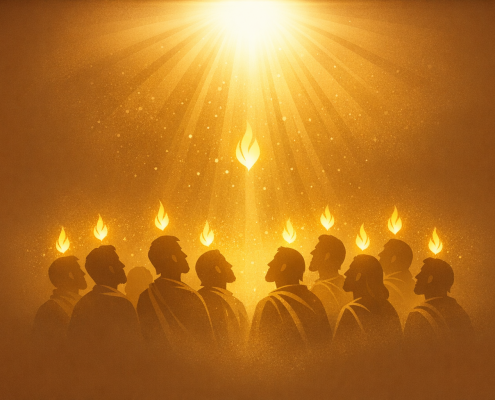
The conversation then turns to the surprising Old Testament roots of speaking in tongues. Through the Tower of Babel, Deuteronomy and Isaiah, we see how foreign languages originally signaled God’s disfavor and judgment. But at Pentecost, everything changes. The same sign that once scattered now gathers. The same confusion that once divided now draws people toward the gospel. Speaking in tongues becomes a powerful, unmistakable sign for unbelievers that God’s favor has arrived through Jesus and the outpouring of the holy spirit.
This episode lays the essential groundwork for Part II, where the New Testament gifts will be examined in greater detail.
Key Takeaways
- Old Testament healings were rare and always served a larger divine purpose.
- Jesus’ healing ministry fulfilled prophecy and revealed God’s sovereignty in a new way.
- In the Old Testament, foreign tongues were a sign of God’s disapproval and judgment.
- At Pentecost, tongues became a sign of God’s favor, enabling the gospel to reach all nations.
- Understanding the Old Testament foundation is essential for interpreting New Testament gifts today.


















Thanks for the message. I have a question. At Pentecost–was it a miracle of speaking in tongues, or hearing in their own tongue? Was there multiple languages being spoken at once, or one voice which each heard in their own tongue?
I will share an experience from a couple of years ago. There was 4 of us in Armenia visiting a brother who lived with his parents. Three of us were in the room with the father who didn’t speak English. The father clearly said, “I am worried about my son.” in perfect English. If it was just me in the room, I would have thought I was hearing things, but the three of us looked at each other and couldn’t believe our ears. When the brother came back in the room, he questioned his father–who he knew didn’t speak English and the father said he didn’t speak English. We told him what he had said, but I don’t recall if he admitted that he said it or not.
It wasn’t demons–so we don’t need to go there.
Three consecrated brethren heard the exact same thing.
Lord bless
Thanks
Thank you for your comments. Pentecost was a miracle of speaking, not hearing. Acts 2 says the apostles “began to speak with other tongues,” and the crowd heard them because those were real, known languages being spoken out loud. Luke even lists the different language groups present. The Greek verbs used in Acts 2 for “speaking” never imply “hearing.” So yes — multiple languages were being spoken at the same time, and each listener recognized their own native tongue. The miracle was that the apostles could speak languages they had never learned, enabling the gospel to reach people from many nations at once.
As far as your experience, English is quite ubiquitous around the globe. It is possible the father picked up this simple expression without realizing it from hearing it in the past in some context. While curious, it would not be an example of the apostolic gift of speaking in tongues that is referenced in this episode. May the Lord continue to bless your studies! – Christian Questions
I had to stop the moment you said healing and the gift of tongues stopped. This is so untrue! I am a walking miracle as are both my son’s and it all happend because healing and the gift of tongues is still very much active today. Thank you for being honest upfront but it concerns me that you are teaching against the Word of God.
Thank you so much for sharing this, and we’re glad you and your sons experienced healing in ways that were meaningful and life‑changing for you. We never want to diminish anyone’s personal experience or the comfort they’ve received from God. He absolutely does answer prayer, strengthen us, and intervene in our lives in powerful ways. In this episode, we’re looking specifically at the biblical definition and purpose of the miraculous gifts of healing and speaking in tongues as they operated in the days of Jesus and the apostles. When we say those gifts have ceased, we’re referring to the unique, instantaneous abilities described in the New Testament. Scripture shows that these gifts were always connected to Jesus or the apostles, or to individuals who received the ability directly through the apostles. There is no record of these gifts continuing independently beyond that foundation.
That doesn’t mean God no longer heals, helps or works in our lives. It simply means that the apostolic gifts served a particular role in establishing the gospel, and Scripture shows that their purpose was fulfilled. If you’re open to it, we’d love for you to listen to the full episode. We walk carefully through the Old and New Testament passages to explain why we believe what we do, and we do it with deep respect for all who have had different experiences. Thank you again for taking the time to comment. We very much appreciate your sincerity. Christians don’t agree on every topic, so if this episode didn’t resonate, we hope you will try another topic. We release a new episode every week. – Christian Questions
I’ve been going to an Apostolic Church for 20 yrs. or so now and really appreciate our preachers and their preaching. With that being said, sometimes I get a little tired of the same laying on hangs and speaking in tongues 👅 at the end of every service. I have never spoken in tongues 👅 but have made it ti stammering 💋. I do know that the Bible is a ❤️ story and I agree that love is way more important than speaking in tongues and such.