


Ep.1439: Should Women Be Pastors? (Part II)
The Bible’s male focused pastor’s role and its effect on women

CHAPTERS
Theme Scripture: Galatians 3:27-29
In Part I of this 2-part series, we introduced several reasons why many Christians believe women should be able to serve as pastors. Our scriptural considerations began with understanding what the "equality in Christ" in our theme text means. We found that it is pointing to an immovable foundation for people of differing ethnicities, different social standings and both genders to stand firmly upon. While Christ does not change our heritage, social standing or gender privileges, he equally welcomes all of us. We also briefly examined the roles of a few prominent Old Testament women. Here we discovered that even though they were wise and chosen prophets of God, that did not open the door for them to be in any way related to the priesthood of Israel.
In Part II of our series, we continue examining the question of whether women should serve as pastors or elders by looking closely at New Testament women in ministry by including examples often raised in support of egalitarian views. We explore the lives of Priscilla, Phoebe and Junia—women of remarkable faith and influence—and consider how their contributions fit within the structure God designed for the early church. These women served powerfully and sacrificially, yet Scripture never presents them as holding the governing or teaching offices reserved for elders.
Gift vs. office
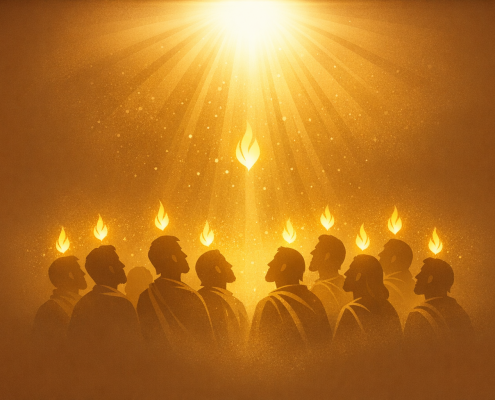
A major theme of this episode is the difference between gifts and offices. God gives spiritual gifts broadly to both men and women, enabling all believers to teach, encourage, counsel and serve. But the New Testament consistently assigns the formal teaching and governing roles of the church to qualified men. This distinction becomes especially important when we look at Pentecost. Peter quotes a prophecy from Joel to show that God’s spirit was being poured out on both sons and daughters, but his purpose was to highlight the arrival of miraculous gifts—not to redefine church leadership. Pentecost was a preview of God’s power, not a restructuring of the elder role.
The Competency Argument
We also address the modern argument of competency. Many women today are highly educated, capable leaders in every sphere of society. Scripture never denies their ability. Instead, it provokes us to consider how God arranges His body according to His design, not human preference. The pattern of male eldership is rooted not in culture, but in creation, headship and the consistent teaching of both Paul and Peter.
This episode encourages all Christians—men and women—to embrace their God given roles with humility, gratitude and purpose, recognizing that leadership in the body of Christ begins and ends with faithful service.
Key Takeaways
• New Testament women served powerfully, but none are shown holding the office of elder.
• Gifts and offices are different: gifts show ability; offices show responsibility.
• Pentecost demonstrated God’s power, not a change in church leadership structure.
• Competency is not the issue—God’s design and order are.
• Headship is rooted in creation, not culture.
• Every Christian can lead by example, regardless of role.

















Leave your comment